
Nitrile Rubber & Armaflex Insulation: The Complete Guide to Unslit Coils
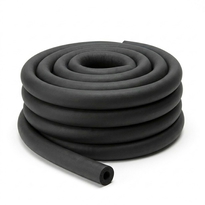
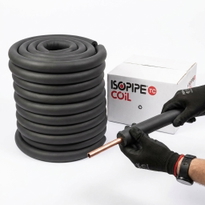
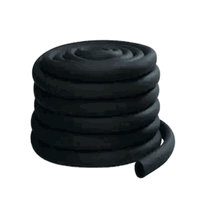
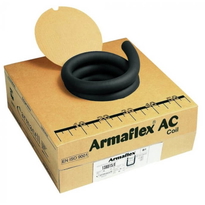
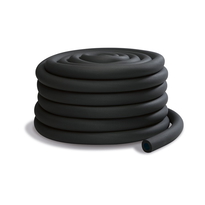
Armaflex unslit coils are closed-cell nitrile rubber pipe insulation supplied in continuous coil form without a pre-cut slit, making them the preferred choice for new installations where pipework can be threaded through the insulation before connecting.
What Is Nitrile Rubber Insulation?
Nitrile rubber (NBR) is a synthetic elastomer formed from a copolymer of acrylonitrile and butadiene. In its closed-cell foam form, it offers an outstanding combination of thermal performance, flexibility, and vapour resistance that makes it ideal for pipe insulation. Unlike rigid insulation materials such as phenolic or mineral wool, nitrile rubber remains flexible across a wide temperature range, conforming easily to bends, valves, and fittings without cracking or crumbling.
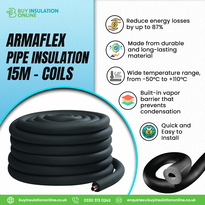
The closed-cell structure is the key to its performance — each tiny cell is sealed, meaning moisture and water vapour cannot travel through the material. This makes it particularly effective at preventing surface condensation on cold pipework, which is the primary cause of corrosion, mould growth, and structural damage in HVAC and refrigeration systems.
What Makes Armaflex the Leading Brand?
Armaflex, manufactured by Armacell, is the market-leading nitrile rubber insulation brand and has been for decades. The name has become almost synonymous with flexible pipe insulation in the UK trade. Armaflex is produced to consistently high standards with precise cell structure control, giving it reliable thermal conductivity values (typically λ = 0.033–0.036 W/m·K depending on grade) and a water vapour diffusion resistance factor (µ) that far exceeds most competing products.
Armacell also incorporates Microban® antimicrobial protection into the Armaflex AF range, inhibiting the growth of bacteria, mould, and mildew on the surface — particularly valuable in humid plant rooms and commercial HVAC environments.
Unslit vs Slit Coils
This is an important distinction when specifying or purchasing Armaflex coils:
| Unslit Coils | Slit Coils | |
|---|---|---|
| Construction | Continuous tube, no cut | Pre-cut along the length |
| Best for | New pipework, threading onto pipe | Retrofitting over existing pipework |
| Vapour seal | Superior — no seam to seal | Seam must be glued or taped |
| Installation | Pipe threaded through before connecting | Opened and clipped over pipe |
| Finish | Cleaner, fewer joints | Requires careful sealing |
For new installations — such as a refrigerant circuit being installed from scratch, or copper pipework being run before commissioning — unslit coils are always the better choice. The insulation is slid onto the pipe as it is run, eliminating the need to seal a longitudinal seam entirely. This produces a significantly better vapour barrier and a cleaner finished appearance.
Typical Applications
Armaflex unslit coils are used across a wide range of commercial and domestic applications:
-
Air conditioning and refrigeration — refrigerant pipework on split systems, VRF/VRV systems, and chillers
-
Chilled water pipework — secondary circuits in fan coil and AHU installations
-
Cold water supplies — protecting cold water pipes from condensation in warm, humid environments
-
Heat pumps — both source and distribution pipework where condensation control is needed
-
Food and beverage — process pipework requiring hygiene-rated insulation
Available Wall Thicknesses
Armaflex coils are available in a range of wall thicknesses to suit different applications and compliance requirements:
-
9mm — light duty, domestic cold water, short refrigerant runs
-
13mm — standard HVAC and air conditioning (most common)
-
19mm — enhanced thermal performance, chilled water, longer runs
-
25mm — heavy duty, low temperature refrigeration, compliance-critical installations
The correct wall thickness is determined by the pipe size, fluid temperature, ambient conditions, and any applicable building regulations or system specifications.
Common Bore Sizes in Coils
Armaflex unslit coils are typically available in the following internal diameters, covering the most common copper and steel pipe sizes used in UK HVAC and plumbing:
-
6mm, 8mm, 10mm, 12mm, 15mm, 18mm, 22mm, 28mm
Sizes above 28mm are generally supplied as sheets or pre-formed sections rather than coils, as the larger bore makes coiling impractical.
Installation Tips
-
Thread before connecting — always slide unslit coils onto the pipe run before making end connections; once joints are made, you lose the ability to thread
-
Plan your run — measure and cut coil lengths before fitting to minimise waste and joints
-
Seal all butt joints — even with unslit coils, end-to-end joints must be sealed with Armaflex tape or Armaflex 520 adhesive to maintain vapour integrity
-
Avoid compression — do not over-tighten brackets or clips against the insulation, as compressing the foam reduces its thermal performance
-
Store correctly — keep coils in a dry environment away from direct sunlight prior to installation; UV degrades nitrile rubber over time if left unprotected
Outdoor Use
For any pipework installed externally, Armaflex should be finished with Armafinish 99 UV-resistant coating or wrapped in a suitable protective jacketing. Whilst nitrile rubber has reasonable ozone and UV resistance, prolonged outdoor exposure without protection will cause surface degradation and cracking over time, compromising both appearance and performance.