
Xps U Value
XPS insulation panels are renowned for their low thermal conductivity, contributing to an impressive U-value for building envelopes. The effectiveness of insulation improves significantly with increased panel thickness, with even modest increases offering enhanced performance. While thicker panels provide a more substantial barrier, the benefits of additional thickness may begin to plateau after a certain point.
The moisture resistance and robust mechanical properties of XPS ensure that these U-values remain consistent over time, making it a reliable choice for various applications.
To further enhance insulation efficiency, it is worthwhile to explore how variations in thickness and specific application techniques can influence overall U-value performance.
Understanding the Thermal Conductivity of XPS
Understanding the thermal conductivity of expanded polystyrene (XPS) is essential for assessing its insulating properties. The typical thermal conductivity, or K value, of XPS is around 0.024 W/m·K at 10°C, although variations may occur depending on density. XPS panels exhibit high compressive strength, making them suitable for load-bearing insulation applications. Due to its closed-cell structure, XPS maintains a consistent thermal conductivity over time, ensuring that its insulating capabilities remain intact. Thermal conductivity is influenced by several factors, including density, cell size, and wall thickness. The design of the material effectively minimises heat transfer through radiation and convection, particularly because the small, closed cells restrict airflow. This combination of stability and low thermal conductivity makes XPS a highly effective insulation material, ideal for maintaining temperature control in various environments.
How XPS Thickness Affects U-Value Performance
The thickness of XPS insulation panels has a significant impact on their U-value, which is a measure of a material's ability to resist heat transfer. Thicker panels lead to a reduced U-value, indicating enhanced insulation performance. Starting with a thickness of around 25 mm, XPS insulation typically provides substantial thermal resistance, and increasing the thickness can further improve this effect by considerably lowering heat transfer. Increasing the thickness significantly improves the U-value performance. When thickness is increased, the insulation capability improves, particularly when moving from thinner to thicker panels. However, it's important to recognise that beyond a certain thickness, the benefits of additional material may begin to diminish. Building regulations in the UK often stipulate minimum thicknesses to achieve specific U-value targets, particularly in areas with colder climates where enhanced insulation is essential. The thermal conductivity of XPS, which generally falls within a narrow range, plays a crucial role in determining the necessary thickness for optimal performance. Selecting the appropriate thickness is vital to strike a balance between insulation efficiency and the constraints of space and structural requirements.
Mechanical Strength and Its Impact on Insulation Efficiency
Aspect |
Range / Detail |
Application |
| Compressive Strength | Standard boards typically range | Supports foundations, roofing, underfloor heating |
| Tensile Strength | Generally around 600 kPa | Resists tension during installation and movement |
| Shear Strength | Typically about 250 kPa | Maintains layer integrity under lateral forces |
Mechanical strength is vital for ensuring the effectiveness of XPS insulation. Stronger XPS materials can resist deformation under load, which helps maintain their shape and thermal properties. By withstanding pressure and physical stresses, XPS insulation prevents cracks that may lead to heat loss, thereby enhancing energy efficiency. Enhanced mechanical properties also contribute to the insulation’s resistance to weathering and environmental impact over time. Boards with higher compressive strength are essential for supporting heavy structures, while an optimal balance of tensile and shear strengths reduces the likelihood of failure over time. This durability is crucial in ensuring consistent insulation performance, contributing to a sense of security and comfort in well-insulated buildings. Ultimately, the appropriate mechanical properties of XPS insulation support both thermal efficiency and long-term durability, making them an indispensable choice for construction and renovation projects across the UK.
Moisture Resistance and Long-Term Thermal Stability
Moisture resistance is crucial for maintaining the long-term performance of XPS insulation, particularly when subjected to wet conditions. Its closed-cell structure, characterised by tightly packed and isolated foam cells, effectively prevents water from penetrating. This creates a robust moisture barrier that limits absorption, ensuring that typical water uptake remains minimal even after prolonged exposure to moisture. This property is especially important in applications such as foundations or below-grade installations, where water presence is unavoidable. This resistance is essential in preserving the integrity of the insulation, as it helps prevent issues such as rot or corrosion that could compromise the building material.
However, over extended periods, particularly when buried underground, XPS may absorb a significant amount of water weight, leading to a reduction in its thermal performance.
Nevertheless, XPS continues to perform admirably in damp environments, sustaining its core insulating properties for longer than many alternatives.
Practical Applications and Optimizing U-Value in Building Design
Integrating XPS insulation into building envelope designs is essential for optimising U-values and enhancing energy efficiency. XPS boards offer excellent thermal resistance, significantly reducing heat loss in floors, roofs, and walls.
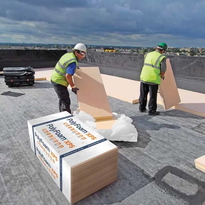
For example, in underfloor heating systems, placing XPS boards beneath concrete slabs ensures consistent insulation performance while minimising energy consumption. In inverted roofs, accurate U-value calculations guarantee that insulation is sufficient without the need for excess material, resulting in cost savings.
Layered wall designs that combine XPS with masonry can achieve impressive U-values, supporting compliance with energy regulations. Furthermore, XPS can be custom routed to accommodate underfloor heating pipes, ensuring optimal functionality without compromising the installation process.
Proper specification of XPS insulation enables buildings to meet or exceed energy standards, thereby lowering carbon emissions and promoting sustainable, energy-efficient designs. Accurate U-value calculations are critical in this process to ensure compliance. This approach fosters a sense of community and shared responsibility towards environmental stewardship.
Conclusion
XPS offers effective insulation due to its low thermal conductivity and moisture resistance. By increasing its thickness, one can enhance its U-value performance, although this must be balanced with structural requirements. The robust mechanical properties of XPS ensure durability, while its moisture resistance contributes to long-term stability.
Understanding these factors allows builders to optimise the use of XPS in their designs, ultimately achieving improved energy efficiency and enduring thermal performance. This makes XPS a dependable choice for a variety of construction applications in the UK.