Hemp Block Insulation
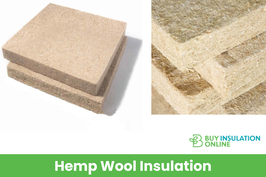
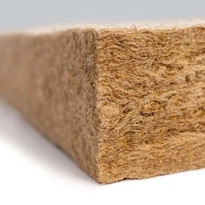
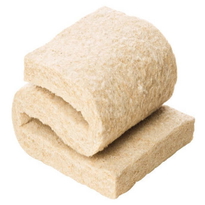
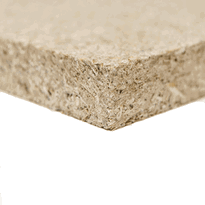
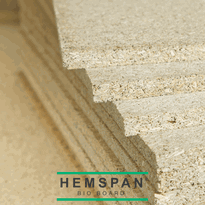
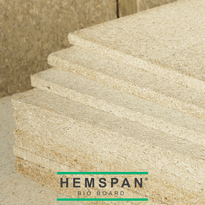
Hemp block insulation is a natural building material primarily composed of hemp shives bonded with lime or cement, providing excellent thermal and acoustic insulation properties. It is environmentally sustainable, as hemp sequesters carbon dioxide, requires minimal water, and contains no toxic additives. The material offers outstanding moisture regulation, fire and frost resistance, and support for energy-efficient construction methods. Its durability and straightforward installation make it suitable for various building applications. Continue reading to discover how this eco-friendly option can enhance your building projects in the UK.
Composition and Material Properties of Hemp Blocks
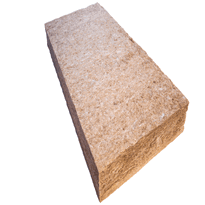
Hemp blocks are primarily composed of hemp shives, which are the woody inner core of the hemp plant. These shives serve as the main aggregate material, providing bulk and structural stability. Typically, they constitute about 80% of the overall composition, offering a lightweight yet strong foundation. To bind the shives together, lime-based agents are utilized, usually in the form of aerial lime and hydraulic lime. These binders account for roughly 20% of the mixture and set through carbonation and hammering, which enhances the durability of the blocks. Some formulations may also include small quantities of pozzolanic binders or cement to accelerate setting times. Importantly, hemp blocks contain no toxic chemicals or synthetic additives, ensuring a natural and safe product. Their composition provides excellent thermal and acoustic insulation while also enabling natural moisture regulation. The lime components also contribute to the product's alkalinity, making the blocks resistant to pests and mold. These qualities make hemp blocks highly suitable for sustainable building projects across the UK.
Environmental Benefits and Sustainability of Hemp Insulation
Over recent years, the environmental benefits of hemp-based insulation have gained increasing recognition within sustainable building practices across the UK. Hemp sequesters substantial amounts of carbon dioxide (CO2) during its growth, capturing more carbon than it emits over its lifecycle—each hectare can sequester over 9 tonnes of CO2, making hemp insulation effectively carbon-negative. The cultivation process requires minimal water, no pesticides, and no synthetic fertilizers, thereby reducing ecological impact. Additionally, the crop’s rapid growth cycle ensures a renewable and sustainable supply. Hemp fibers are already used in textiles and biodegradable plastics. Hemp insulation also has a significantly lower greenhouse gas emission profile compared to conventional materials such as mineral or synthetic fibers, reducing overall carbon footprints by up to 80%. The material is biodegradable, decomposing naturally without releasing toxins, which minimizes waste and supports eco-friendly disposal methods. The development of liquid membranes as waterproofing solutions further enhances the sustainability profile of eco-friendly buildings by providing durable, flexible, and environmentally friendly barriers that complement hemp insulation. Collectively, these factors underscore hemp insulation’s vital role in promoting sustainable construction and reducing environmental impact within the UK.
Thermal, Acoustic, and Humidity Regulation Capabilities
Hemp-based insulation materials, including hemp blocks and hempcrete, demonstrate notable capabilities in regulating indoor environments through their thermal, acoustic, and humidity management functions.
Hemp blocks exhibit low thermal conductivity, with λ-values around 0.071 W/mK, enabling effective insulation. Their thermal resistance can reach up to 5.37 m²K/W in 36 cm-thick blocks, which enhances energy efficiency. The thermal phase shift of approximately 23.6 hours helps to stabilize indoor temperatures by delaying heat transfer. This ability to delay heat transfer is especially beneficial for maintaining consistent indoor temperatures in variable climates. Hempcrete’s combination of insulation and thermal mass allows for heat storage, further supporting temperature regulation.
In addition, these materials offer excellent acoustic properties. The sound absorption coefficient can be as high as 0.85, and sound attenuation may reach 44 dB, significantly reducing external noise infiltration and contributing to a quieter indoor environment.
Hemp blocks are also permeable to water vapour and hygroscopic in nature. This promotes moisture exchange within the indoor environment, helping to maintain ideal humidity levels and prevent mold growth, thereby supporting healthier living spaces.
Construction Applications and Mechanical Performance
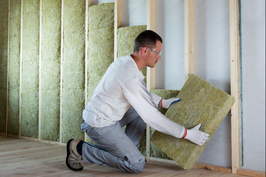
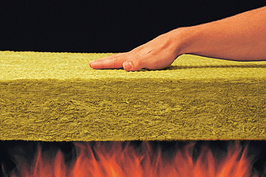
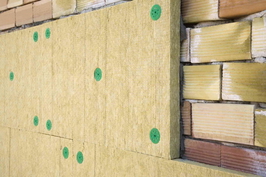
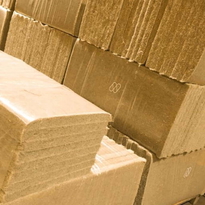
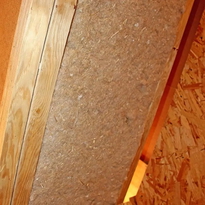
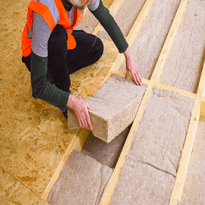
Constructing with hemp block insulation offers several practical advantages due to its specific design and mechanical properties. Hemp blocks are non-load-bearing, glued masonry elements suitable for insulating building envelopes, serving as substrates for parging or cladding, and integrating service ducts within floor systems. Their robustness ensures long-term durability, with a lifespan spanning decades, while their structural rigidity supports cladding and internal walls without risk of collapse. Hemp blocks exhibit fire resistance of up to 240 minutes for thicker variants, with a non-toxic reaction classification, thereby enhancing safety. Hempcrete insulation blocks are naturally fire and frost resistant, increasing durability without chemicals. Installation is efficient, averaging about one minute per square meter, and the absence of mortar joints simplifies assembly. Their thermal inertia, vapour permeability, and acoustic performance contribute to the overall mechanical stability and moisture regulation of buildings, making them a reliable choice for sustainable construction.
Conclusion
Hemp block insulation offers a sustainable and efficient solution for building applications, providing notable thermal, acoustic, and humidity regulation properties. Its environmentally friendly composition helps to reduce ecological impact and enhance energy efficiency. With sufficient mechanical strength, hemp blocks are suitable for various structural and non-structural uses. Incorporating hemp insulation into construction practices promotes durability and eco-conscious building standards, making it an appealing choice for those aiming to improve environmental performance without compromising on quality.