
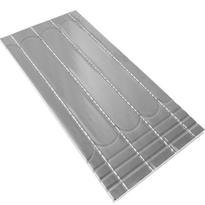
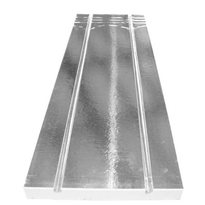
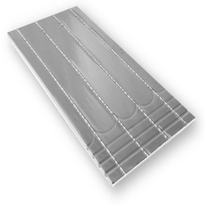
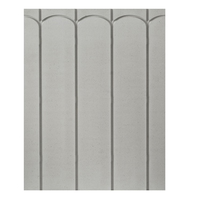
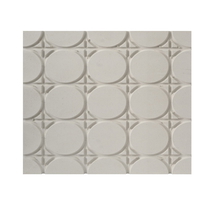
Underfloor Heating Grooved Chipboard
Grooved chipboard designed for underfloor heating features precisely cut channels that securely hold pipes, ensuring even heat distribution and optimal efficiency. Crafted from moisture-resistant materials, this chipboard also incorporates aluminium foil surfaces, making it suitable for joisted or suspended floors while remaining easy to install.
The panels come with tongue and groove edges, creating a seamless surface that enhances aesthetics and functionality. Their excellent thermal properties significantly optimise heat transfer, contributing to a comfortable living environment.
For homeowners and builders seeking to maximise system performance, further technical specifications and installation advice are available.
Materials and Dimensions of Grooved Chipboard
Materials and dimensions are essential elements of grooved chipboard utilised in underfloor heating systems. The main material is high-density particleboard, often flooring grade P5, which offers excellent structural integrity. The surface layer is typically laminated with aluminium foil to enhance heat diffusion and thermal efficiency. This aluminium foil not only improves heat transfer but also adds durability to the surface. The grooves, precisely routed into the chipboard, are designed to securely accommodate 12mm or 16mm pipes. Standard thickness provides a balance of strength and insulation, while the panels are generally about 600mm wide and 2400mm long, covering a substantial area. These panels are lightweight, facilitating easier installation. The grooves are spaced at 150mm centres, aligning perfectly with pipe sizes, and feature full tongue and groove edges to create a seamless floor surface when joined together. This construction not only supports the heating system effectively but also contributes to a well-finished appearance in any room.
Installation Procedures and Best Practices
Proper installation of grooved chipboard is essential for an effective underfloor heating system. To ensure success, all components must be correctly prepared and installed with care.
Key Steps for Installation:
Prepare Subfloor
Clean and level the subfloor, ensuring insulation is placed between the joists. This prevents uneven surfaces and minimises heat loss. Using moisture-resistant routed chipboard, which is suitable for damp areas, enhances the durability of the installed flooring for long-term performance. [Moisture resistance](https://horstad.com/optimizing-your-underfloor-heating-with-moisture-resistant-routed-chipboard/) is crucial for maintaining the system's integrity over time.
Lay Panels
Stagger the panels and secure them with screws and adhesive. This technique ensures stability and maintains a flat surface.
Install Pipes
Carefully lay the heating pipes evenly, avoiding kinks. This promotes uniform heating throughout the space.
Cover Pipes
Add an overlay of plywood or chipboard to protect the pipes and enhance the structural rigidity of the system.
Final Checks
Conduct thorough tests for leaks and ensure everything is level and securely in place. This guarantees safe and efficient operation of the underfloor heating system.
Adhering to these steps and best practices optimises performance, creates a comfortable environment, and extends the longevity of the system.
Enhancing Thermal Efficiency and System Performance
Enhancing thermal efficiency and system performance in underfloor heating installations involves strategic choices that optimise heat distribution and minimise energy loss.
The use of materials such as chipboard with high thermal conductivity ensures an even spread of heat across surfaces. Additionally, features like reflective foil backing and heat spreader plates assist in reflecting and distributing heat more effectively.
The following strategies contribute significantly:
Installing foil-faced chipboard options to reflect heat and enhance efficiency.
Adjusting groove spacing to optimise heat output.
Employing aluminium diffuser panels to transfer heat from pipes directly into the room.
Selecting materials with low thermal resistance for quicker heat transmission.
These choices allow the system to operate more efficiently, reduce energy costs, and provide consistent comfort in living spaces. High-quality chipboard adds to the overall performance due to its durable and energy-efficient properties.
Suitable Applications and Compatibility Considerations
Due to its versatile design, the suitable applications for chipboard with underfloor heating are diverse across various projects.
It's specifically crafted for use on joisted and battened floor systems, making it ideal for suspended timber floors in both renovations and new builds. The tongue and groove feature ensures secure connections between panels, while the bi-directional grooved design facilitates easy fitting around changing joist directions or steel supports.
This type of chipboard is particularly effective in open-plan spaces and complex modern constructions. It's compatible with a range of floor finishes when an overlay board or plywood is added for enhanced stability.
Moisture-resistant options are available for different environments, and the precision grooves securely accommodate heating pipes, ensuring efficient heat transfer. The material's lightweight nature further simplifies handling and installation, especially in challenging environments.
These characteristics render it a flexible choice for both residential and commercial projects.
Conclusion
Grooved chipboard is an excellent choice for underfloor heating systems due to its commendable thermal conductivity and straightforward installation process. By ensuring the right selection of materials and dimensions, optimal performance can be achieved. Adhering to best practices during installation will further enhance efficiency and longevity.
This material is suitable for a variety of applications, including both residential and commercial spaces, as long as compatibility with other flooring components is confirmed.
Overall, grooved chipboard provides a dependable and cost-effective solution when installed and maintained with care. It supports energy-efficient heating, contributing to comfortable living and working environments.