
Garage Door Foam Insulation
Garage door foam insulation enhances energy efficiency, durability, and soundproofing by sealing gaps between panels with specialized foam materials designed for particular needs. Polystyrene offers budget-friendly, lightweight options, while polyurethane delivers superior thermal resistance and structural strength. Closed-cell foam improves moisture barriers and provides additional support, whereas open-cell foam is ideal for air sealing and noise reduction. Proper installation, sealing, and selection of materials are essential to maximize benefits, helping homeowners reduce utility bills and extend the lifespan of their garage doors. Further guidance can assist in identifying the most suitable solution for individual requirements.
Types of Foam Insulation for Garage Doors
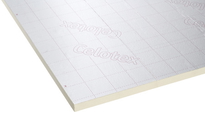
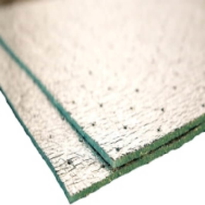
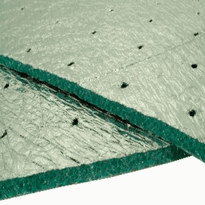
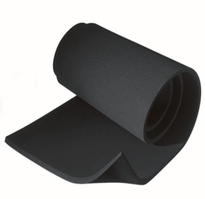
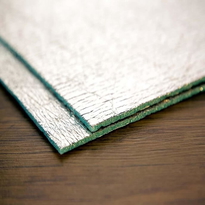
There are several common types of foam insulation used in garage doors, each with distinct properties that influence their suitability for various applications. Polystyrene foam is a rigid, lightweight material often inserted as panels within the door or sandwiched between steel layers. It provides good thermal resistance with K-values typically ranging from 0.35 to 0.20 W/m²K. It also helps to make the door operate more quietly.
Alternatively, polyurethane foam is injected as a liquid that expands and hardens into a rigid layer. It offers superior insulation properties, with K-values generally between 0.20 and 0.15 W/m²K. Additionally, it contributes to increased durability and noise reduction.
Closed-cell foam, which is denser and more compact, improves the structural integrity of the door. It acts as a moisture barrier and is usually installed by professionals.
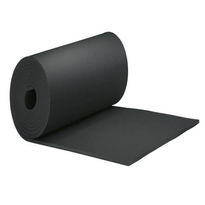
Open-cell foam, on the other hand, is lighter and less dense. It makes it suitable for air sealing and soundproofing tasks. It's often preferred for DIY projects due to its ease of application.
Benefits of Foam Insulation in Supporting Energy Efficiency and Durability
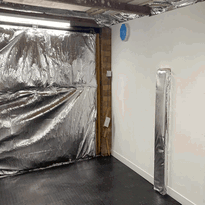
Foam insulation enhances energy efficiency by forming an airtight seal around garage doors, effectively minimizing air infiltration and reducing heat exchange between the interior and exterior. This sealing helps decrease energy consumption for heating and cooling by up to 20%, subject to local climate conditions and the frequency of garage use. Maintaining consistent temperatures improves comfort and usability while also lowering utility bills and easing the load on heating, ventilation, and air conditioning (HVAC) systems. Proper installation ensures the foam insulation functions optimally over time. Additionally, foam insulation provides structural support, helping to protect garage doors from environmental factors such as moisture, which can lead to deterioration over time. It also significantly reduces noise transmission from external sources and internal operations, resulting in a quieter environment. When correctly installed, foam insulation can also help manage the water vapor within the garage space by reducing condensation issues that may otherwise lead to moisture problems. The table below summarizes key benefits:
Benefit |
Description |
Impact |
| Energy efficiency | Minimises heat exchange and air leakage | Cuts down utility costs |
| Structural reinforcement | Strengthens door stability and resilience | Extends lifespan |
| Acoustic insulation | Dampens external and internal sounds | Enhances comfort |
| Thermal performance | High K- and U-values assure stable temperatures | Maintains consistent indoor climate |
Considerations for Choosing and Installing Garage Door Foam Insulation
Selecting the appropriate foam insulation type and ensuring correct installation are fundamental to maximizing both energy efficiency and the structural integrity of garage doors.
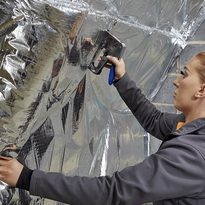
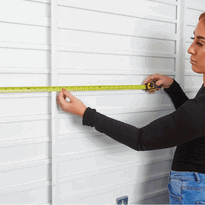
When choosing foam, consider factors such as U-value, moisture resistance, impact resistance, and budget. Polyurethane offers higher thermal resistance ratings and increased durability suitable for extreme climates, whereas polystyrene presents a more affordable alternative suitable for moderate conditions. Additionally, the application method can significantly influence the insulation's overall effectiveness and longevity. Using proper sealing techniques ensures gaps are minimized, which is crucial for preventing thermal bridging and moisture ingress. Proper installation involves careful measurement and secure attachment of foam panels or the correct application of spray foam, following safety guidelines to prevent hazards. Sealing gaps with sealant or caulk and covering foam with a thermal barrier when required by building regulations enhances safety and performance.
Consistency in these steps ensures long-term insulation effectiveness, reducing energy costs and extending the lifespan of the door.
Conclusion
Choosing the appropriate foam insulation for garage doors involves assessing factors such as material type, thermal resistance, and installation method to optimize energy efficiency and durability. Correct application ensures insulation effectively minimizes heat transfer, reduces energy costs, and enhances overall door performance. Professionals recommend precise installation techniques and selecting high-quality materials to achieve optimal results. Understanding these considerations enables informed decisions that improve the garage’s insulation capacity, providing long-term benefits through better thermal regulation and structural integrity.