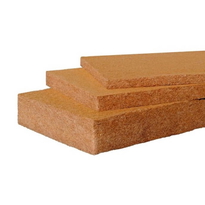
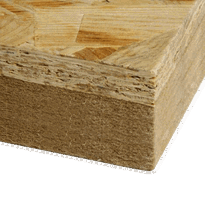
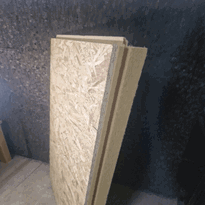
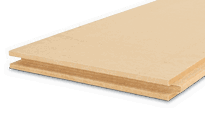
Wood Fibre Board Internal Wall Insulation
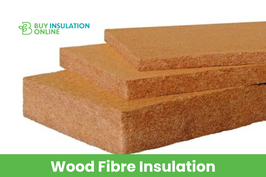
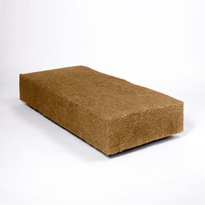
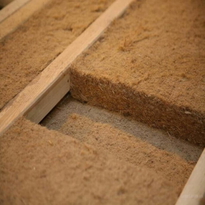
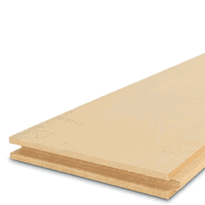
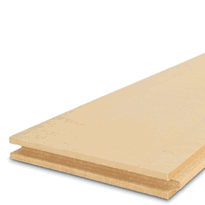
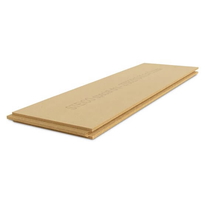
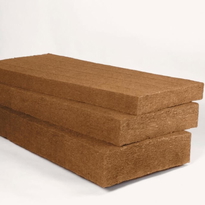
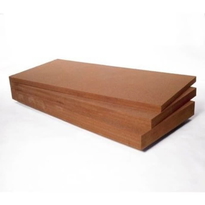
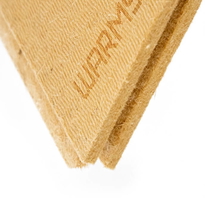
Wood fibre boards present a sustainable and effective solution for internal wall insulation, delivering outstanding thermal and acoustic advantages. Their porous structure captures air, which diminishes heat transfer and mitigates sound transmission. Additionally, the breathability of these boards aids in moisture management, reducing the risk of mould growth.
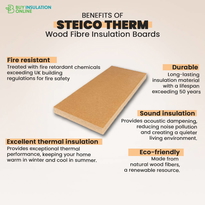
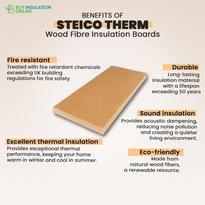
Often regarded for their fire-resistant properties, wood fibre boards are environmentally friendly, crafted from renewable materials with a low embodied energy. They contribute to achieving low U-values, thereby enhancing energy efficiency in buildings.
These versatile panels not only improve indoor comfort but also promote sustainability, making them an excellent choice for modern construction and renovation projects. Their ability to create a healthier living environment aligns perfectly with the growing demand for eco-conscious building materials in the UK.
Thermal Insulation Performance and Energy Efficiency
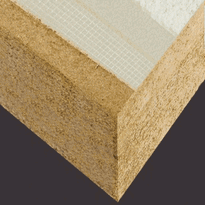
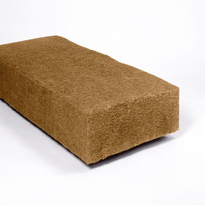
Wood fibre boards are renowned for their excellent thermal insulation performance, which significantly contributes to enhancing a building’s energy efficiency. Their porous cellular structure effectively traps air pockets, reducing heat transfer and helping to maintain stable indoor temperatures. These boards possess varying thermal conductivities influenced by their density and manufacturing processes. Generally, higher density boards exhibit greater strength but may have a marginally higher thermal conductivity, whereas lower density options tend to offer superior insulation properties. The inherent porous structure results in low thermal diffusivity, allowing heat to move through the material at a slower rate. Because of their low thermal diffusivity, this characteristic is beneficial for retaining warmth during the colder months while keeping interiors cool during warmer periods. Consequently, wood fibre insulation can lead to substantial reductions in heating and cooling expenses, promoting energy efficiency and enhancing comfort in homes across the UK.
Breathability and Moisture Management Advantages
Wood fibre boards are recognised not only for their excellent insulation qualities but also for their effective moisture management capabilities.
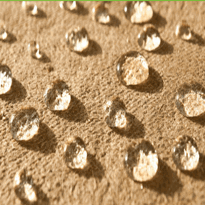
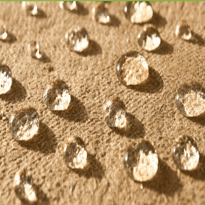
These materials are vapour-permeable, allowing moisture to pass through via capillary action, which helps to prevent condensation and the growth of mould. This natural movement of moisture contributes to a stable indoor environment by balancing humidity levels. High surface tension They act as a buffer for moisture, absorbing excess humidity from everyday activities such as cooking or sleeping, which diminishes the risk of dampness.
The vapour permeability of wood fibre boards ensures that moisture isn't trapped within the walls, promoting better air quality and minimising the likelihood of mould. Their hygroscopic properties enable them to absorb or release moisture in response to changing conditions, maintaining steady microclimates within the walls.
This effective moisture management fosters a healthier and more comfortable home for those who prioritise a sense of belonging and well-being.
Environmental Benefits and Sustainability Aspects
Sustainable building materials are increasingly significant for minimising environmental impact, and wood fibre boards are particularly noted for their eco-friendly characteristics.
These boards sequester carbon dioxide absorbed by trees during their growth, effectively locking carbon within buildings over time. Primarily composed of renewable wood fibres sourced from sustainably managed forests or sawmill by-products, they significantly reduce the reliance on fossil fuels during production. Their low embodied energy means they require less energy to produce compared to many synthetic insulation materials, further reducing their environmental footprint. In comparison to synthetic alternatives, wood fibre insulation boasts a substantially lower embodied carbon footprint, thereby supporting climate objectives. The utilisation of existing wood waste streams not only prevents additional tree harvesting but also promotes a more circular approach to resource use.
Moreover, these boards are safe and free from harmful chemicals, enhancing indoor air quality for occupants.
When disposed of appropriately, wood fibre boards can be recycled or composted. However, when integrated into buildings, they function as long-term carbon sinks, contributing to a more sustainable future.
Fire Safety and Resistance Characteristics
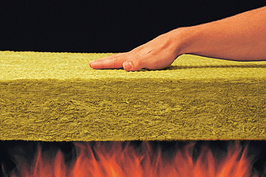
Fire safety and resistance are crucial considerations when employing wood fibre insulation in construction projects. These materials are engineered to achieve specific fire ratings, such as B-s1, d0, indicating they generate minimal smoke and don't release flaming droplets during a fire. Wood fibre insulation burns slowly, offering time for occupant escape. Here are three key points to consider:
Certain products, like GUTEX boards, offer significant fire resistance, complying with legal standards.
Fire classifications can differ, with many systems categorising wood fibre insulation as Class B or B2, which permits usage in specific building types.
The integration of wood fibre insulation with fire-resistant plasterboard can enhance fire safety, achieving A1 or A2 ratings.
Understanding these attributes is essential for ensuring that buildings remain safe while maintaining comfort and sustainability.
Acoustic Insulation Capabilities
Wood fibre boards, with their porous and fibrous structure, are exceptionally effective at absorbing sound. This unique property enables them to significantly reduce both airborne and impact noise, fostering a quieter environment. Generally, lower-density boards demonstrate superior sound absorption capabilities, making them versatile for a range of acoustic requirements. Their natural, open-cell composition plays a crucial role in dampening vibrations and minimising noise transfer between rooms.
Property |
Benefit |
Application |
| Porous Structure | Absorbs sound waves | Walls and ceilings |
| Density | Enhances sound absorption | Floors and intermediate walls |
| Material Quality | Mitigates noise transmission | Room partitions |
| Sustainability | Eco-friendly soundproofing | Overall building design |
The inherent qualities of wood fibre boards not only provide effective soundproofing but also contribute to sustainable building practices. Their ability to create tranquil spaces makes them an ideal choice for both residential and commercial applications.
Versatility in Installation and Application Methods
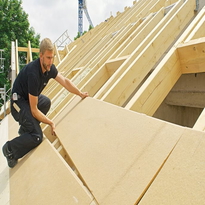
Wood fibre boards are highly adaptable when it comes to installation methods, making them suitable for a wide range of building projects. Their versatility allows for different approaches to fit various structures and needs.
Preparation and Fitting
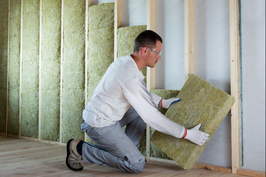
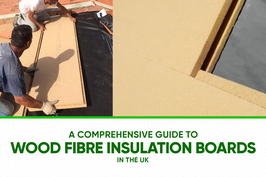
Boards require precise measurement and cutting, particularly around existing services. Ensuring tight fits minimises cold bridges, while any gaps can be filled with insulating plaster.
Fixing Methods
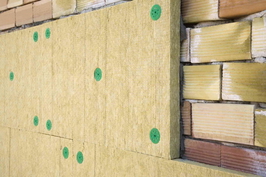
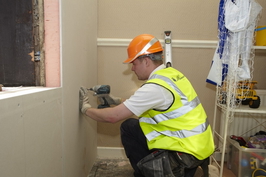
Quality plugs or wide staples are used to secure boards onto timber and masonry. Incorporating reinforcing mortar and fabric layers enhances durability, and it's essential to avoid placing fixings at stress points.
Finishing Options
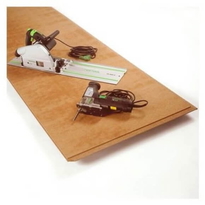
These boards can be easily cut and shaped with standard tools, allowing them to fit seamlessly around features like electrical boxes. They're compatible with a variety of finishes, and their stability ensures long-lasting, effective insulation.
Achieving Low U-Values With Wood Fibre Boards
Achieving low U-values with wood fibre boards hinges on a thorough understanding of their thermal properties and proper installation techniques.
These boards exhibit thermal conductivity comparable to other insulating materials, positioning them as effective insulators. When installed correctly, they've the potential to exceed predicted U-values, leading to a significant reduction in heat loss.
Utilising thicker boards can facilitate U-values below the required thresholds, making them suitable for meeting stringent building regulations.
The density of wood fibre boards also contributes to thermal mass, which helps to delay heat transfer and stabilise indoor temperatures.
Moreover, careful installation around frames and openings is essential to reduce thermal bridging. This attention to detail is key in achieving lower U-values.
The hygroscopic characteristic of wood fibre plays a vital role in moisture regulation, ensuring that insulation performance is maintained over time.
Compatibility With Various Wall Systems and Structures
Wood fibre boards are highly adaptable to various wall systems and structures, making them a versatile option for insulation projects. Their natural composition allows them to be compatible with a range of walls, from traditional to contemporary and timber-framed constructions.
Timber-framed buildings benefit from their organic fit, providing excellent thermal and acoustic insulation while effectively managing moisture to enhance indoor comfort.
Solid masonry walls experience improved thermal performance with internal insulation that remains breathable, preventing moisture accumulation and potential structural issues.
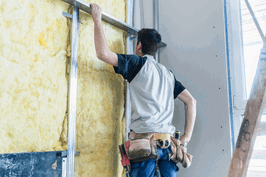
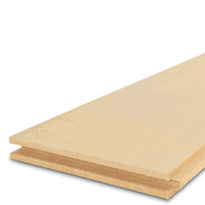
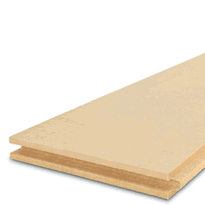
Metal frame constructions can be easily insulated between frames using tongue-and-groove systems, facilitating swift installation while addressing moisture control and fire safety.
This flexibility ensures that wood fibre boards contribute to the creation of comfortable, sustainable, and safe interiors, regardless of the wall type.
Ideal Use Cases and Best Practice Applications
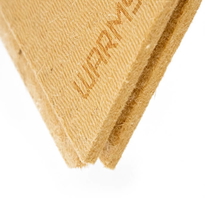
Wood fibre board insulation is particularly well-suited for retrofit wall solutions, especially in older buildings where moisture regulation and breathability are essential. This type of insulation effectively contributes to internal soundproofing, helping to minimise noise transfer in both residential and commercial environments. Furthermore, its environmentally friendly properties make it an excellent choice for sustainable building practices in the UK. For optimal installation, compatible systems like the Warmshell Woodfibre Interior System can be used, offering a range of components such as lime-based plasters and mesh for effective application (cost-effective solutions).
Retrofit Wall Insulation Solutions
Retrofit wall insulation solutions using wood fibre board are particularly suitable for buildings where external insulation isn't feasible. This makes them ideal for conservation or listed buildings, where modifications to the exterior are often restricted. They effectively enhance thermal comfort in older structures that lack cavity insulation, ensuring that indoor spaces are more pleasant and inviting.
These boards are especially beneficial for solid masonry walls found in historic buildings. Their application allows for improvements in energy efficiency without making any external alterations, preserving the aesthetic integrity of the property. Manufactured from sustainable waste wood, making them an environmentally friendly option compared to other insulation methods.
Additionally, their hygroscopic properties make them suitable for moisture-prone structures, as they assist in regulating humidity levels, thereby promoting healthier walls.
Wood fibre boards provide a sustainable approach to upgrading energy efficiency while respecting the heritage of buildings. Their breathability and moisture regulation capabilities contribute to creating a more comfortable living environment, making them an excellent choice for those looking to improve their home's insulation without compromising on historical value.
Internal Soundproofing Benefits
Internal soundproofing with wood fibre board insulation presents numerous advantages for enhancing acoustic comfort within buildings.
Its high density and porous, fibrous structure effectively absorb sound waves and dampen vibrations, resulting in quieter indoor environments. This insulation significantly reduces sound transmission, depending on the assembly and product employed.
The weight of wood fibre boards, being considerably denser than synthetic alternatives, bolsters soundproofing by adding mass, which creates a more robust barrier against noise.
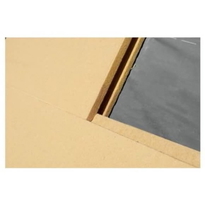
The irregular airspaces within the boards play a crucial role in absorbing airborne sounds, while tongue-and-groove joints help seal gaps, preventing sound leaks.
Ideal for residential properties, offices, or any space requiring tranquillity—such as bedrooms or studios—wood fibre boards enhance acoustic comfort while ensuring ease of installation and use.
Eco-Friendly Building Applications
Eco-friendly building applications of wood fibre board insulation are becoming increasingly popular due to their sustainable and natural attributes.
These boards are crafted from renewable wood, which effectively locks in carbon dioxide and is biodegradable at the end of their life cycle. Free from toxic chemicals, they ensure safety for both installers and inhabitants. Their breathability allows for moisture absorption and release, aiding in the regulation of indoor humidity and diminishing the risks of mould.
Applications include:
Retrofitting older buildings to enhance energy efficiency while maintaining their character.
External wall insulation within breathable, moisture-regulating building envelopes.
Utilising wood fibre boards as a sustainable thermal mass in external renders, which helps improve temperature stability.
These applications illustrate how wood fibre boards contribute to eco-conscious construction, fostering healthy and durable indoor environments.
Conclusion
Wood fibre board internal wall insulation provides numerous advantages, including excellent thermal performance, breathability, and effective moisture management. It is an environmentally friendly option that enhances fire safety while offering substantial sound insulation.
The versatility of wood fibre boards facilitates straightforward installation across various wall types, contributing to low U-values. Overall, wood fibre boards present a practical and sustainable choice, suitable for a wide range of applications. They serve as a dependable solution for improving comfort and energy efficiency in buildings.
Featured Articles on Wood fibre board internal wall insulation