
- Blogs
- A Comprehensive Guide to Shipping Container Insulation in the UK: Materials, Methods, and Regulations
A Comprehensive Guide to Shipping Container Insulation in the UK: Materials, Methods, and Regulations


TLDR: A Quick Summary
Insulating a shipping container in the UK is essential, primarily to control condensation rather than just for thermal comfort. The unforgiving nature of a steel box in a damp climate means that without insulation, "container rain"—severe condensation dripping from the ceiling and walls—is inevitable, leading to rust, mould, and damage to the container and its contents.
The choice of insulation material dictates the entire construction method. Closed-cell spray foam is highly effective, creating a seamless, airtight layer that adheres directly to the corrugated steel and acts as its own vapour barrier. Alternatives like rigid foam boards (PIR) or mineral wool are also common but require a separate internal timber frame and, critically, a meticulously sealed vapour control layer (VCL) to prevent moisture from becoming trapped behind the insulation. Foil-based insulation kits offer a thin, DIY-friendly option that also functions as a VCL, but their performance relies on a perfect seal.
For any habitable use, such as a home, office, or workshop, compliance with UK Building Regulations is a legal requirement. Part L (Conservation of Fuel and Power) sets strict thermal performance targets (U-values) that demand significant insulation thickness. Part B (Fire Safety) governs the fire performance of insulation and internal linings, a critical safety consideration. Finally, an insulated, airtight container must have a dedicated ventilation system to manage internal moisture and maintain healthy air quality.
Introduction: Why Insulating a Shipping Container is Non-Negotiable in the UK Climate 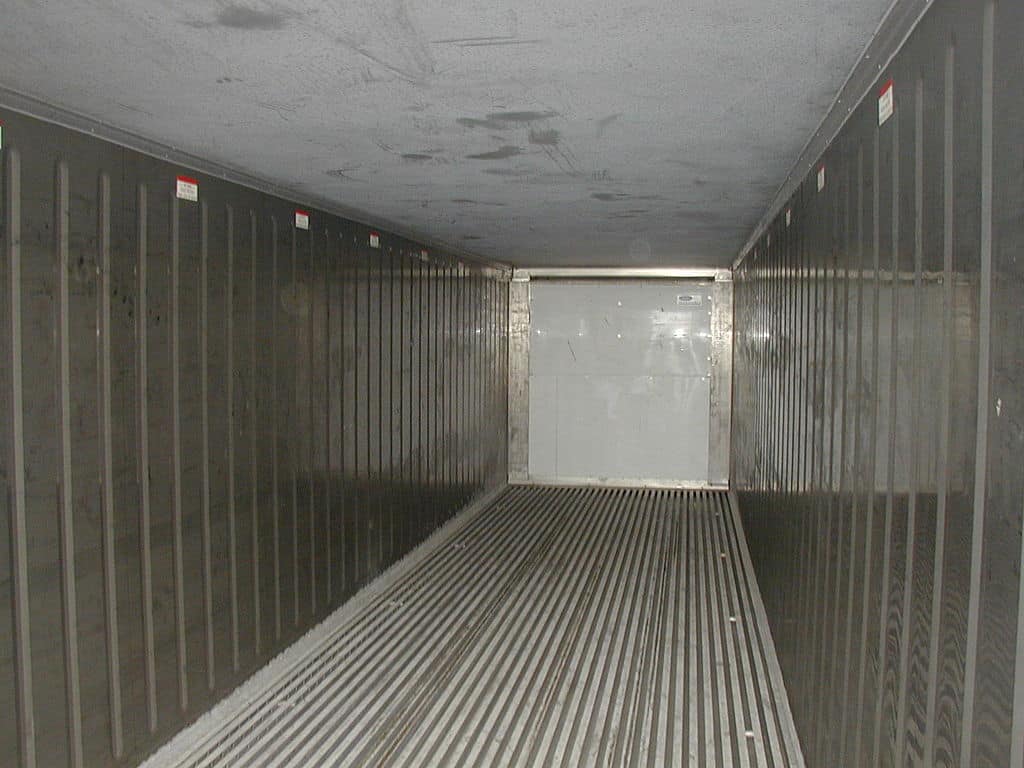
The idea of converting a shipping container into a usable space is appealing, but a fundamental misunderstanding of its properties in the UK climate can lead to project failure. An uninsulated shipping container is little more than a single-skin steel box. Steel is an excellent thermal conductor, meaning it transfers heat and cold with remarkable speed. On a cold night, the temperature of the internal steel surfaces will rapidly drop to match the outside air temperature.
This creates the perfect conditions for the primary challenge of any container project: condensation. The air inside a container will always contain a certain amount of moisture, introduced by people breathing, goods being stored, or simply from the ambient air when the container was sealed. When this relatively warm, moist internal air comes into contact with the cold steel surfaces, particularly the roof, it is rapidly cooled to its dew point. At this point, the air can no longer hold the moisture, which is released as liquid water droplets on the steel surface.
This phenomenon, often called "container rain," is not a minor inconvenience. The constant presence of moisture dripping from the ceiling and running down the walls has severe consequences. It accelerates the rust and corrosion of the steel structure itself, compromising its lifespan. It provides the ideal environment for the growth of mould and mildew on any internal surfaces and stored items, posing a health risk and causing damage to goods like furniture, textiles, and paperwork. Cardboard boxes will turn soggy, and internal timber frames or linings will begin to rot.
Therefore, insulation in a shipping container serves two critical and interconnected purposes. First, it creates a thermal barrier, slowing the transfer of heat and stabilising the internal temperature. Second, and more importantly, it works to keep the temperature of the innermost surface—the surface you can touch—above the dew point of the air inside the container. By preventing this surface from becoming cold, insulation stops condensation from forming in the first place. The decision to insulate is not a matter of comfort or preference; it is a technical prerequisite for the long-term viability and safety of the structure for almost any application.
BUY SHIPPING CONTAINER INSULATION
A Comparative Analysis of Insulation Materials for UK Projects
The choice of insulation material is one of the most important decisions in a container conversion. It is not simply a case of picking a product, but of selecting an entire insulation system. Each material comes with its own set of requirements for framing, vapour control, and installation, which have significant knock-on effects on cost, complexity, internal space, and regulatory compliance.
Spray Foam Insulation (Closed-Cell Polyurethane)
Closed-cell spray foam is a two-part liquid chemical system applied by a professional using specialised equipment. It is sprayed directly onto the container's internal steel surfaces, where it expands rapidly and hardens into a dense, rigid foam insulation.11 For shipping containers, closed-cell foam is the recommended type due to its structural rigidity and high resistance to moisture.
Advantages:
Seamless and Airtight Seal: This is the standout benefit of spray foam. As it expands, it conforms perfectly to the corrugated profile of the container walls and ceiling, filling every gap, nook, and cranny. This creates a single, monolithic layer of insulation with no joints or air pockets, completely eliminating the risk of condensation forming in voids behind the insulation.
Integrated Vapour Barrier: Closed-cell spray foam is impermeable to water vapour. It acts as its own insulation, air barrier, and vapour barrier in a single application, preventing any moisture from the interior from reaching the cold steel shell.
Structural Adhesion: The foam bonds tenaciously to the steel, which can contribute to the overall rigidity of the structure.
High Performance for Thickness: It provides excellent thermal insulation relative to its thickness, which is a valuable quality when trying to maximise the usable internal space of the container.
Disadvantages:
Cost: It is generally the most expensive insulation option, primarily due to the cost of the material and the need for professional installation.
Professional Installation Required: This is not a typical DIY product. Achieving a safe and effective application requires trained operatives with the correct protective equipment and calibrated machinery.
Permanence: Once applied, spray foam is exceptionally difficult to remove, making future modifications to the container shell complicated.
Rigid Foam Boards (PIR/EPS)
Rigid foam boards are pre-formed, lightweight panels of insulation, most commonly made from Polyisocyanurate (PIR) or Expanded Polystyrene (EPS). They are widely available from builders' merchants, with brands like Kingspan and Celotex being common examples.
Advantages:
DIY-Friendly: The boards are relatively easy for a competent DIYer to handle, cut to size with a hand saw, and install.
Good Thermal Performance: PIR boards in particular offer a very good level of insulation for their thickness, making them an efficient choice.
Cost-Effective: The material cost is typically lower than a professional spray foam installation.
Disadvantages:
The Corrugation Challenge: This is the fundamental weakness of using rigid boards in a container. The boards are flat, but the container walls are corrugated. It is impossible to achieve a continuous, gap-free fit against the steel surface. This leaves numerous air pockets between the insulation and the steel.
Risk of Interstitial Condensation: These air pockets are a major risk. Warm, moist air from inside the container will inevitably find its way through small gaps in the joints of the boards. When this air enters the pocket, it meets the cold steel and condenses. This leads to moisture becoming trapped behind the insulation, where it can cause hidden rust and mould growth, completely undermining the purpose of the insulation.
Requires Framing and Meticulous Sealing: To install rigid boards, an internal timber or metal stud frame must be built first. The boards are then fitted between the studs. To mitigate the risk of air leakage, every single joint between boards, and the entire perimeter, must be carefully sealed with specialised foil tape.
Mineral Wool Insulation 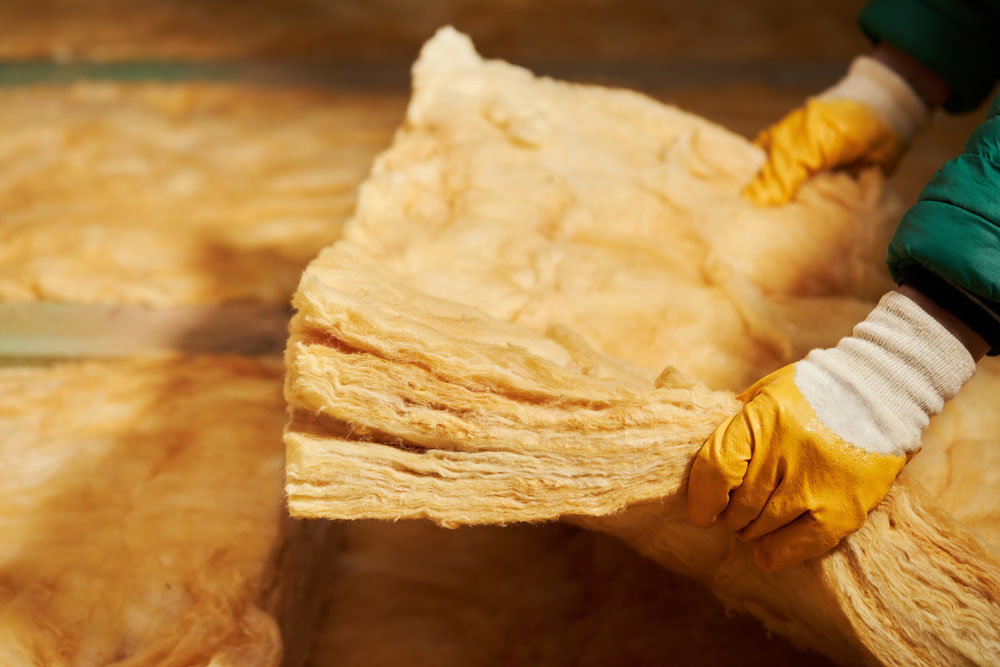
Mineral wool is a fibrous insulation material spun from molten rock (often called stone wool or Rockwool) or recycled glass (glass wool). It is supplied in flexible rolls or semi-rigid slabs (batts) and is a staple of the UK construction industry.
Advantages:
Excellent Fire Resistance: This is a key safety advantage. Mineral wool is classified as non-combustible, typically achieving a Euroclass A1 fire rating—the highest possible. It does not contribute to a fire, making it a very safe choice for habitable structures.
Acoustic Insulation: The fibrous structure is highly effective at absorbing sound, which can significantly reduce the noise of rain on the container roof and dampen other external sounds.
Cost-Effective: The material itself is one of the more affordable insulation options.
Disadvantages:
Separate Vapour Barrier is Essential: This is non-negotiable. Mineral wool is completely breathable and offers no resistance to water vapour. A separate, continuous Vapour Control Layer (VCL) membrane must be installed on the warm side of the insulation. If this VCL is not perfectly sealed, moisture from the interior will pass straight through the mineral wool, condense on the cold steel, and saturate the wool, causing its thermal performance to collapse and leading to severe damp problems.
Performance Degrades when Wet: If the insulation becomes damp for any reason, its ability to insulate is drastically reduced.
Requires a Frame: Like rigid boards, mineral wool batts must be installed within a stud frame, which reduces the final internal dimensions of the space.
Foil Insulation Kits and Multifoil Insulation
This category includes thin, layered insulation blankets that combine reflective foil surfaces with internal layers of wadding or bubble plastic. They are available either as pre-sized, self-fit kits designed for standard 10ft, 20ft, or 40ft containers, or as rolls of multifoil insulation (such as EcoQuilt or SuperQuilt) that can be cut to size.
Advantages:
Easy DIY Installation: Kits are specifically marketed for their ease of installation. They often come with pre-cut panels, a self-adhesive backing, and the necessary foil tape to seal the joints, making them accessible for DIY projects.
Space-Saving: These products are extremely thin (often around 4mm), which is a significant benefit in a narrow shipping container where every centimetre of internal space counts.
Integrated Vapour Barrier: The outer foil layers, when all joints and the full perimeter are correctly lapped and sealed with foil tape, create a continuous and effective Vapour Control Layer.
Radiant Heat Reflection: The reflective surfaces are effective at reflecting radiant heat, helping to keep the container cooler in summer and reflecting internal heat back into the space in winter.
Disadvantages:
Performance is Dependant on a Perfect Seal: The entire system's effectiveness as both an insulator and a vapour barrier relies on meticulous installation. Any un-taped joint, pinhole, or gap in the perimeter seal will create a path for moisture-laden air to pass through and condense on the steel.
Potentially Lower Thermal Performance: While manufacturers often provide equivalence figures to thick polystyrene , these products primarily manage radiant heat and prevent air movement. For a habitable conversion that needs to meet the strict thermal targets (U-values) of UK Building Regulations, a thin multifoil layer alone may not be sufficient and may need to be used in combination with another form of insulation.
Less Effective Against Conducted Cold: Compared to thick mass insulation like PIR or mineral wool, they are less effective at resisting conductive heat loss, which is a significant factor in the UK's cold winters.
Buy Shipping Container Insulation now
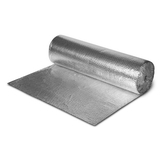
Table 1: Comparative Overview of Shipping Container Insulation Materials
| Material Type | Primary Advantage | Primary Disadvantage | Vapour Barrier Requirement | Installation Complexity | Typical Use Case |
| Closed-Cell Spray Foam | Seamless, airtight, and acts as its own vapour barrier. Conforms perfectly to corrugations. | High initial cost and requires professional installation. | Integrated within the foam. | High (Professional only). | Habitable conversions (homes, offices) where performance and longevity are paramount. |
| Rigid Foam Boards (PIR/EPS) | Good thermal performance and suitable for DIY installation. | Difficult to seal against corrugated walls, creating a high risk of hidden condensation if not perfectly installed. | Requires a separate, meticulously sealed Vapour Control Layer (VCL). | Medium | DIY workshops or studios where the installer is confident in achieving a perfect VCL seal. |
| Mineral Wool (Rockwool) | Excellent fire resistance (non-combustible) and acoustic insulation. | Highly permeable to moisture; performance collapses if it gets wet. | Requires a separate, meticulously sealed Vapour Control Layer (VCL). | Medium | Habitable conversions where fire safety and acoustic performance are the top priorities. |
| Foil Insulation Kits | Very thin (saves space) and easy for DIY installation. Often sold as a complete kit. | Performance is entirely dependent on achieving a perfect, continuous seal with foil tape. | The foil facing acts as the VCL when all joints are sealed. | Low to Medium. | Basic condensation control for storage, or as part of a hybrid system in a conversion. |
Best Practices for Installation: A System-Based Approach
The method of installation is just as important as the material itself. A high-performance material installed incorrectly will fail. The two main approaches are internal and external insulation, each with distinct processes and outcomes.
Internal Insulation: The Common Method
This is the most frequent approach, where a new insulated wall, floor, and ceiling structure is built inside the container. 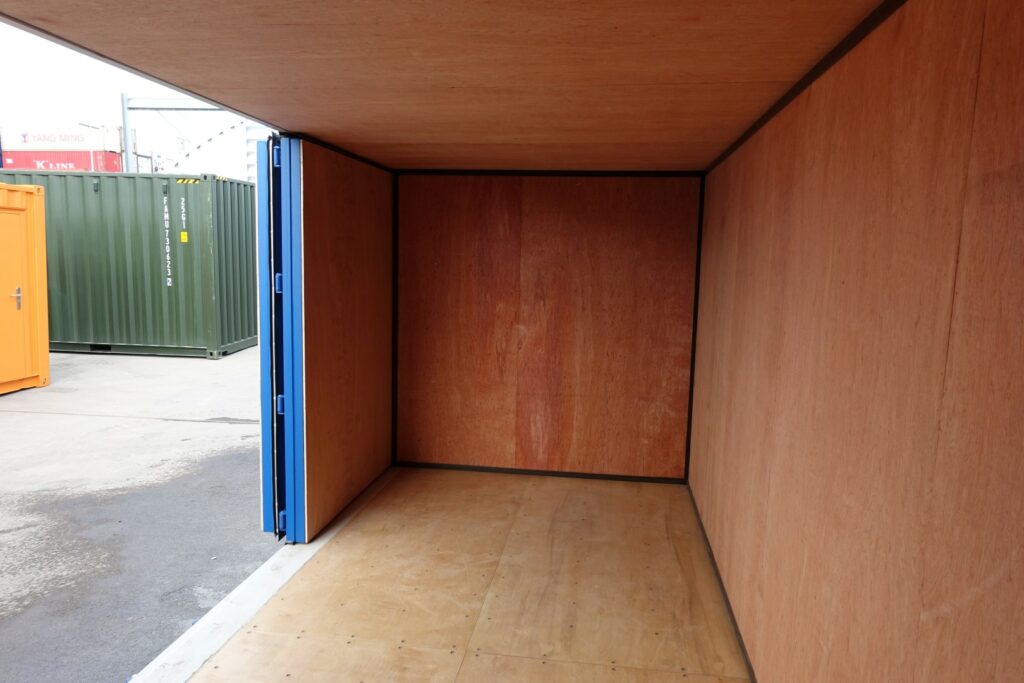
Preparation: The first step is to ensure the container's interior is completely clean, dry, and free from any flaking rust or contaminants. Any existing rust should be treated and painted with a suitable primer to prevent further corrosion under the new linings.
Framing: A supporting frame, typically made from timber or lightweight steel studs, is constructed inside the container. This frame creates the cavity that will hold the insulation. It is important that the frame is secured to the container's floor and ceiling, but not screwed or bolted through the external steel skin, as this would create multiple points for water to enter and act as thermal bridges, conducting cold directly through the fixings.
Insulation Installation: The chosen insulation material (rigid boards or mineral wool batts) is then cut and fitted snugly between the studs of the frame. It is vital to ensure there are no gaps or compression, as this will reduce performance.
Vapour Control Layer (VCL) Installation: This is arguably the most critical stage when using any insulation other than closed-cell spray foam. A continuous sheet of an impermeable membrane (e.g., polyethylene or a foil-backed sheet) must be installed on the warm side of the insulation—that is, the interior face of the stud frame. The membrane must be fixed securely, with all joints lapped by at least 100mm and sealed with the appropriate jointing tape. The VCL must be continuous across the entire surface of the walls and ceiling and carefully sealed around any openings for windows, doors, pipes, or electrical wiring. Any puncture or unsealed joint in this layer will allow warm, moist air to penetrate the insulation cavity, where it will condense on the cold steel and cause failure.
Service Void and Finishing: To protect the integrity of the VCL, it is good practice to fix a second, shallower set of battens over the top of it. This creates a service void, allowing electricians and plumbers to run cables and pipes without puncturing the crucial vapour barrier. Finally, the internal lining board, such as plasterboard or plywood, is fixed to these battens to create the finished interior surface.
External Insulation: The Technically Superior Method
A less common but technically better approach is to apply all insulation to the outside of the container. This method effectively wraps the entire steel structure in a warm blanket.
Advantages:
Maximises Internal Space: Because all the insulation and framing is on the outside, none of the container's valuable internal width and height is lost.
Eliminates Thermal Bridging: The entire steel structure of the container is kept on the warm side of the insulation. This completely prevents "cold bridging," where heat is lost rapidly through the steel frame itself, which is a major source of inefficiency with internal insulation methods.
Prevents Internal Condensation: With the steel shell kept warm by the external insulation, its internal surface temperature will always remain well above the dew point of the air inside. This makes it physically impossible for condensation to form on the inside of the container's walls or ceiling.
Process and Disadvantages:
The main drawbacks are cost and complexity. The process involves fixing insulation (typically rigid foam boards or spray foam) directly to the exterior of the container. This insulation must then be protected from weather, UV radiation, and physical damage by an outer layer of cladding. This could be timber battens and boards, metal sheeting, or a rendered finish. This process is more complex, significantly more expensive, and completely changes the industrial aesthetic of the shipping container.
The "Flash and Bat" Method: A Hybrid Approach
This is an advanced technique that combines the best attributes of spray foam and mineral wool to create a high-performance hybrid system.
The process involves first applying a thin layer, or "flash coat," of closed-cell spray foam (typically 25-50mm thick) directly to the internal steel surfaces. This initial layer perfectly seals all the corrugations, creates an airtight finish, and acts as a complete, bonded vapour barrier, solving the primary condensation risk at its source. After the foam has cured, a conventional timber stud frame is built inside. The cavity is then filled with cost-effective and non-combustible mineral wool batts to provide the bulk of the thermal and acoustic insulation. This method delivers the guaranteed airtightness and vapour control of spray foam while using a cheaper and more fire-resistant material for the main insulation layer, offering a balanced solution of performance, safety, and cost.
Navigating UK Building Regulations: A Practical Guide for Habitable Conversions
If a shipping container is to be used as a habitable space—such as a dwelling, office, garden room, or workshop—it is legally defined as a 'building'. As such, it must comply with the UK Building Regulations. This is not optional. The project will require an application to the local authority's Building Control department, which will inspect the work to ensure it meets the required standards. Failure to comply can result in enforcement action, including orders to rectify the work or even remove the structure. Two of the most relevant parts of the regulations for insulation are Part L (Energy Efficiency) and Part B (Fire Safety).
Part L: Conservation of Fuel and Power
Part L of the Building Regulations sets the standards for the energy efficiency of buildings. Its primary goal is to ensure that new buildings are constructed in a way that conserves fuel and power by limiting heat loss through the building fabric.
The key metric used in Part L is the U-value. A U-value measures the rate at which heat transfers through a building element like a wall, floor, or roof. It is expressed in units of Watts per square metre Kelvin (W/m2K). A lower U-value signifies a slower rate of heat loss and therefore better insulation performance.
For a new dwelling, which a container home would be classed as, Approved Document L, Volume sets out specific target U-values that the construction must achieve. While there is some flexibility through a whole-building calculation method (SAP), adhering to the "notional dwelling" U-values is a straightforward way to demonstrate compliance. The key targets are:
Walls: 0.18 W/m2K
Floors: 0.13 W/m2K
Roofs: 0.11 W/m2K
Achieving these very low U-values has a significant practical implication for a container conversion. It requires a substantial thickness of high-performance insulation. For instance, to reach a wall U-value of 0.18 W/m2K, a builder might need to install around 150mm of PIR rigid board insulation or as much as 270mm of mineral wool.44 This directly impacts the project's design, as this thickness must be accommodated within the container, leading to a considerable reduction in the final usable internal space. This challenge forces a trade-off between regulatory compliance and living area, making the choice of insulation material and installation method (internal vs. external) a critical design decision.
Part B: Fire Safety
Part B of the Building Regulations deals with all aspects of fire safety. For insulation and internal finishes, the key requirement is to limit the potential for fire to start and spread across surfaces.
Materials used for the internal linings of walls and ceilings are classified according to their "reaction to fire" performance under a European testing regime, known as the Euroclass system. This system rates materials from Class A1 (completely non-combustible) down to Class F (easily flammable). The classification also includes ratings for smoke production ('s' rating) and the production of flaming droplets ('d' rating).
For dwellings, Approved Document B, Volume 1 specifies the minimum performance required for wall and ceiling linings in different locations :
Rooms (e.g., living areas, bedrooms, kitchens): Linings must achieve a minimum of Euroclass C-s3, d2.
Circulation Spaces (e.g., hallways, landings, protected stairways): Linings must also achieve a minimum of Euroclass C-s3, d2.
This has direct consequences for material selection. Standard plasterboard generally meets the Class C requirement. However, if a homeowner wishes to use a timber finish, such as plywood or tongue-and-groove cladding, this material would need to be factory-treated with a fire retardant to be upgraded to the necessary fire classification.
The choice of insulation material itself is also a major fire safety consideration. While the regulations focus on the surface lining, the material behind it is hugely important. Non-combustible mineral wool (Class A1) adds a significant layer of passive fire protection to the structure. In contrast, plastic foam insulations like PIR, EPS, and spray foam are combustible (typically Class B to F).24 While they are permitted behind a compliant lining, they represent a higher fire load within the wall structure compared to mineral wool. This creates a direct conflict between the goals of Part L and Part B. To achieve the best thermal performance in the minimum space (satisfying Part L), one might choose a thin PIR board. However, to achieve the highest level of inherent fire safety (addressing the principles of Part B), one would choose non-combustible mineral wool, which would require a much thicker build-up and consume more internal space. This trade-off is a central challenge in container design.
Table 2: UK Building Regulations Compliance Summary for Habitable Container Conversions
Part A: Part L – Conservation of Fuel and Power (Notional Targets for New Dwellings)
Building Element |
Target U-Value (W/m2K) |
| Wall | 0.18 |
| Floor | 0.13 |
| Roof | 0.11 |
Part B: Part B – Fire Safety (Internal Linings)
Location in Dwelling |
Minimum Lining Classification (Euroclass) |
| Rooms (Living, Bedroom, Kitchen etc.) | C-s3, d2 |
| Circulation Spaces (Hallways, Landings) | C-s3, d2 |
The Essential Role of Ventilation
Creating a well-insulated, perfectly sealed, and airtight container is excellent for energy efficiency, but it creates a new problem: the air inside has nowhere to go. Without a dedicated ventilation strategy, the internal environment will quickly become unhealthy. 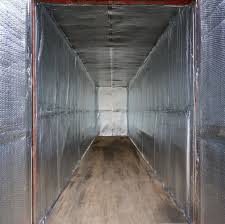
Everyday activities inside a habitable space generate significant amounts of moisture. Breathing, cooking, showering, and drying clothes all release water vapour into the air. In an airtight container with no ventilation, this moisture becomes trapped. The internal humidity level will rise, and even in a well-insulated structure, condensation can begin to form on the coldest available surfaces, such as window panes, leading to damp and mould growth. Furthermore, stale air can accumulate pollutants and carbon dioxide, leading to poor indoor air quality.
Ventilation is therefore essential to purge this moist, stale air and replace it with fresh air from outside. There are several ways to achieve this:
Passive Ventilation: This is the simplest method, involving the installation of vents that allow air to move naturally. Typically, louvered vents are installed in pairs on opposite walls or at high and low levels to encourage cross-flow and convection. While suitable for basic storage, passive vents alone are often insufficient for a habitable dwelling.
Mechanical Extract Ventilation: For spaces that generate a lot of moisture, like kitchens and bathrooms, Building Regulations will require mechanical extractor fans. These fans actively pull the moist air out of the building at its source, preventing it from circulating.
Mechanical Ventilation with Heat Recovery (MVHR): This is a whole-house system that is particularly well-suited to highly airtight structures like an insulated container. An MVHR unit uses two fans: one to extract stale, moist air from wet rooms (kitchen, bathroom) and another to supply fresh air to habitable rooms (living room, bedrooms). Inside the unit, a heat exchanger allows the heat from the outgoing stale air to be transferred to the incoming fresh air, recovering energy that would otherwise be lost. This provides excellent air quality without a significant energy penalty and is a key technology for meeting the stringent energy targets of Part L.
Conclusion: Key Decisions for a Successful Project
Successfully insulating a shipping container in the UK is a technical challenge that requires a systematic approach. The project's success hinges on a series of key decisions that must be made with a clear understanding of the underlying principles.
The first and most important distinction is between a container used for simple storage and one intended for habitation. For basic storage of non-sensitive goods, the primary goal is condensation control, which can be achieved with relatively simple solutions like anti-condensation paints, desiccant poles, or a basic foil insulation kit. For any habitable use, however, the project must be treated as a proper construction project, engaging with the full scope of materials, installation methods, and regulations outlined in this guide.
The choice of insulation is not a standalone decision but the selection of an integrated system. A builder must consider the material, the required framing, the critical vapour control strategy, and the ventilation as a single, holistic system where each component affects the others. Closed-cell spray foam offers a robust, all-in-one solution but at a high cost. Rigid boards and mineral wool are viable alternatives but shift the burden of performance onto the perfect execution of a separate vapour control layer, a point of high potential failure if not done correctly.
For any project intended for human occupation, compliance with UK Building Regulations Part L and Part B is a legal necessity. The stringent thermal targets of Part L demand thick, high-performance insulation, which directly competes with the need to preserve internal space. The fire safety requirements of Part B guide the selection of internal linings and place a further constraint on the choice of insulation material.
Ultimately, the most critical advice for anyone embarking on a habitable container conversion is to engage with their local authority's Building Control department at the earliest possible stage of design. Discussing the plans for insulation, ventilation, and fire safety with an officer before work commences is the surest way to ensure the project is safe, legal, and successful, avoiding the risk of costly remedial work down the line.
Legal Disclaimer
The information contained in this article is provided for general information purposes only. The information is provided on the understanding that it does not constitute legal, construction, engineering, or other professional advice on any subject matter.
While we endeavour to keep the information up to date and correct, we make no representations or warranties of any kind, express or implied, about the completeness, accuracy, reliability, suitability, or availability with respect to the article or the information at your own risk.
In no event will we be liable for any loss or damage including without limitation, indirect or consequential loss or damage, or any loss or damage whatsoever arising from loss of data or profits arising out of, or in connection with, the use of this article. This article is not a substitute for professional advice. You should not act or refrain from acting on the basis of any content included in this site without seeking the appropriate legal, architectural, engineering, or other professional advice from a person qualified in the relevant field. The content of this article does not create a professional-client relationship. You should consult your professional adviser for legal or other advice.

Samuel Hitch
Managing Director
Buy Insulation Online.
Leave A Reply
Your feedback is greatly appreciated, please comment on our content below. Your email address will not be published. Required fields are marked *