
- Blogs
- A Comprehensive Guide: The Benefits of Jablite Expanded Polystyrene Insulation in the UK
A Comprehensive Guide: The Benefits of Jablite Expanded Polystyrene Insulation in the UK
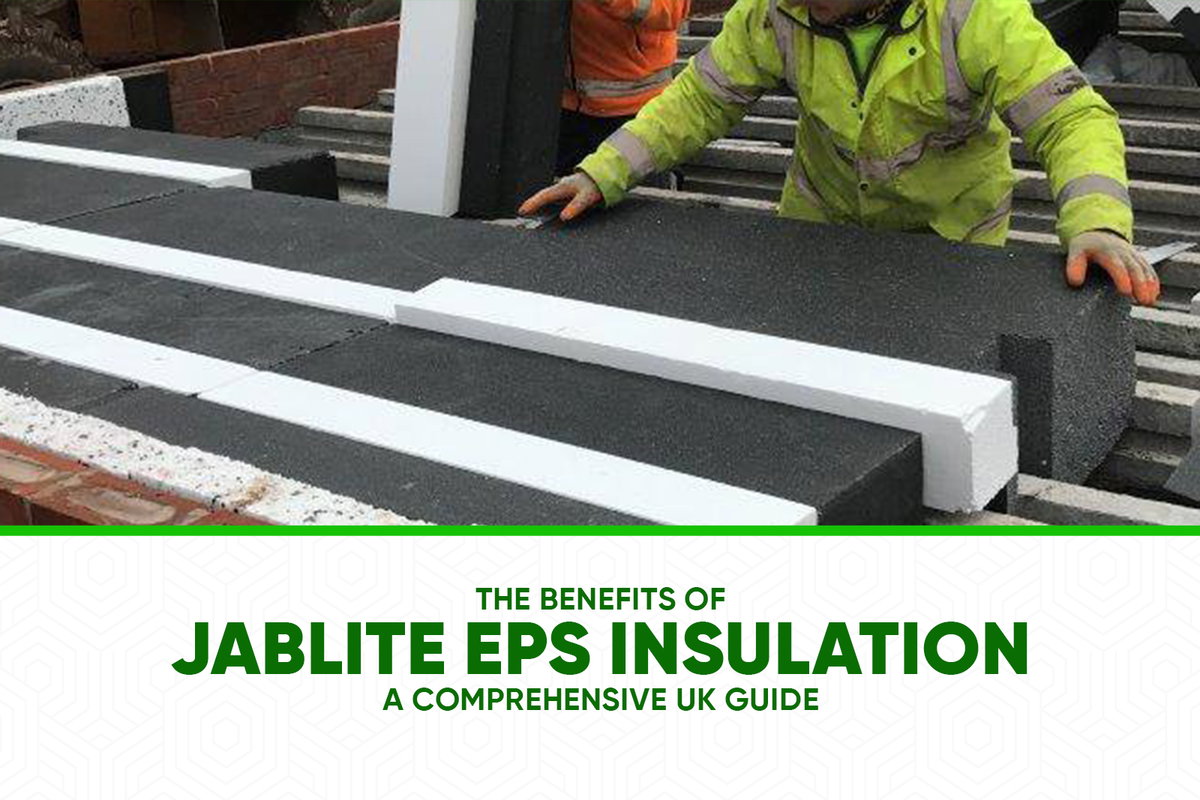

TLDR: Quick Summary of Jablite EPS Advantages for UK Construction
Jablite is a lightweight, closed-cell Expanded Polystyrene (EPS) material widely used for permanent insulation in UK floors, walls, and roofs.
This material delivers consistent, long-term thermal performance, substantiated by British Board of Agrément (BBA) certification, ensuring compliance with current UK Building Regulations. The High Performance Plus (HP+) range features a graphite carbon additive, providing approximately 20% greater thermal capacity than standard EPS, facilitating thinner build-ups.
Jablite is rot-proof, biologically inert, and flood-proof, offering high durability and exceptional compressive strength suitable for commercial and residential floors (up to EPS500 grading). Furthermore, it supports sustainable construction practices, being 100% recyclable and manufactured using low energy processes, with products achieving an A+ rating in the BRE Green Guide to Specification.
1. Jablite: A Trusted UK Specialised Solution for Building Insulation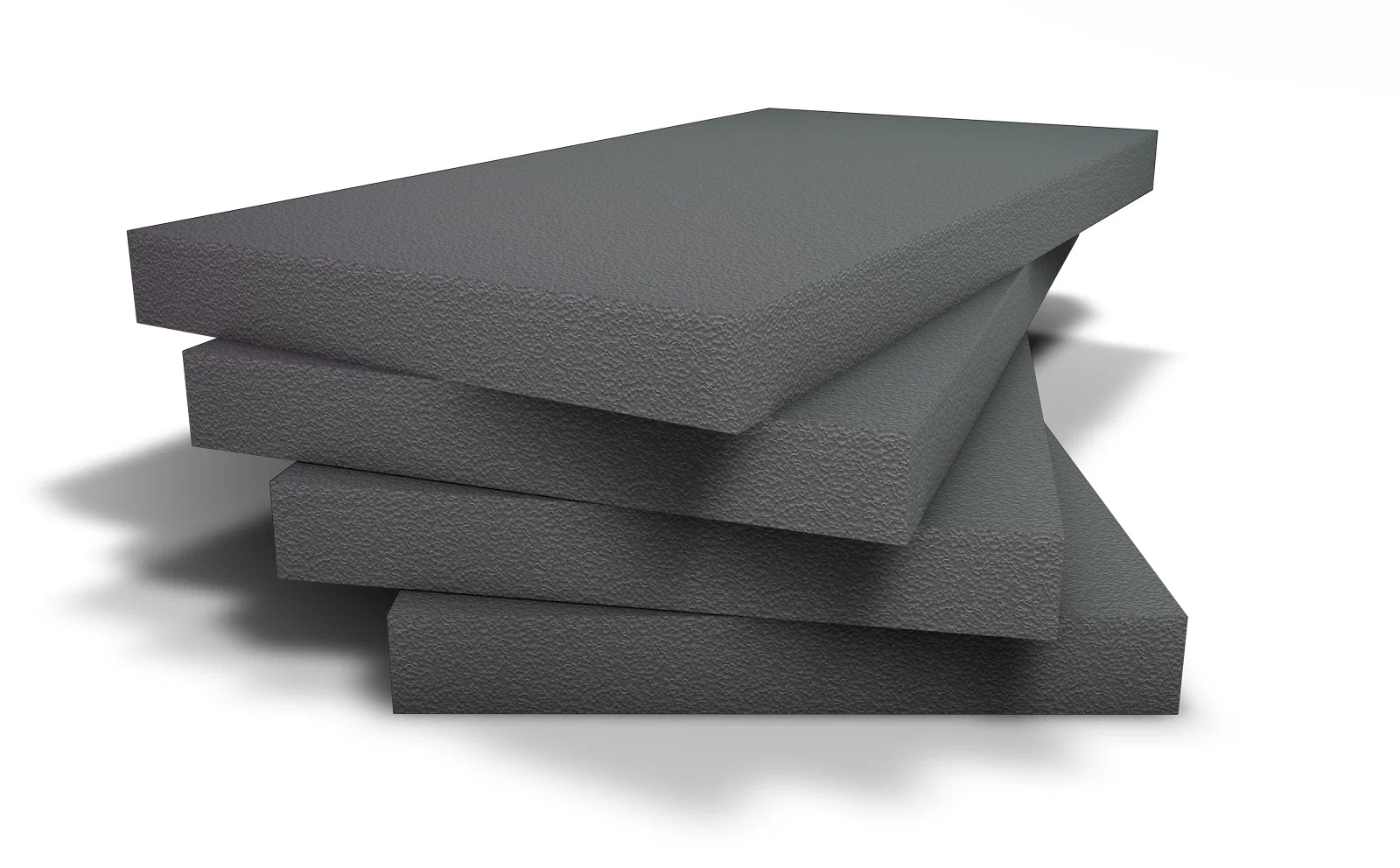
1.1 Defining Expanded Polystyrene (EPS) in Modern UK Construction
Jablite Expanded Polystyrene (EPS) is a cellular plastic material characterised by its lightweight, closed-cell structure. This internal configuration, which effectively traps air, forms the basis of its effectiveness as an insulating medium by restricting heat flow. The material is highly versatile, clean, non-irritant, and exceptionally light in weight, characteristics which aid handling and installation efficiency across varied UK construction sites.
Jablite EPS is engineered for performance consistency across typical environmental conditions, and is suitable for use within an extensive service temperature range, from 150 to 80. This capacity makes it reliable for standard residential and commercial building envelopes, and also qualifies it for highly specific, demanding applications such as cold stores.
1.2 A Heritage of UK Manufacturing, Quality, and Reliability
Jablite was established in 1973 and holds a prominent position as one of the UK's largest producers of expanded polystyrene products, providing solutions for insulation and civil engineering requirements. This longevity in the UK market is coupled with a commitment to stringent procedural rigour.
The manufacturing facilities operate under formal quality management systems, assessed and registered as meeting the requirements of BS EN ISO 9001 and ISO 14001. This adherence to international standards confirms rigorous control over both the quality of the product and the environmental performance of the manufacturing process and supply chain. For trade professionals, the continuous maintenance of these standards, supported by decades of history as a major UK producer, positions Jablite as a provider of low-risk, consistently performing material. This verifiable history and robust certification base provide crucial technical documentation necessary for design specification, effectively reducing the exposure to product quality assurance risks for site managers and developers.
1.3 Understanding the Jablite Product Range: Standard vs. High Performance Plus
The core product line, typically branded as Jabfloor, is a closed-cell EPS board specifically designed for use across all floor constructions, including below screed and below chipboard applications.
A more advanced variant is the High Performance Plus (HP+) range, which is easily distinguished by its graphite grey colour. This pigmentation is a result of incorporating a carbon additive, specifically graphite, into the manufacturing process. This additive modifies the thermal mechanism of the board, contributing to its superior thermal efficiency. The HP+ technology offers approximately 20% better insulation capacity compared to standard white EPS.
2. Assured Compliance and Meeting UK Building Standards
2.1 Verification by the British Board of Agrément (BBA)
Jablite products are independently verified and certified by the British Board of Agrément (BBA), a critical standard for acceptance within UK construction. This certification process involves extensive technical investigation, assessment criteria, installation guidance, and regular surveillance of the production facility. The BBA verification confirms that the product is deemed "fit for its intended use," provided that installation and maintenance follow the exact guidelines set out in the Certificate documentation.
For example, Agrément Certificate 87/1796 confirms the long-term suitability of Jabfloor products, with some having been certificated since 1987. This longevity of independent assessment provides specifiers with strong confidence in the material's consistency within the changing UK regulatory landscape.
2.2 Alignment with Current UK Thermal Requirements
A primary purpose of specifying Jablite EPS is to meet, or surpass, the stringent thermal performance standards mandated by UK Building Regulations for walls, floors, and roofs.
The material's efficiency is quantified using the declared thermal conductivity, which is independently verified during the BBA assessment. This foundational metric is used by construction professionals to accurately calculate the overall U-value of the building element, ensuring regulatory compliance is achieved through appropriate thickness selection.
2.3 Jablite’s Contribution to NHBC Standards for Residential Buildings
For new residential developments requiring an NHBC warranty, specific construction systems must be verified as compatible. The BBA confirms that the Jablite Thermal Floor System can contribute to satisfying the relevant requirements within NHBC Standards, specifically Chapter 5.2 concerning Suspended ground floors.
This level of detailed compliance assurance moves the BBA certificate beyond a general claim of quality. It provides actionable, prescriptive data that designers must integrate to secure formal warranty and building control sign-off. For instance, the BBA certification explicitly confirms compatibility with structural concrete toppings that incorporate reinforcement such as macro-polymer, steel fibres, and steel mesh, while noting that NHBC Standards do not accept micro-polymer fibre structural concrete toppings in this specific context. This regulatory specificity confirms that Jablite is designed to operate reliably within the interconnected requirements of UK building component systems and national quality assurance schemes.
2.4 Fire Safety Characteristics
Fire performance is an integral consideration in material specification. Jablite insulation boards are formulated to incorporate a Class E fire retardant additive, ensuring that the products meet important safety specifications relevant to their intended applications.
3. Optimising Thermal Performance: Efficiency and Consistency
3.1 The Consistent Performance of Closed Cell Expanded Polystyrene
Jablite EPS is prized for its consistency and reliable thermal performance over time. The material’s stable, closed-cell structure ensures that its insulating capacity, which relies on trapped air, remains effective for the entire lifespan of the building when correctly installed.
This stability offers a distinct advantage in long-term performance prediction compared to certain alternative insulation products, such as PIR (Polyisocyanurate) board, which encapsulate a blowing agent gas. This gas can leak out over several decades, potentially reducing the material's initial high thermal efficiency. For a specifier, the cost-effectiveness of Jablite, often substantially lower than PIR , combined with its guaranteed, indefinite thermal stability, represents a demonstrable superior total economic value in a lifecycle cost analysis.
Buy Jablite EPS Insulation
3.2 Interpreting Thermal Conductivity (lambda_D) and Material Efficiency
Thermal conductivity (lambda_D) is the standard metric used to compare material efficiency. Lower values signify better insulation. Jablite’s BBA-verified figures, for example 0.034 { W/mK}, are the basis for calculating U-values and determining the necessary thickness of the board required to achieve regulatory compliance.
3.3 Introducing Jablite High Performance Plus (HP+): Carbon Additive Technology
The advanced High Performance Plus (HP+) range represents a step change in EPS efficiency. This technology relies on the incorporation of a graphite carbon additive, which gives the boards their grey colour.
This additive enhances performance by actively dispersing and reflecting heat radiation that passes through the material. By interrupting this radiant heat transfer mechanism, the reflective technology provides approximately 20% better insulation capacity than conventional white EPS. This translates directly into practical benefits for construction projects facing space constraints, as it permits the use of thinner boards to meet specific, often demanding, U-value targets.
3.4 Mitigating Condensation Risk within the Building Fabric
Effective insulation must manage not only heat flow but also moisture migration. The BBA assessment confirms that Jablite products, when correctly integrated into a building system, contribute effectively to limiting the risk of condensation forming, both on surfaces and interstitially within the fabric of the structure.
Jablite EPS Thermal and Cost Performance Comparison
| Criteria | Jablite EPS (Standard/HP+) | Typical PIR Board | Mineral/Glass Wool |
| Core Thermal Stability | Consistent and effective for the full life of the structure | Potential for reduction in thermal performance over decades due to gas leakage | High long-term stability provided moisture protection is maintained |
| Cost-Effectiveness | Highly competitive and cost-effective, potentially offering substantial material savings | Higher initial unit material cost due to superior initial | Varies widely; often economical for filling cavities (stud walls, lofts) |
| Durability (Moisture) | Flood-proof, rot-proof, and moisture resistant | Requires protective facing (foil) to maintain performance; susceptible to damage if compromised | Thermal and structural properties severely compromised by damp/water ingress |
| Handling Characteristics | Very lightweight, non-irritant, clean, and easy to cut and install | Requires more care in handling to protect foil face; produces dust when cutting | Requires full protective gear (RPE, gloves) due to fibre irritation |
| Application Suitability | Excellent for floors requiring high compressive strength, compatible with UF heating | Preferred where space is extremely limited due to superior initial thermal performance | Ideal for irregular or non-load bearing applications (lofts, stud walls) |
4. Versatility in Application: Insulating Floors, Walls, and Roofs
4.1 Floor Insulation: Engineering Structural Support (Jabfloor Range)
Jablite EPS, particularly the Jabfloor range, is specified across a broad spectrum of floor constructions common in the UK, including ground-bearing slabs, precast suspended concrete floors, and beam-and-block systems.
A key technical advantage is the availability of specific compressive strength grades. Jablite is supplied in grades such as EPS 70, EPS 100, and highly specialised grades up to EPS 500, with the higher grades possessing exceptional compression properties suitable for heavy industrial or commercial loads. This grading system is not simply a product choice but a crucial design parameter directly linked to satisfying structural warranties and building control sign-offs. Specifying the correct grade ensures that the insulation layer, which is often beneath the main load-bearing element (e.g., screed), remains dimensionally stable and capable of supporting the specified structural loads for the building's duration. Failure to specify the correct grade could result in structural failure of the floor finish, making precise selection vital for long-term compliance.
Jablite is routinely used below a slab with concrete poured on top, above a slab beneath a concrete screed, and beneath chipboard overlays, sometimes supplied pre-laminated as a walk-on board. Its structural capacity and consistent performance also make it fully compatible with modern underfloor heating systems, helping to minimise downward heat loss.
4.2 Walls, Roofs, and Specialised Applications
Jablite is used in both wall and roof construction. For walls, it can be applied to significantly improve the thermal envelope of external walls (EWI) or used in internal lining systems, providing a lightweight yet robust solution.
For roofs, the boards are specified for pitched and flat installations. In flat roof systems, they are designed to protect underlying waterproof membranes and can also facilitate specialised construction, such as green roof installations.
Beyond standard insulation, Jablite also provides specialised civil engineering solutions, including products such as Claymaster for clay heave protection and Fillmaster for structural void forming and structural fill beneath foundations, supporting overall stability.
Typical Jablite Jabfloor Product Grades and Applications
| Product Grade (EPS) | Minimum Compressive Strength (kPa) | Typical UK Application Area | Key Compliance Function |
| EPS 70 | 70 | Domestic ground floors, loft installations, non-load bearing walls | Economical solution meeting standard UK thermal performance requirements |
| EPS 100 | 100 | Standard suspended and ground-bearing floors, light commercial use | Suitable for standard residential uniform floor loading requirements |
| EPS 150/200 | 150 / 200 | Medium commercial floors, specialist domestic uses requiring high rigidity | Provides stability and robustness under elevated point or distributed loads |
| EPS 500 | 500 | Heavy industrial floors, specialist cold store applications, high-density traffic areas | Offers exceptional compression properties for stringent load-bearing specifications |
5. Durability, Longevity, and Environmental Responsibility
5.1 Resistance to Moisture and Biological Agents
Jablite EPS is dimensionally stable and known for its exceptional durability. It is entirely rot-proof, biologically inert, and chemically non-reactive in normal conditions. This resistance prevents decomposition, mould growth, or pest infestation, which can compromise the structural integrity and air quality of a building.
Crucially, Jablite is rated as flood-proof. This inherent resilience to moisture ingress ensures that the material maintains its thermal performance even after severe water exposure. In a climate increasingly affected by extreme weather, this status offers a form of long-term economic resilience, as the material can recover its function without requiring expensive and disruptive replacement associated with mitigating water damage, particularly in flood-prone UK areas.
5.2 Longevity and Lifecycle Performance
When correctly installed and protected within the fabric of the structure, Jablite EPS is dimensionally stable and provides an insulating layer that remains effective for the projected life of the building. This permanence is a significant factor in calculating the long-term energy efficiency and operational cost of a property. BBA verification explicitly confirms that the material's durability prevents the formation of gaps over time that could otherwise lead to thermal bridging, ensuring the long-term integrity of the thermal envelope.
5.3 Sustainability and Recyclability
The manufacture of Jablite EPS employs low energy processes, contributing to a reduced embodied carbon impact. Furthermore, Jablite supports the circular economy by being 100% recyclable. This commitment to resource efficiency helps to significantly reduce construction and demolition waste destined for landfill. These environmental credentials are independently assessed, resulting in an A+ rating in the BRE Green Guide to Specification , supporting projects that require adherence to BREEAM or other sustainable building metrics.
6. Practical Considerations for Installation and System Integration 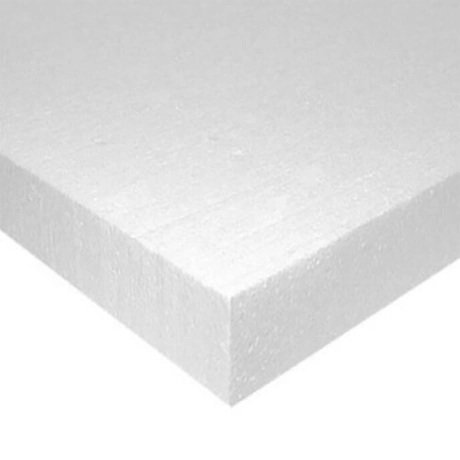
6.1 Ease of Handling and Safety
Jablite’s lightweight nature and clean, easily manageable characteristics streamline the installation process. This attribute translates directly into faster project completion times and reduced labour strain compared to alternative insulation materials.
6.2 Specific Material Interaction Cautions
While Jablite is generally inert, professionals must adhere to strict guidelines regarding chemical compatibility. The material is soluble in certain chemicals, including aromatic, halogenated solvents, and ketones, and must be protected from contact with hydrocarbons and strong solvents by installing a suitable membrane barrier.
A highly specific system integration caution relates to electrical installations. Jablite EPS must not be allowed to come into direct contact with PVC-sheathed electrical cables. Direct contact leads to the migration of plasticiser chemicals from the PVC sheath, which causes the embrittlement and eventual structural failure of the cable insulation. Because this degradation is a slow process, the resulting safety hazard may not materialise until long after the building is occupied. Therefore, successful application requires mandatory coordination between the thermal envelope designer and the electrical services installer to implement protective barriers, such as enclosing the cables in a dedicated conduit or maintaining a continuous air gap separating the cable from the insulation material.
6.3 Installation Protocols
To guarantee that the declared thermal performance and load-bearing capacity are achieved, installers must strictly adhere to the specific design considerations and installation guidance detailed within the BBA Certificate documentation.4 This includes proper cutting techniques, ensuring tight jointing between boards, and securely fixing the boards to prevent movement and mitigate thermal bypass.
Conclusions
Jablite Expanded Polystyrene insulation represents a highly reliable and technically compliant choice for UK construction professionals. Its primary advantages stem from the long-term consistency of its thermal performance, its exceptional durability (rot-proof, flood-proof), and its economic advantages, often offering lower initial material costs than high-performance alternatives without sacrificing long-term effectiveness.
The verified technical data, including BBA certification and specific NHBC compatibility statements, provide necessary assurance for navigating complex regulatory and warranty requirements. Furthermore, specialised products like the HP+ range address modern demands for thinner, more efficient build-ups through graphite enhancement. Ultimately, the successful application of Jablite hinges upon strict adherence to installation guidelines, particularly concerning structural grading and critical system integration notes, such as the mandatory separation from PVC electrical cables, ensuring structural and electrical safety for the full lifespan of the building.
UK Legal Disclaimer
IMPORTANT NOTICE: DISCLAIMER REGARDING TECHNICAL SPECIFICATION AND ADVICE
This article is provided purely for general information and background purposes related to insulation materials and their potential application within the UK construction industry. While every reasonable effort has been made to ensure the accuracy and technical veracity of the information presented, this content is published without any express or implied warranty or representation regarding its completeness, fitness for purpose, or current applicability to specific regulatory frameworks.
This article should not, under any circumstances, be relied upon as definitive technical advice, design specification, or a substitute for professional consultation. Insulation requirements, material specification, fire safety regulations, and building control compliance are highly dependent on the individual circumstances of a construction project, including geographical location, building type, and other site-specific factors.
All design choices, material specifications, and installation methodologies must be thoroughly checked and verified by qualified, competent professionals, including architects, structural engineers, and building surveyors, before procurement or installation begins. Compliance with all relevant UK Building Regulations, NHBC Standards, and local authority requirements remains the sole responsibility of the project designer and installer. Reliance upon any information contained herein is entirely at the reader’s own risk.

Samuel Hitch
Managing Director
Buy Insulation Online.
Leave A Reply
Your feedback is greatly appreciated, please comment on our content below. Your email address will not be published. Required fields are marked *