
- Blogs
- A Comprehensive Guide to Materials in UK Skyscraper Construction
A Comprehensive Guide to Materials in UK Skyscraper Construction
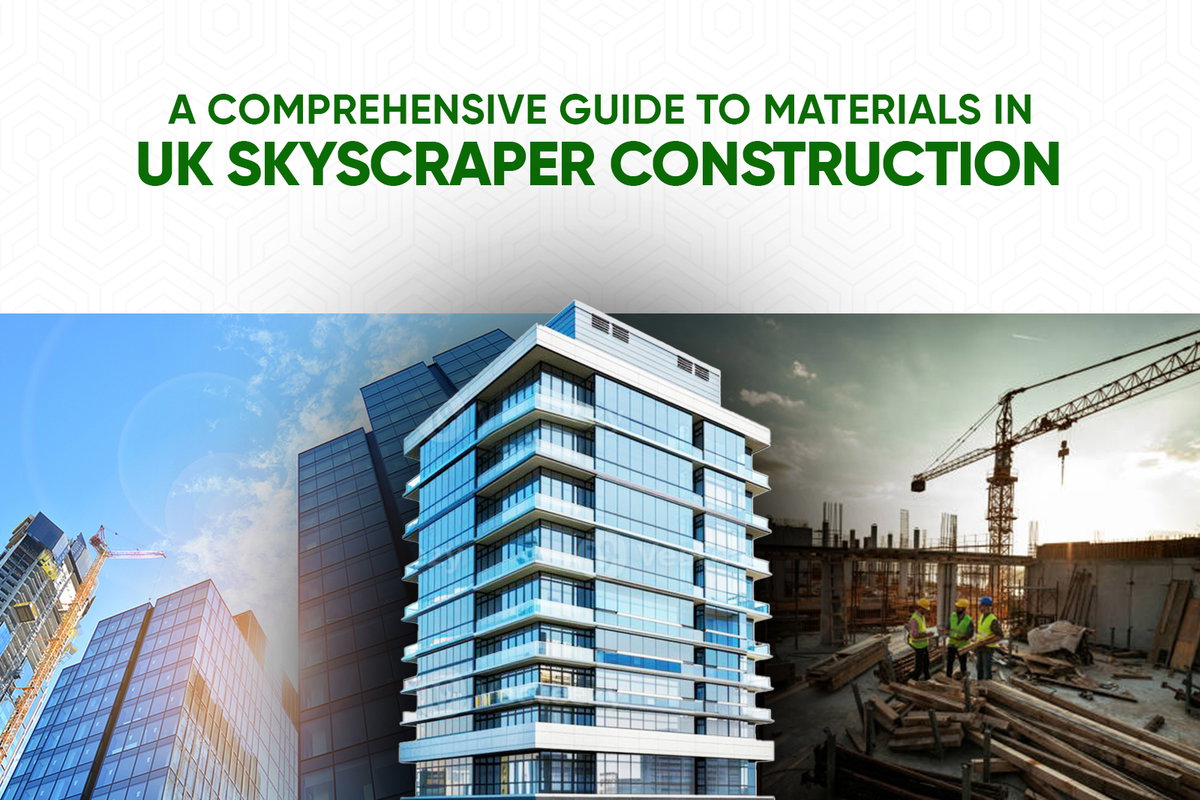


TLDR: UK skyscrapers are built using a combination of high-strength structural steel, advanced reinforced concrete, and high-performance glazing systems. Their design and construction are rigorously governed by the UK Building Regulations, particularly Approved Documents A (Structure), B (Fire Safety), and L (Energy Conservation). Modern Methods of Construction, including off-site manufacturing and Building Information Modelling (BIM), are increasingly pivotal for delivering these complex structures efficiently and to a high standard.
Introduction: The Blueprint of a Modern UK Skyscraper
The skylines of the United Kingdom's major cities are increasingly defined by tall buildings that stand as monuments to advanced engineering and architectural ambition. These structures are not merely collections of building materials; they are complex, integrated systems born from a sophisticated interplay between material science, stringent safety regulations, and innovative construction processes. The selection of materials for any high-rise project in the UK is a decision-making process shaped by a convergence of powerful forces.
At the core of any skyscraper are its primary physical components: structural steel, reinforced concrete, and advanced glazing. These materials are chosen for their inherent properties of strength, durability, and performance. Steel provides the skeletal framework, concrete offers the stabilising mass, and glass creates the protective, transparent envelope. The capabilities and limitations of these materials set the physical boundaries for what can be designed and built.
Governing this entire process is the UK's robust legal and regulatory framework. The Building Regulations, supported by detailed guidance in the Approved Documents, establish the non-negotiable standards for structural integrity, fire safety, and energy efficiency. These regulations are not a secondary consideration but a primary design driver, shaping the building's form and fabric from the earliest conceptual stages. The choice of any material or system is directly influenced by its ability to meet these exacting legal requirements.
Finally, the methods by which these buildings are realised are undergoing a profound transformation. Modern Methods of Construction (MMC), underpinned by digital technologies like Building Information Modelling (BIM), are shifting the focus from traditional on-site activities to controlled, factory-based manufacturing and assembly. This evolution in process has a direct impact on material selection, design coordination, and the overall quality and efficiency of skyscraper construction. The modern UK skyscraper is therefore a product of these interconnected domains: the potential of its materials, the mandates of its regulations, and the innovation of its construction processes.
The Structural Core: High-Strength Steel and Reinforced Concrete 
The ability of a skyscraper to withstand the immense forces of gravity and wind rests upon its structural system. In the UK, this is almost universally a hybrid system that leverages the distinct advantages of high-strength steel and reinforced concrete, creating a structure that is both strong and efficient.
High-Strength Structural Steel: The Essential Framework
The "skeleton" of a modern UK skyscraper is typically a frame of structural steel. This material is selected for its exceptional strength-to-weight ratio, which is a critical attribute in tall building design. By using steel, engineers can design long, open-plan floor plates with minimal internal columns, maximising the usable and lettable area for occupants. This structural efficiency also contributes to lighter buildings, which in turn reduces the load on the foundations.
While the most common structural steel grades used in general UK construction are S275 and S355, high-rise projects increasingly specify higher-strength grades. The designation of a steel grade, such as S355, refers to its minimum yield strength in Newtons per square millimetre (N/mm2) for a given thickness. For example, S355 grade steel has a minimum yield strength of 355 N/mm2 for sections up to 16 mm thick.
For the unique demands of skyscrapers, grades such as S460M are becoming more prevalent. Using a higher-strength steel like S460M allows for structural elements, particularly columns on the lower floors, to be significantly more slender. This not only increases valuable floor space but also reduces the overall weight of the steel frame, leading to smaller foundations and lower material costs.
The "M" in S460M signifies that the steel's strength is achieved through a sophisticated manufacturing process known as thermomechanical rolling. This involves precise control of temperature and rolling to refine the steel's microstructure. This method is superior to simply adding more alloys, as it results in a steel that is not only stronger but also has better weldability. Good weldability is essential for efficient and reliable fabrication, both in the factory and on-site.
The table below outlines the key mechanical properties for the principal structural steel grades used in the UK, showing how strength characteristics vary with material thickness.
Grade |
Minimum Yield Strength (N/mm2) for Nominal Thickness t (mm) |
Minimum Tensile Strength (N/mm2) for Nominal Thickness t (mm) |
| t ≤ 16 | 16 < t ≤ 40 | |
| S275 | 275 | 265 |
| S355 | 355 | 345 |
| S460M | 460 | 440 |
Reinforced Concrete: The Stabilising Heart
Concrete plays a fundamental and multifaceted role in skyscraper construction. Its journey begins deep underground, where massive reinforced concrete foundations are poured to anchor the immense weight of the structure securely to the ground. These foundations can be several stories deep, forming the solid base upon which the entire building rests.
Above ground, concrete's most critical function in a modern tall building is forming the central structural core. This core, typically containing the lift shafts, stairwells, and service risers, acts as a colossal vertical cantilever beam. It is this element that provides the primary resistance to lateral loads, such as wind forces, ensuring the building's stability and preventing excessive sway. The structural efficiency of the core is maximised when it is designed to carry a significant portion of the building's vertical load, often up to 60%, as this weight helps to counteract the overturning forces from wind.
The dimensions of this core, along with the building's columns, are critical design considerations. To keep these elements as slender as possible and maximise floor space, designers rely on High-Strength Concrete (HSC). While standard concrete might have a compressive strength of 30-40 Megapascals (MPa), the concrete used in the cores and columns of UK skyscrapers frequently specifies strengths in excess of 60 MPa, with some landmark projects in London utilising concrete with a strength of 115 MPa.
Delivering this high-performance concrete presents its own set of challenges. It must be pumpable to great heights—sometimes over 200 metres—while maintaining its specified properties. This is achieved through highly sophisticated mix designs that incorporate a range of chemical admixtures. Superplasticisers, such as those in the Sika ViscoCrete® range, are essential for creating a workable, flowing concrete that can be pumped easily. In situations with very dense steel reinforcement, Self-Compacting Concrete (SCC) may be used. SCC is an advanced, fluid concrete that can flow into and fill every part of the formwork under its own weight, without needing mechanical vibration.
The use of steel and concrete in a modern skyscraper is not a matter of two independent systems operating in parallel. Instead, they form a single, highly integrated and symbiotic structural system. The steel frame provides the lightweight, flexible solution for spanning large distances and carrying gravity loads, while the concrete core provides the immense rigidity and mass required for lateral stability. The floors, typically made of composite slabs (a profiled steel deck with a concrete topping), act as giant horizontal diaphragms, tying the steel frame to the concrete core at every level and transferring the wind loads from the building's perimeter into the stabilising core. This intelligent combination allows engineers to harness the best properties of both materials, creating a structural solution that is more efficient and effective than one made from either material alone.
The Building Envelope: Advanced Façade and Glazing Systems
The external skin of a skyscraper, known as the building envelope or façade, is a critical barrier between the controlled interior environment and the external elements. It must provide weather resistance, thermal insulation, acoustic control, and natural light, all while contributing to the building's architectural identity.
High-Performance Glazing and Façades
The sleek, glass-dominated aesthetic of many contemporary skyscrapers is achieved through the use of advanced façade technologies. The most common type of system is the curtain wall, which is a non-structural cladding system that hangs from the main building frame like a curtain.
For high-rise construction, the preferred method is the unitised façade system. This approach represents a significant shift of the construction process from the building site into a factory. Large, complete panels of the façade—often one storey high and several metres wide—are manufactured and assembled in a controlled off-site environment. These units, which include the aluminium framing, insulation, cladding, and glazing, are then transported to site, hoisted into position by crane, and fixed to the building's structure from the inside. This method offers numerous advantages for tall buildings: it dramatically increases the speed of installation, allows the building to be made watertight much earlier in the programme, improves quality control, and enhances site safety by minimising work at height on external scaffolding.
The glass itself is a multi-layered, high-technology product. For safety, particularly at height, the glass must be either tempered (heat-treated to increase its strength and cause it to crumble into small, granular chunks if broken) or laminated (made with an interlayer that holds the glass together if shattered).
To comply with the UK's stringent energy efficiency regulations, the glazing units are highly engineered for thermal performance. They are typically double or triple-glazed, with the space between the panes filled with an inert gas like argon to reduce heat transfer. A critical component is the Low-emissivity (Low-E) coating, an microscopically thin, transparent metallic layer applied to one of the glass surfaces. This coating reflects long-wave infrared energy (heat), helping to keep heat inside the building during winter and outside during summer. The aluminium framing that holds the glass is also "thermally broken," meaning a less conductive material is used to separate the inner and outer parts of the frame to prevent heat from passing through it.
These complete façade systems undergo rigorous testing to ensure they can withstand the extreme conditions found at the top of a tall building, including high wind pressures and driving rain. They are also tested for their security performance and acoustic insulation capabilities.
The prevalence of unitised systems illustrates a fundamental evolution in how building envelopes are created. The façade is no longer simply an element constructed on-site; it is a sophisticated, pre-manufactured industrial product. This is a prime example of Modern Methods of Construction (MMC) in practice, transforming a traditionally craft-based, site-intensive part of the build into a precise, manufacturing-led assembly process. This industrial approach is a key enabler for achieving the quality, programme certainty, and safety standards demanded by modern skyscraper projects.
Buy Skyscraper Materials now









The Regulatory Framework: Complying with UK Building Regulations
The design and construction of any building in the UK, especially a skyscraper, is not left to chance. It is governed by a comprehensive set of legal requirements known as the Building Regulations. These regulations set out the minimum standards for design, construction, and alterations. Practical guidance on how to comply with these requirements is provided in a series of publications called "Approved Documents." For tall buildings, three of these are particularly significant.
Approved Document A: Structure
Approved Document A provides guidance on meeting the structural requirements of the Building Regulations. Its primary purpose is to ensure that the building is designed and constructed to be structurally safe and robust.
Requirement A1: Loading ensures the structure can safely support the combined weight of the building itself (dead loads), its occupants and contents (imposed loads), and environmental forces like wind.
Requirement A2: Ground Movement deals with the interaction between the building and the ground, ensuring foundations are designed to cope with potential issues like subsidence.
Requirement A3: Disproportionate Collapse is of paramount importance for tall buildings. This requirement mandates that the building must be designed with sufficient robustness so that if an accident were to occur—such as an impact or a localised fire causing the failure of a single structural element—it would not lead to a widespread, catastrophic collapse of a disproportionate part of the structure. To achieve this, the document classifies buildings into different "Consequence Classes" based on their height, use, and occupancy. Tall buildings fall into the higher-risk classes, which require more stringent measures, such as the provision of alternative load paths within the structure to bridge over a damaged area.
Approved Document B: Fire Safety 
Following the Grenfell Tower fire, the regulations and guidance concerning fire safety in high-rise buildings have been subject to intense scrutiny and significant updates. Approved Document B, which provides guidance on fire safety, is therefore one of the most critical documents for skyscraper design. It is split into two volumes: Volume 1 for dwellings and Volume 2 for other buildings.
For buildings defined as "high-rise" (typically those with a storey over 18 metres above ground level), the rules are exceptionally strict.
Requirement B4: External Fire Spread has been amended to effectively ban the use of combustible materials in the external walls of relevant residential and institutional buildings over 18 metres in height. This has a direct and profound impact on the selection of materials for façades, particularly insulation and cladding panels, which must now achieve a very high standard of fire resistance.
Requirement B1: Means of Escape is also undergoing significant change. Following a public consultation, the government has confirmed that new residential blocks with a top storey more than 18 metres high will be required to have a second staircase. This change is scheduled to take effect in 2026 and will fundamentally alter the design of floor plans and structural cores in future tall residential buildings.
Requirement B5: Access and facilities for the fire and rescue service mandates the provision of special facilities in tall buildings to assist firefighters. This includes the installation of firefighting shafts, which are protected enclosures containing a firefighting stair, a fire main for water, and a firefighting lift.
Sprinkler systems are also a mandatory requirement for new high-rise blocks of flats.
Approved Document L: Conservation of Fuel and Power
Approved Document L sets out the requirements for energy efficiency. Its aim is to reduce the energy consumption and associated carbon emissions of buildings. Like Approved Document B, it is split into two volumes covering dwellings and non-dwellings.
The document sets minimum performance standards for the building envelope by specifying maximum thermal transmittance values, known as U-values. A lower U-value indicates better insulation. These limits apply to all thermal elements, including walls, floors, roofs, and glazing. These requirements are a key reason why the high-performance, triple-glazed, Low-E coated glazing units discussed earlier are now standard in new tall buildings.
Approved Document L also sets a target for airtightness. Uncontrolled air leakage through gaps and cracks in the building fabric can be a major source of heat loss. The regulations require that new buildings are constructed to a high standard of airtightness, which must be verified by a pressure test carried out on completion. The efficiency of building services, such as heating, cooling, ventilation, and lighting systems, is also regulated to ensure they consume as little energy as possible.
The UK's regulatory framework is far from being a simple checklist to be consulted at the end of the design process. The stringent, non-negotiable requirements for structure, fire safety, and energy performance are fundamental design drivers that shape a skyscraper from its inception. The 18-metre height threshold, for example, acts as a critical line in the sand; crossing it triggers a cascade of additional requirements—from the materials permitted in the façade to the number of staircases required—that profoundly influence the building's cost, layout, and form. The regulations are, in effect, a foundational part of the architect's and engineer's brief, establishing the primary rules within which all subsequent creative and technical work must take place.
Evolving Practices: Modern Methods and Sustainability
Alongside the core principles of materials and regulation, the UK construction industry is being reshaped by new methodologies and an increasing focus on the long-term environmental impact of the buildings it creates.
Modern Methods of Construction (MMC) and Off-site Manufacturing
Modern Methods of Construction (MMC) is a broad term for a range of construction approaches that prioritise off-site manufacturing in a controlled factory environment. This stands in contrast to traditional construction, which is predominantly carried out on-site. The UK government actively endorses the use of MMC as a means to improve the construction sector's productivity and performance.
In the context of skyscrapers, MMC is not about creating entire "prefabricated" buildings. Instead, it involves the factory production of high-quality, engineered components that are then transported to the site for assembly. Examples relevant to high-rise construction include:
Volumetric Pods: Complete, factory-finished rooms, such as bathrooms or kitchens, which are craned into position and simply connected to the building's services.
Panellised Systems: Pre-cast concrete wall or floor panels, or the unitised façade systems discussed previously.
Sub-assemblies: Complex sections of the structural steel frame or mechanical and electrical systems that are pre-assembled on the ground before being lifted into their final position.
The key drivers for this shift towards off-site manufacturing are compelling. It can accelerate project delivery by 30-50% because site preparation work can happen in parallel with factory production. It leads to higher and more consistent quality due to the controlled factory setting, improves site safety by reducing the amount of complex work done at height, and significantly cuts down on construction waste.
Building Information Modelling (BIM)
Building Information Modelling (BIM) is the digital process that underpins and enables effective MMC. BIM is the creation and management of a detailed, information-rich, three-dimensional digital model of a building. This is far more than just a 3D drawing; it is a shared digital resource that contains data about every single component of the building.
This central model is used by the entire project team—architects, structural engineers, services engineers, contractors, and specialist manufacturers—to coordinate their work. By working on a single, shared model, potential clashes between different elements (for example, a steel beam conflicting with a ventilation duct) can be identified and resolved on screen, long before they become expensive and time-consuming problems on the actual construction site. This level of digital coordination is essential for the success of MMC, where components are being manufactured to precise tolerances in a factory and must fit together perfectly on site. The data within the BIM model can also be used for many other purposes, such as generating cost estimates, planning construction schedules, and, ultimately, managing the operation and maintenance of the building throughout its life.
Material Sustainability 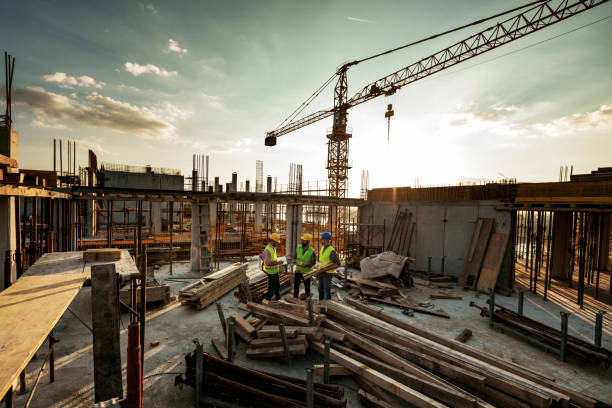
The environmental performance of construction materials is a critical consideration. The two primary structural materials for skyscrapers, steel and concrete, have distinct sustainability profiles.
The main environmental advantage of steel is its almost perfect recyclability. Steel can be recycled repeatedly without any loss of quality. In the UK, the end-of-life recycling rate for structural steel is over 95%. However, there is an important nuance. Global demand for new steel currently outstrips the available supply of scrap. This means that a significant amount of new steel must still be produced from raw materials (iron ore and coal) via the carbon-intensive Blast Furnace-Basic Oxygen Furnace (BF-BOF) route. The alternative route, the Electric Arc Furnace (EAF) method, uses recycled scrap steel and has a much lower carbon footprint. Therefore, the environmental impact of a steel product is heavily dependent on its production method.
For concrete, the primary environmental concern is the production of Portland cement, which is a key ingredient. The chemical process used to make cement releases large quantities of carbon dioxide. The industry is addressing this in several ways, including by increasing the energy efficiency of cement plants and by substituting a portion of the cement in a concrete mix with other materials. A common strategy is to use industrial by-products, such as Ground Granulated Blast-furnace Slag (GGBS), which is a waste product from the steel industry. Using GGBS as a cement replacement not only reduces the carbon footprint of the concrete but also contributes to a circular economy by finding a valuable use for another industry's waste.
The combined rise of MMC and BIM signals a fundamental shift in the culture and operations of UK construction. It represents a move away from a traditional, project-based, and craft-led model towards a more modern, product-based, and manufacturing-led approach. This is more than just a change in technique; it can be seen as the industrialisation of the construction process. This shift demands new skillsets focused on logistics, systems integration, and digital technologies. It also requires new commercial and contractual models that involve manufacturers and specialist contractors much earlier in the design process, fostering a collaborative mindset known as Design for Manufacture and Assembly (DfMA).
Conclusion: The Future of High-Rise Construction in the UK
The modern UK skyscraper is a highly evolved structure, a testament to the sophisticated integration of material science, regulatory diligence, and process innovation. Its form and function are dictated by the inherent capabilities of high-performance materials like engineered steel and advanced concrete, which are pushed to their limits to achieve the required strength and efficiency. Its design is fundamentally shaped by a rigorous and constantly evolving regulatory environment that places an uncompromising emphasis on structural robustness, fire safety, and energy conservation.
The methods used to construct these buildings are also advancing rapidly. The adoption of a manufacturing-led mindset, realised through Modern Methods of Construction and enabled by the digital coordination of Building Information Modelling, is transforming the industry. This industrialisation of the construction process is delivering improvements in quality, safety, and programme certainty.
Looking ahead, these trends are set to continue and intensify. The drive for greater sustainability will lead to further innovation in low-carbon materials and circular economy principles. The full-scale adoption of digital and manufacturing processes will become the industry standard, not the exception. The next generation of tall buildings that will shape the UK's cityscapes will be the product of this continued, integrated evolution of materials, regulations, and methods.
Legal Disclaimer
The information contained in this article is provided for general information purposes only. The information is provided by this website and while we endeavour to keep the information up to date and correct, we make no representations or warranties of any kind, express or implied, about the completeness, accuracy, reliability, suitability, or availability with respect to the website or the information, products, services, or related graphics contained on the website for any purpose.
This content does not constitute legal, technical, professional, or any other form of advice and should not be relied upon as such. You should consult a suitably qualified professional for advice on any specific problem or matter.
In no event will we be liable for any loss or damage including without limitation, indirect or consequential loss or damage, or any loss or damage whatsoever arising from loss of data or profits arising out of, or in connection with, the use of this website. Any reliance you place on such information is therefore strictly at your own risk. We disclaim all liability in respect to actions taken or not taken based on any or all the contents of this site to the fullest extent permitted by law. Do not act or refrain from acting upon this information without seeking professional advice.

Samuel Hitch
Managing Director
Buy Insulation Online.
Leave A Reply
Your feedback is greatly appreciated, please comment on our content below. Your email address will not be published. Required fields are marked *