
- Blogs
- A Comprehensive Guide to Plasterboard Adhesive in the UK
A Comprehensive Guide to Plasterboard Adhesive in the UK


TLDR; (Too Long; Didn't Read)
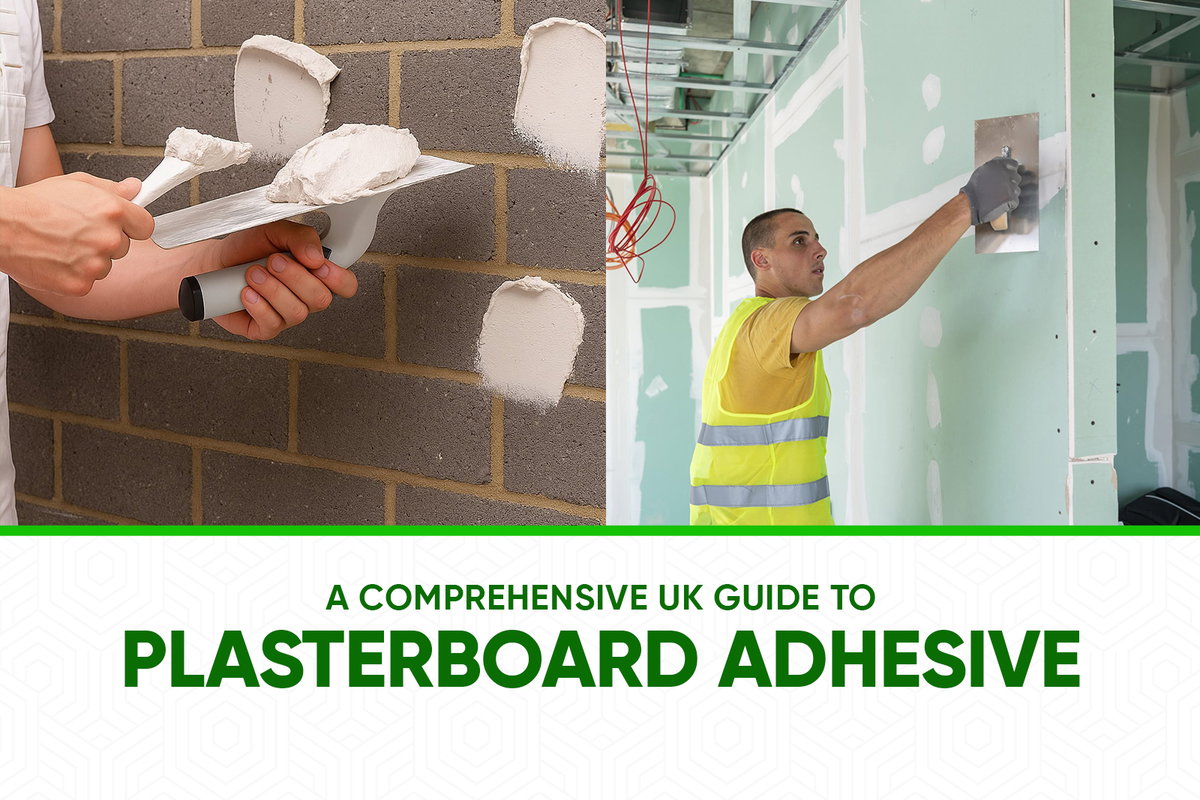
Plasterboard adhesive, also known as bonding compound or drywall adhesive, is used to fix plasterboard directly to masonry walls, a method called 'dot and dab' or drylining.
There are two primary types in the UK: traditional gypsum-based powders that are mixed with water, and modern, ready-to-use polyurethane (PU) foam adhesives.
Gypsum-based adhesives are primarily made of calcium sulfate hemihydrate. They are cost-effective but require mixing and have longer setting times. Their main hazards are dust and skin irritation from their alkaline nature.
PU foam adhesives offer speed and convenience, curing quickly via moisture from the air and substrate. Their main hazards relate to flammability and chemical sensitisation from isocyanates.
Correct 'dot and dab' application requires dabs of a specific size and spacing, plus a continuous perimeter bead of adhesive around all board edges and openings. This perimeter seal is critical for fire safety, airtightness, and acoustic performance.
Key UK standards include BS EN 14496 for the product itself and BS 8000-8 for workmanship. UK Building Regulations (Parts B, C, E, L) govern the performance of the final wall system.
Plasterboard adhesive must not be used as the sole fixing method for ceilings; UK regulations require mechanical fixings (screws) for safety.
Always check manufacturer-specific instructions, especially when using specialist boards like moisture-resistant or insulated laminates, as some adhesives are not compatible.
Understanding Plasterboard Adhesive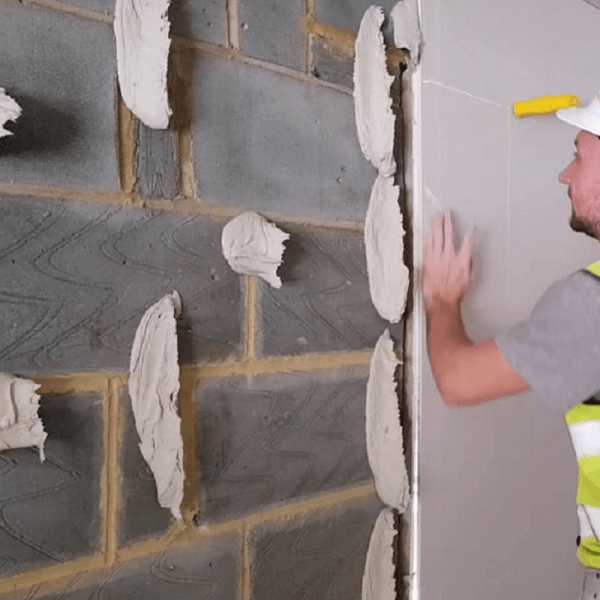
What is Plasterboard Adhesive? (Defining "Bonding Compound" and "Drywall Adhesive")
Plasterboard adhesive is a specialised bonding agent formulated for the purpose of securing plasterboard panels directly to internal building substrates, most commonly masonry walls. This method of construction is known as dry lining, a term that distinguishes it from traditional wet plastering techniques. Dry lining offers a system for cladding the internal faces of buildings to create a smooth, uniform surface that is ready for decoration with minimal preparation.
Within the UK construction industry, several terms are used interchangeably to describe this product. "Plasterboard adhesive" is the most direct descriptor. "Drywall adhesive" is also common, reflecting the alternative name for plasterboard. Perhaps most frequently used in a professional context is "bonding compound," which typically refers to the traditional, gypsum-based powder form of the product. While these terms can refer to the same class of material, it is useful to note that "bonding compound" almost exclusively means a gypsum powder, whereas "plasterboard adhesive" can also encompass modern foam-based alternatives.
The primary function of these adhesives is to form a durable and permanent bond between the paper-faced plasterboard and a variety of common building substrates, including brick, concrete blockwork, and cast concrete surfaces.
Primary Functions in UK Construction Projects
The principal application for plasterboard adhesive in the UK is the 'dot and dab' method of dry lining. This technique involves applying regularly spaced dabs of adhesive to the wall, onto which the plasterboard is then pressed and levelled. This process has become widespread because it is significantly faster than applying multiple coats of wet plaster, which involves considerable drying time between stages. The speed of a dry lining system, enabled by adhesive, allows walls to be ready for painting or finishing almost immediately after the adhesive has set, accelerating project timelines.
A key technical advantage of using plasterboard adhesive is its ability to overcome irregularities in the background substrate. By varying the thickness of the adhesive dabs, an operative can create a perfectly plumb and true final wall surface, even when the underlying brickwork or blockwork is uneven. This function is particularly valuable in refurbishment projects where existing walls may be out of alignment.
The 'dot and dab' method inherently creates a small cavity, typically between 10mm and 25mm, between the back of the plasterboard and the face of the masonry wall. This void is a convenient space for concealing shallow services, such as electrical wiring and small-diameter pipework, without the need to chase them into the structural wall, further saving time and labour.
Beyond standard plasterboard, these adhesives are also specified for fixing thermal laminates. These are composite boards consisting of a plasterboard layer bonded to a rigid insulation material. Applying these boards directly to solid masonry walls with adhesive is an effective method for improving the thermal performance of a building's envelope and helping to meet the requirements of UK Building Regulations for energy conservation.
The widespread adoption of 'dot and dab' dry lining is not merely a technical preference but reflects a fundamental shift in UK construction methodology. The process is a direct response to the industry's continuous demand for greater on-site efficiency. The significant reduction in working time, with some estimates suggesting a saving of up to 30% compared to wet plastering, translates directly into lower labour costs and shorter overall project durations. The elimination of lengthy drying periods, a major bottleneck in traditional plastering, allows subsequent trades to commence work sooner, compressing the entire construction schedule. This focus on speed and cost-effectiveness has made plasterboard adhesive a central material in modern residential and commercial construction.
Types of Plasterboard Adhesive: A Comparison
Two distinct categories of plasterboard adhesive are prevalent in the UK market: the traditional gypsum-based powders and the more recent polyurethane foam adhesives. Each has a different chemical basis, application method, and performance profile.
Gypsum-Based Powder Adhesives
These are the conventional form of plasterboard adhesive, often referred to as bonding compound. They are supplied as a fine, dry powder, typically grey or off-white in colour, in paper sacks of 10kg or, more commonly, 25kg. To be used, the powder must be mixed on-site with a specified volume of clean water until it reaches a thick, creamy, and lump-free consistency.
A key characteristic of gypsum-based adhesives is their defined working time, often called 'pot life'. This is the period after mixing during which the adhesive remains workable and can be applied. For most products available in the UK, this is approximately 90 minutes. The initial set, where the adhesive hardens sufficiently to hold the board securely, typically occurs within 2 to 3 hours. These products are known for developing a high final bond strength and represent a cost-effective solution, especially for large-scale projects where material cost is a significant factor.
Leading manufacturers in the UK market for this type of adhesive include Knauf, with their 'Plasterboard Adhesive', and British Gypsum, with their 'Gyproc DriWall Adhesive'. Other brands such as Siniat also offer widely used universal bonding compounds.
Polyurethane (PU) Foam Adhesives
A more modern alternative, polyurethane (PU) foam adhesives are single-component, ready-to-use products supplied in pressurised aerosol cans. They require no on-site mixing, saving preparation time and eliminating the need for mixing equipment and water. The adhesive is extruded from the can as a bead of foam which then undergoes a slight expansion before curing.
PU foams are characterised by their rapid curing profile. A surface skin forms within approximately 8 minutes, and the bond is strong enough for subsequent work, such as jointing, to begin after about one hour. This can dramatically speed up the installation process. They exhibit an excellent initial bond, or 'grab', even at lower ambient temperatures where gypsum-based products can be slow to set.
These adhesives are also very efficient in terms of coverage. A single 600ml or 750ml can is often marketed as providing coverage equivalent to a 25kg bag of powder adhesive, typically up to 12 or 14 square metres of board. They are available in two main formats: hand-held applicators with an integrated trigger and tube, and gun-grade cans that require a separate professional applicator gun for more precise control over the bead size.
Prominent brands in the UK PU foam adhesive market include Soudal, No Nonsense (a Screwfix own-brand), Dow, and Evo-Stik.
Key Differences: A Technical Comparison
The choice between a gypsum-based powder and a PU foam adhesive depends on the specific requirements of the project, including scale, speed, substrate conditions, and the preferences of the installer. The following table provides a direct comparison of their key technical characteristics.
Characteristic |
Gypsum-Based Powder |
Polyurethane (PU) Foam |
| Common Names | Bonding Compound, Drywall Adhesive | PU Foam Adhesive, Sticky Foam, Fixing Foam |
| Form | Dry Powder (mixed with water) | Ready-to-use Aerosol Can |
| Base Material | Gypsum (Calcium Sulfate Hemihydrate) | Single Component Polyurethane |
| Curing System | Hydration (Chemical reaction with water) | Moisture Cure (Reaction with ambient moisture) |
| Preparation | Mixing required (~5-10 mins) | None (Shake can for ~20 seconds) |
| Working Time | Approx. 90 minutes | N/A (Apply and fix immediately) |
| Curing Time | Set time: ~2-3 hours. Full strength: >12 hours | Skin time: ~8 mins. Workable: ~1 hour. Full strength: ~12 hours |
| Application | Trowel ('Dot and Dab') | Bead application (Hand-held or gun) |
| Substrates | Dry masonry, blockwork. Primer may be needed | Wide range: concrete, wood, metal, moist surfaces. |
| Hazards | Dust inhalation, skin/eye irritation (alkaline) | Flammability, pressurised container, chemical sensitisation |
The Material Composition of Plasterboard Adhesives
The performance, application characteristics, and safety considerations of plasterboard adhesives are directly linked to their chemical composition. The two main types, gypsum-based and polyurethane-based, are fundamentally different materials.
Analysis of Gypsum-Based Bonding Compounds 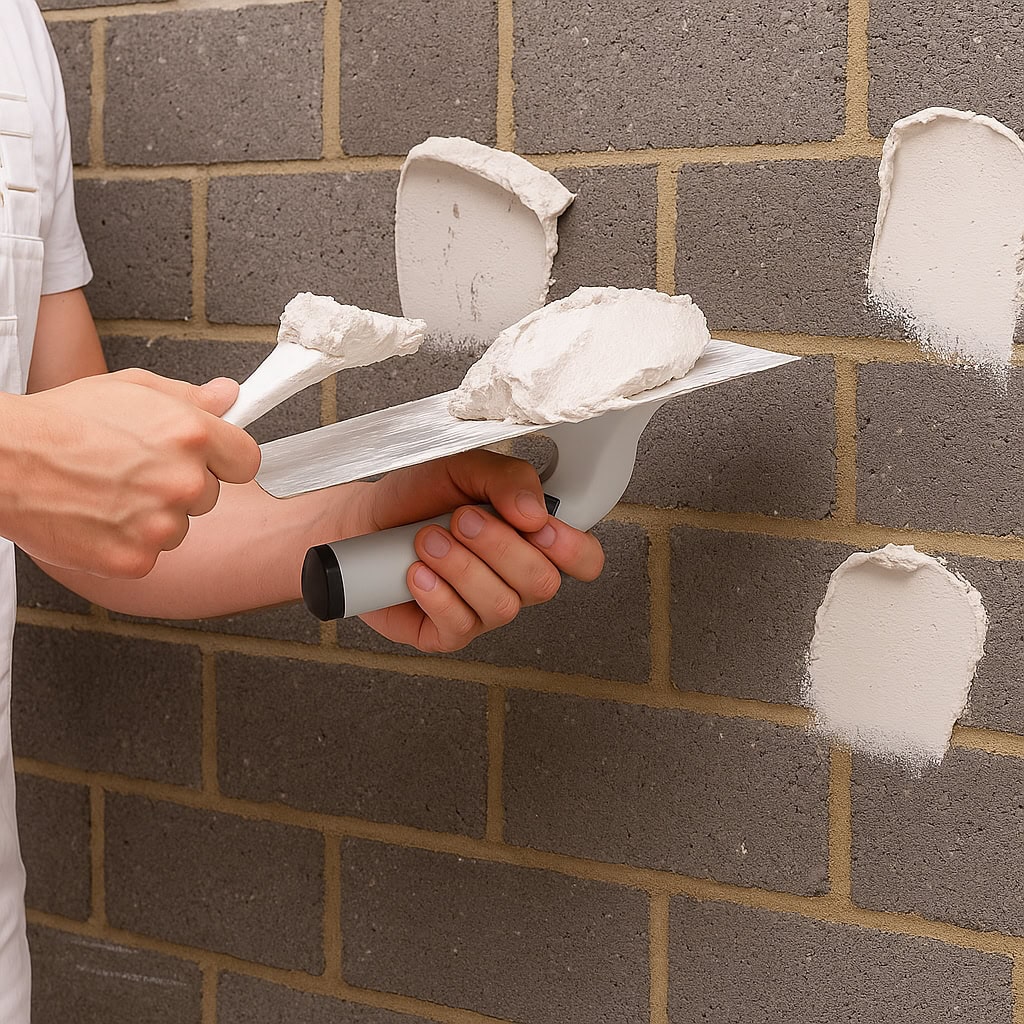
The primary active ingredient in traditional bonding compounds is Calcium Sulfate Hemihydrate (CaSO4?⋅21?H2?O). This is a type of gypsum that has been heated to remove some of its water content, a process known as calcination. When mixed with water on site, it undergoes a hydration reaction, reforming into gypsum (calcium sulfate dihydrate) and setting into a hard, solid mass. The products are specifically formulated with a 'retarded' hemihydrate, meaning additives are included to slow down this setting reaction, providing the necessary 90-minute working time.
A small quantity, typically less than 1%, of Calcium Hydroxide (Ca(OH)2?), also known as hydrated lime, is often included in the blend. When mixed with water, this dissolves to form an alkaline solution, which can be an irritant to skin and eyes.
To achieve the desired performance, manufacturers include a range of additives. These can include rheological modifiers to give the wet mix its characteristic thick and non-slump consistency, making it easy to apply with a trowel. Retardants, as mentioned, are crucial for controlling the setting time. Minor amounts of polymer binders may also be added to improve the adhesive properties and the final bond strength.
The raw gypsum material is a mined mineral, and as such, it can contain other natural constituents. These commonly include small amounts of clay and quartz (a form of crystalline silica). The presence of respirable crystalline silica is a key consideration in the health and safety assessment of the dust generated during mixing or sanding.
The Makeup of Polyurethane Foam Adhesives
These modern adhesives are based on single-component polyurethane (PU) chemistry. They consist of polyurethane prepolymers stored in a pressurised can. Unlike two-component systems, they do not require the mixing of a separate hardener.
moisture-curing system. When the foam is extruded from the can, the prepolymers react with moisture present in the ambient air and on the surface of the substrate. This chemical reaction causes the foam to cure and harden, forming a strong and durable adhesive bond. These products are typically formulated to be solvent-free.
The aerosol cans contain flammable propellants, such as butane and propane, which are necessary to expel the product from the can. This is the reason for the 'Extremely Flammable' hazard warning associated with these products.
The core chemistry of these adhesives involves diisocyanates. These are a family of chemical compounds that are essential for the formation of polyurethanes. However, they are also known respiratory and skin sensitisers, meaning repeated exposure can lead to allergic reactions. This is why safety data sheets for these products carry specific warnings for individuals with pre-existing asthma or skin conditions and highlight the risk of sensitisation by inhalation or skin contact.
The choice of adhesive is heavily influenced by its curing mechanism, which dictates its operational limits. Gypsum-based adhesives rely on a hydration process, where the water added during mixing is chemically consumed to form a rigid crystal matrix. This process is sensitive to the amount of water present. If applied to a very dry, high-suction background like aircrete block, the substrate can draw water out of the mix too quickly, leading to incomplete hydration and a weak, powdery bond. Conversely, application to damp or non-porous surfaces prevents the dissipation of excess water, disrupting the crystal formation and preventing a proper set. This is why surface preparation and the use of primers to control suction are so critical for gypsum adhesives.
In complete contrast, PU foam adhesives require moisture from the environment to initiate their curing reaction. This makes them inherently more tolerant of the 'building moist' conditions often found on UK construction sites and allows them to bond to a wider range of substrates, including those that are slightly damp. This fundamental difference in chemical curing is not just a technical detail; it is the primary factor determining where and when each type of adhesive can be successfully used.
Buy Plasterboard Adhesive now
Application Best Practices: The 'Dot and Dab' Method Explained
Successful dry lining depends on the correct application of the adhesive. The 'dot and dab' technique, while seemingly straightforward, requires adherence to specific best practices to ensure a stable, durable, and compliant wall finish.
Essential Tools and Surface Preparation
Before any adhesive is mixed or applied, proper preparation is essential. The required toolkit for applying gypsum-based adhesive includes a clean mixing bucket, a mechanical whisk with a slow speed and high torque setting, a plasterer's trowel, a hawk for holding the mixed adhesive, a long spirit level (at least 1.8 metres), and a straight edge, often referred to as a feather edge, for tapping the board into position.
The wall surface, or substrate, must be structurally sound, clean, and completely free of any contaminants that could interfere with the bond. This includes dust, grease, oils, and any loose or friable material, which should be brushed down thoroughly.
Controlling the suction of the background is a critical step. Very porous surfaces like lightweight aerated concrete blocks can draw moisture from the adhesive mix too rapidly, weakening the final bond. Conversely, very dense, low-suction surfaces like cast concrete can prevent the adhesive from 'keying' into the surface. In such cases, a primer is necessary. A diluted solution of polyvinyl acetate (PVA) can be used to seal moderate-suction backgrounds. For particularly challenging low-suction or smooth surfaces, manufacturers recommend specialised primers such as Knauf Betokontakt or British Gypsum's Thistle Bond-it. It is also vital that the wall is reasonably dry before application, as applying adhesive to damp blockwork can lead to moisture becoming trapped, causing staining on the plasterboard face and potential bond failure.
Mixing and Applying Gypsum-Based Adhesive
Correct mixing is vital for achieving the specified properties of a gypsum-based adhesive. The process should begin by adding the powder to the pre-measured amount of clean, cold water in the mixing bucket—not the other way around. Allowing the powder to soak for one to two minutes before starting to mix helps to ensure all particles are wetted out. The mixture should then be whisked mechanically until it forms a thick, creamy consistency, free of lumps. Over-mixing should be avoided, as it can shorten the working time.
To prevent the adhesive from setting before it can be used, it is best practice to only mix enough for one plasterboard at a time.
The adhesive is applied to the wall in 'dabs'. A standard dab should be between 50mm and 75mm wide and approximately 250mm long. For a standard 1200mm wide plasterboard, these dabs should be applied in three vertical rows. The dabs within each row should be spaced at approximately 300mm centres. This pattern is designed to ensure that the total contact area between the adhesive and the board is at least 20% of the board's surface area, a minimum requirement for a secure bond. After the board is positioned and tapped back, the final compressed thickness of the dabs should be no less than 10mm and no more than 25mm.
A Step-by-Step Guide to the Dot and Dab Technique
-
Preparation: Ensure the wall is prepared and primed as necessary. Measure and cut all plasterboards to the required sizes, making allowances for any openings like windows, doors, or socket boxes.
-
Mixing: Mix a batch of adhesive sufficient for one board, following the manufacturer's water-to-powder ratio.
-
Perimeter Seal: This is a critical step. Using a trowel, apply a continuous, unbroken ribbon of adhesive to the wall along the floor line, the ceiling line, and down both vertical edges of the area where the board will be placed. A continuous ribbon must also be applied around the perimeter of all openings.
-
Dab Application: Apply the three vertical rows of dabs within the sealed perimeter on the wall, following the specified size and spacing guidelines.
-
Board Placement: Lift the plasterboard into position, often resting it on packers on the floor to maintain a small gap. Press the board firmly onto the adhesive dabs. Using a long straight edge and a spirit level, gently tap the board back until its face is perfectly plumb and level, and in line with adjacent boards.
Correct Application of PU Foam Adhesives 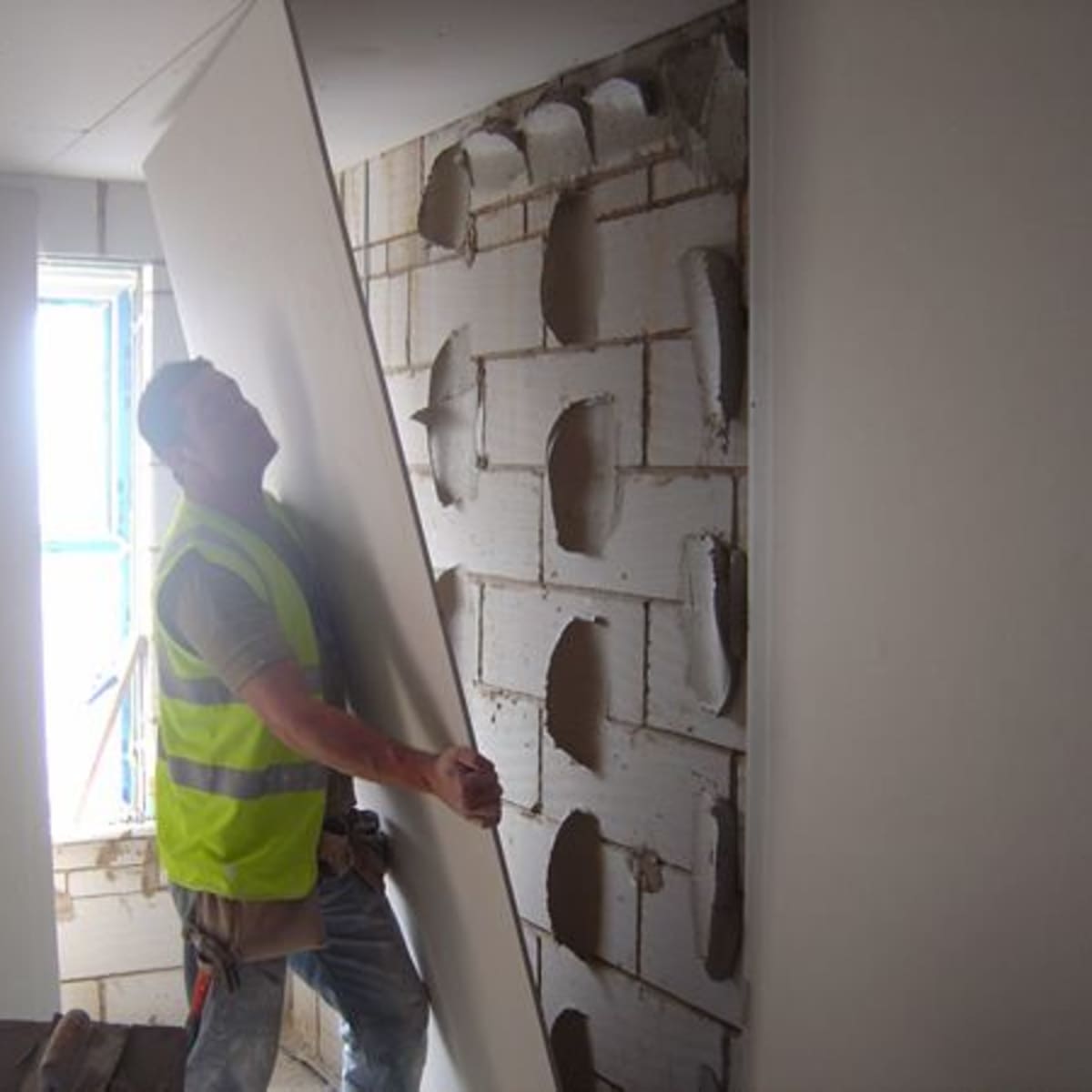
The application of PU foam adhesives is a different process that does not involve a trowel.
-
Preparation: Shake the aerosol can vigorously for a minimum of 20 seconds to ensure the contents are properly mixed.
-
Application to Board: Unlike gypsum adhesive, PU foam is typically applied directly to the back of the plasterboard panel. Apply a continuous bead of foam around the entire perimeter of the board, keeping it approximately 2cm in from the edge.
-
Central Beads: Apply further beads to the centre of the board. A common pattern is a 'W' shape, which helps to ensure an even distribution of adhesive and achieve the recommended 40% contact area after compression.
-
Flash-Off Time: After applying the foam, wait for approximately 3 to 6 minutes. This allows the foam to 'flash off' and become tacky, which is essential for achieving an optimal initial bond.
-
Board Placement: Offer the board up to the wall and press it firmly and evenly into place. It is important not to tap, adjust, or pull the board away from the wall after this initial contact, as this can permanently break the bond that is beginning to form.
Common Application Mistakes and How to Avoid Them
Several common errors can compromise the quality and safety of a dry lined wall.
-
Mistake 1: Omitting the Perimeter Seal. The most frequent and serious mistake is failing to apply the continuous ribbon of adhesive around the board's perimeter and openings. This seal is not just for adhesion; it functions as a crucial barrier.
-
Mistake 2: Insufficient Coverage. Using dabs that are too small or spaced too far apart will result in a contact area of less than the required 20%, leading to a weak bond and an increased risk of the board detaching or 'pillowing'.
-
Mistake 3: Double Dabbing at Joints. A common shortcut is to apply one large dab intended to support the edges of two adjacent boards. This invariably causes a bulge at the joint line, making it impossible to achieve a flat, seamless finish after taping and jointing. Best practice dictates that each board edge must have its own independent row of dabs, positioned approximately 25mm in from the edge.
-
Mistake 4: Using Contaminated Equipment. When mixing gypsum-based adhesive, using dirty water or a bucket containing remnants of a previous mix can significantly alter the chemical reaction. Contamination can accelerate the setting time unpredictably and reduce the final strength of the adhesive.
-
Mistake 5: Applying to Unsuitable Surfaces. Adhesion will fail if the product is applied directly onto dusty, damp, or painted surfaces without correct preparation. The adhesive will bond to the unstable surface layer, not the solid substrate, leading to delamination over time.
The 'dot and dab' method's primary advantage is its ability to create a flat plane over an uneven substrate, which is only possible because of the cavity it forms. This cavity, however, is also the system's greatest inherent weakness. It creates an uninterrupted void behind the wall lining that can act as a hidden channel for the rapid spread of fire and smoke. It also allows for uncontrolled air movement, leading to draughts and reduced thermal performance. Furthermore, the cavity can act as a resonance chamber, amplifying sound and degrading the acoustic insulation of the wall. The mandated solution to all these problems is the continuous perimeter adhesive bead. This bead seals the cavity at every edge and opening, compartmentalising the void and restoring the fire, air, and acoustic integrity of the wall system. Field observations suggest this critical step is often poorly executed or even completely omitted, partly because it is hidden from view after the board is installed and is difficult to inspect. Therefore, the perimeter seal must be understood not as an optional detail for a slightly better bond, but as a non-negotiable requirement for a safe and compliant installation that meets UK Building Regulations.
UK Standards and Building Regulations for Drylining
The installation of dry lining systems using plasterboard adhesive is governed by a framework of British Standards and UK Building Regulations. These work in tandem: the standards define the quality of the materials and workmanship, while the regulations set the required performance outcomes for the finished building.
Adherence to British Standards: BS EN 14496 and BS 8000-8
Two key British Standards are central to the specification and use of plasterboard adhesive in the UK.
-
BS EN 14496: Gypsum based adhesives for thermal/acoustic insulation composite panels and gypsum boards. This is the harmonised European product standard, which has been adopted as a British Standard. It specifies the "definitions, requirements and test methods" that gypsum-based adhesives must meet to be sold in the UK. The standard sets minimum performance levels for essential characteristics such as bond strength and reaction to fire classification. Compliance with BS EN 14496 ensures that the adhesive product itself is fit for its intended purpose. Manufacturers of bonding compounds in the UK, such as Knauf and British Gypsum, explicitly state that their products conform to this standard.
-
BS 8000-8: Workmanship on construction sites – Design and installation of dry lining systems. This standard is a code of practice that provides recommendations for the correct design and installation of dry lining systems. It is not a product standard but a guide to good workmanship. It covers the practical aspects of the installation, including details on the correct size and spacing of adhesive dabs and the critical requirement for continuous perimeter seals around boards and openings. Leading manufacturers make it a condition of their product warranties that the installation is carried out in accordance with BS 8000-8.
Navigating UK Building Regulations
UK Building Regulations set out the minimum performance standards for the design and construction of buildings. They are presented as a series of 'Approved Documents', each covering a different aspect of performance. A dry lining system, including the adhesive, is a component of the building and must contribute to meeting these overall requirements.
Fire Safety (Approved Document B)
Approved Document B deals with fire safety. The hidden cavity created by the 'dot and dab' method poses a significant risk as it can allow fire and smoke to spread unseen within the wall construction. The continuous perimeter bead of adhesive is therefore a critical fire-stopping measure. It acts as a cavity barrier, sealing the void at the edges of the wall and around openings to prevent the passage of hot gases and flames. Most gypsum-based bonding compounds are classified as Class A1 'non-combustible' in accordance with European standards, meaning they make no contribution to a fire.
Moisture and Condensation (Approved Document C)
Approved Document C covers site preparation and resistance to contaminants and moisture. A dry lining system must be designed and installed in a way that does not create a risk of harmful interstitial condensation (condensation forming within the wall structure). This may require the inclusion of a separate vapour control layer, or the use of plasterboards with an integrated vapour barrier. As previously noted, applying adhesive directly to damp masonry walls is a primary cause of failure, as it can trap moisture within the wall, potentially leading to mould growth and degradation of the building fabric.
Sound Insulation (Approved Document E)
Approved Document E sets standards for the resistance to the passage of sound, particularly in residential buildings. The 'dot and dab' method can be problematic for acoustic performance. The air gap between the board and the wall can resonate when struck by sound waves, a phenomenon sometimes called the 'drum effect', which can amplify sound transmission. To improve performance, best practice guidance sometimes recommends applying a thin plaster coat (a parge coat) to the face of the blockwork before dry lining. This seals the porosity of the blocks and closes any small gaps in the mortar joints, reducing air leakage paths that can transmit sound.
A Critical Note on Ceiling Applications and Mechanical Fixings
It is imperative to state that plasterboard adhesive, whether gypsum-based powder or polyurethane foam, is not suitable and must not be used as the sole method of fixing plasterboard to ceilings.
This is a critical safety issue. UK Building Regulations, British Standards, and all reputable manufacturer installation guides mandate that plasterboard fixed to ceilings must be secured with appropriate mechanical fixings, such as drywall screws, driven into the ceiling joists or metal frame. The constant downward pull of gravity places the adhesive bond under a peel stress, which it is not designed to resist long-term. Over time, the bond is likely to fail, often by the paper liner of the plasterboard peeling away from its gypsum core. This can lead to the sudden and catastrophic collapse of the ceiling, posing a severe risk of injury to occupants.
Health and Safety: Handling Plasterboard Adhesives 
The control of substances hazardous to health (COSHH) is a legal requirement in the UK. The two main types of plasterboard adhesive present different hazards and require distinct safety protocols.
Safety Protocols for Gypsum-Based Powders
The primary hazards associated with gypsum-based bonding compounds are dust inhalation and direct contact with the wet mixture.
-
Primary Hazards: The fine powder can easily become airborne during handling and mixing, creating a dust cloud. This dust is an irritant to the respiratory system. Prolonged or repeated inhalation of high concentrations of gypsum dust can lead to lung diseases. The dust may also contain small amounts of respirable crystalline silica (quartz), a substance with a workplace exposure limit. When mixed with water, the adhesive forms a strong alkaline solution due to the presence of calcium hydroxide. Direct contact with this wet mix can cause skin irritation, and in cases of prolonged contact, chemical burns or allergic dermatitis. Eye contact is particularly dangerous and can cause serious, painful irritation.
-
Control Measures: Always handle bags of adhesive carefully to minimise the creation of dust. Mixing should be done in a well-ventilated area. If sanding of any kind is required on materials containing gypsum, on-tool extraction using an M-class or H-class rated vacuum cleaner is strongly recommended by the Health and Safety Executive (HSE) to capture the fine dust at source.
-
First Aid: In case of eye contact, the eye should be rinsed immediately with copious amounts of clean water for at least 15 minutes, and professional medical advice should be sought. If the wet mix comes into contact with skin, it should be washed off promptly with soap and water.
Safe Use of Polyurethane Foam Adhesives
PU foam adhesives present a different set of hazards related to their chemical composition and packaging.
-
Primary Hazards: The three main hazards are flammability, the pressurised container, and chemical sensitisation. The product contains extremely flammable aerosol propellants (H222), and the can itself is a pressurised container that may burst if heated (H229). The core chemical components are diisocyanates. These are known sensitisers, meaning that exposure, particularly through inhalation of the spray mist or direct skin contact, can cause allergic reactions. These can manifest as allergic skin reactions (dermatitis) or respiratory sensitisation, leading to asthma-like symptoms. Once an individual is sensitised, any future exposure, even to very low levels, can trigger a severe allergic response.
-
Control Measures: All sources of ignition, including open flames, sparks, and smoking, must be eliminated from the work area. The product must only be used in well-ventilated areas to prevent a build-up of flammable vapours and to reduce inhalation exposure. The aerosol can must never be pierced or burnt, even when it appears to be empty.
-
First Aid: If the product is accidentally inhaled and symptoms occur, the person should be moved to fresh air immediately. In case of an accident or if feeling unwell, medical advice should be sought without delay, and the product container or label should be shown to the medical professional.
Recommended Personal Protective Equipment (PPE)
The use of appropriate Personal Protective Equipment is essential for minimising exposure to the hazards of both types of adhesive.
-
For Gypsum-Based Powders:
-
Respiratory Protection: When handling or mixing the powder, a dust mask conforming to standard EN149 is required. An FFP3 category mask offers the highest level of protection against fine dusts and is recommended.
-
Eye Protection: Safety goggles conforming to EN166 are essential to protect against both dust and splashes of the wet, alkaline mixture.
-
Hand Protection: Waterproof gloves, such as nitrile or rubber gloves, should be worn to prevent skin contact with the wet adhesive.
-
-
For PU Foam Adhesives:
-
Respiratory Protection: In areas with good natural or mechanical ventilation, specific respiratory protection is not usually required. However, if working in confined or poorly ventilated spaces, a respirator fitted with an appropriate organic gas filter (Type A1 conforming to EN14387) should be used.
-
Eye Protection: Safety goggles should always be worn to protect against accidental spray into the eyes.
-
Hand Protection: Chemical-resistant protective gloves should be worn to prevent skin contact.
-
Frequently Asked Questions (FAQs)
What substrates are suitable for plasterboard adhesive?
Gypsum-based adhesives are specifically designed for direct bonding to sound, clean, and dry masonry backgrounds. This includes common materials found in UK construction such as clay brickwork, concrete blocks, aerated blocks, and cast in-situ concrete. Polyurethane foam adhesives are generally more versatile and can be used on this same range of masonry substrates, as well as on other materials like wood, OSB, and metal.
Can standard adhesive be used with specialist plasterboards?
This requires careful checking of manufacturer-specific technical data. As a general rule, caution should be exercised. For example, some manufacturers of gypsum-based adhesives explicitly state that their standard bonding compound should not be used to fix moisture-resistant plasterboards or boards with an integrated vapour control layer. The composition of these specialist boards can affect adhesion. Always consult the technical data sheets for both the adhesive and the specific type of plasterboard to confirm compatibility before proceeding. For applications in areas with persistent damp, specially formulated damp-resistant adhesives are available and should be used.
How long does plasterboard adhesive take to fully cure?
Curing times are dependent on the type of adhesive, ambient temperature, and humidity. Gypsum-based adhesives typically have an initial set time of around 2 to 3 hours, at which point the board is secure and work such as jointing or skim plastering can commence. Full bond strength continues to develop over a longer period. Polyurethane foam adhesives cure much more rapidly. They are often firm enough to allow work to continue after approximately one hour, but typically require around 12 hours to achieve their full bond strength.
What is the typical coverage of a 25kg bag of bonding compound?
When applied using the standard 'dot and dab' method with the recommended dab size and spacing, a single 25kg bag of gypsum-based plasterboard adhesive will typically cover an area of approximately 4.6 square metres. This is a key figure for estimating material quantities for a project.
Legal Disclaimer
The information contained in this article is for general guidance purposes only. It is not intended to be a definitive statement of law or a substitute for professional advice. The application of building regulations and standards can vary depending on the specific circumstances of a project. Laws, regulations, and standards are subject to change. You should not act, or refrain from acting, based on the information provided herein. Always seek appropriate professional advice from a qualified expert, such as a structural engineer, architect, or building control officer, before undertaking any construction work or specifying any materials. The author and publisher disclaim all responsibility, including in negligence, for any consequences of any person acting on, or refraining from acting in reliance on, the information contained in this article. All work must be carried out in accordance with the manufacturer's latest instructions, current British Standards, and UK Building Regulations.

Samuel Hitch
Managing Director
Buy Insulation Online.
Leave A Reply
Your feedback is greatly appreciated, please comment on our content below. Your email address will not be published. Required fields are marked *