Perforated Plasterboard
Perforated plasterboard comprises a gypsum core coated with durable paper, featuring engineered perforations of various patterns and sizes to enhance acoustics, ventilation, and aesthetic appeal. It is suitable for suspended ceilings, partitions, and acoustic panels, offering high sound absorption and noise reduction through perforations, insulation, and specialized finishes.
The installation process involves precise fastening, careful joint filling, and surface finishing to ensure optimal acoustic performance.
Further design options and installation strategies are available, providing a comprehensive understanding of its practical applications within UK construction and renovation projects.
Material Composition and Design Features
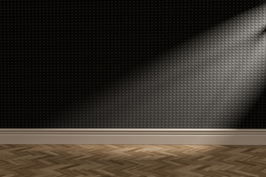
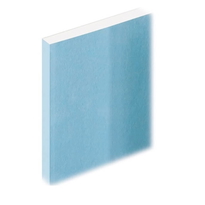
Perforated plasterboard is predominantly made from gypsum as its core material, offering inherent fire resistance and environmental advantages due to its natural, recyclable qualities. The gypsum core is usually coated with paper to enhance durability and ease of handling. Made of high-quality paper-faced gypsum board, the perforated plasterboard benefits from environmentally friendly and lightweight materials. The thickness of perforated plasterboard generally varies between 10mm and 12.5 mm, enabling it to meet a wide range of structural and design requirements. The design features of perforated plasterboard include various perforation patterns such as round, square, cross, and irregular shapes. These patterns serve both functional purposes, like improved acoustic properties, and aesthetic purposes, contributing to contemporary architectural finishes. Edges can be recessed for flush jointing or squared for different installation needs, with sizes often customizable to suit specific project specifications. These versatile features enhance the product's suitability for diverse architectural and construction applications, prioritizing durability, visual appeal, and adaptability in line with UK building standards and preferences.
Acoustic Properties and Sound Management
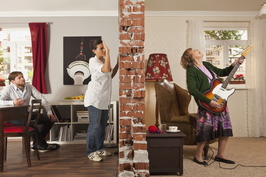
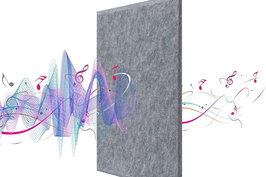
How effectively perforated plasterboard manages sound within interior spaces depends on its capacity to absorb and diffuse noise, thereby reducing echo and reverberation. Its perforations enable sound waves to pass through, where acoustic fabric and insulation enhance absorption, resulting in improved room acoustics. The perforation patterns are designed to optimize the balance between aesthetics and acoustic performance, addressing the specific needs of different environments. High Noise Reduction Coefficients (NRC) indicate its efficiency in controlling sound, supporting speech clarity and privacy. The specific perforation patterns are carefully engineered to optimize sound diffusion and absorption, balancing aesthetic appeal with acoustic performance. Such systems help improve acoustic privacy in shared environments, reduce fatigue caused by noise, and prevent sound leakage. When properly designed, perforated plasterboard contributes to a comfortable, quiet setting, making it an essential solution for spaces requiring effective sound management and controlled acoustic environments. [Perforation patterns influence absorption efficiency and visual appeal. NRC values reflect overall sound absorption performance. Acoustic fabric and insulation improve noise reduction. Design flexibility allows customized acoustic solutions. The inclusion of advanced technologies like ActivAir further enhances air quality in conjunction with sound management.
Installation Techniques and Finishing Standards
Effective installation of perforated plasterboard necessitates meticulous preparation, precise positioning, and strict adherence to standardized procedures to ensure optimal acoustic performance and aesthetic quality.
Control joints should be installed at intervals not exceeding 12 meters, particularly at substrate transitions, to minimize the risk of cracking.
Begin installation from the center of the room to ensure a balanced layout.
In larger spaces, installing second rows transversely can enhance stability and appearance.
Panels are fastened using specified screws, such as 3.5 x 30 mm, with initial fastening along the short edges followed by the long edges, ensuring a perpendicular orientation to the framework.
Supporting profiles must be accurately aligned to properly support the panels.
Joints are filled with specialized fillers, finished to Level 4 standards, and carefully sanded to prevent damage to the perforations.
Surface preparation, priming, and subsequent painting are carried out with careful attention to preserving the acoustic properties of the perforated plasterboard.
Throughout the process, maintaining precision and consistency ensures the finished installation meets both functional and aesthetic standards in accordance with UK building practices.
Key Applications in Public and Commercial Spaces
In public and commercial spaces, perforated plasterboard is widely employed to meet both functional and aesthetic requirements, leveraging its acoustic, visual, and structural qualities. Its applications include dividing large areas through partitioning systems that allow flexible space management, creating suspended ceilings that effectively conceal utilities whilst supporting lighting and air conditioning fixtures, and improving sound control by reducing echo and reverberation within rooms. Moreover, its durable nature makes it suitable for high-traffic environments, such as shopping centers, airports, and office complexes, where resilience is essential. Its customizable surface finishes also enable seamless integration with various interior design themes, enhancing visual appeal. It provides excellent acoustic performance, which is vital in noisy environments, supporting several key uses, including: - Partitioning for adaptable space division - Suspended ceiling systems for utility concealment and lighting integration - Acoustic treatment to minimise noise disturbance - Aesthetic finishes that promote interior design continuity
Variations and Customization Options
Variations and customization options for perforated plasterboard offer a versatile solution for both acoustic performance and aesthetic appeal, catering to a wide range of project requirements within the UK. Different perforation patterns, including Gyptone and Rigitone designs, feature distinct open area percentages and hole types, ranging from traditional 6mm round holes to intricate grid styles. These options enable precise tailoring of sound absorption characteristics to suit specific spaces. Material thickness choices typically range from standard 12.5mm boards ideal for walls and ceilings, to thinner, flexible variants, such as 6.5mm, which are designed for curved surfaces. Many of these boards come with recessed edges, facilitating straightforward installation and seamless integration with surrounding surfaces. Customization extends beyond perforation patterns and thickness. Color and finish options are supported through systems like Vogl Color, allowing for full-color customization to match interior schemes. Additionally, advanced technologies ensure seamless joints and crack resistance, maintaining visual integrity over time. Advanced manufacturing processes also contribute to the durability and consistent performance of perforated plasterboard in demanding environments. Size options predominantly include large panels, such as 1200mm by 2400mm, which are compatible with standard UK installation methods. These dimensions help achieve both functional performance and aesthetic cohesion in various commercial and residential settings.
Conclusion
Perforated plasterboard provides an effective solution for improving acoustic performance within a range of public and commercial environments. Its customizable designs allow architects and builders to tailor the aesthetic and functional aspects to suit specific project needs. Constructed from durable materials, perforated plasterboard ensures reliable performance and straightforward installation, making it a practical choice for various applications.
The perforations in the board play a vital role in managing sound by absorbing or diffusing noise, contributing significantly to better acoustic environments. To achieve optimal results, proper installation and finishing are essential, ensuring both functionality and visual appeal are maximized.
Understanding the diverse applications and customization options available with perforated plasterboard empowers professionals to make informed decisions. This ensures that the chosen solution effectively meets the desired architectural and acoustic objectives with precision and dependability.