
- Blogs
- A Comprehensive Guide to Top Ten Budget-Friendly Soundproofing Solutions for Apartments in the United Kingdom
A Comprehensive Guide to Top Ten Budget-Friendly Soundproofing Solutions for Apartments in the United Kingdom



TLDR
esidential acoustics in the United Kingdom are governed by a complex interplay of architectural heritage, modern construction standards, and the physical behaviour of sound waves in enclosed spaces. For the millions of residents living in flats, particularly those in converted Victorian or Georgian terraces, noise pollution remains a significant contributor to stress and reduced quality of life. The challenge of soundproofing is compounded by the variety of building materials used across different eras, from solid masonry and brick to timber joists and modern steel frames. Each material transmits sound energy differently, necessitating a strategic approach to mitigation that is both effective and financially accessible.
The legal framework for residential soundproofing in the United Kingdom is primarily defined by the Building Regulations 2010, specifically Approved Document E, which focuses on the resistance to the passage of sound. These regulations apply to new dwellings, conversions of existing buildings into flats, and certain refurbishments. Understanding these standards is the first step for any apartment owner or tenant looking to improve their living environment. The primary objective of these regulations is to ensure that a reasonable level of acoustic privacy is maintained between adjoining properties, protecting inhabitants from the sounds of speech, music, and television, as well as the physical impact of footsteps and moving furniture.
The Regulatory Framework: Approved Document E and Acoustic Standards
Approved Document E sets out the minimum requirements for sound insulation in residential buildings in England and Wales. It is divided into several requirements, including E1, which deals with protection against sound from adjoining buildings, and E2, which addresses sound within the same dwelling. The requirements for E3 focus on reverberation in common internal parts of buildings containing flats, while E4 covers acoustic conditions in schools.
For residential apartments, the performance of walls and floors is measured against two distinct types of sound transmission: airborne and impact. Airborne sound travels through the air before hitting a partition, such as voices or a radio. Impact sound is generated by direct physical contact with a surface, such as footsteps or a dropped object. The regulations specify target values for both, measured in decibels (dB). In the context of sound insulation, a higher decibel value for airborne sound indicates better performance, as it represents the amount of sound blocked. Conversely, a lower decibel value for impact sound is preferred, as it represents the amount of sound allowed to pass through the structure.
| Property Type and Element | Airborne Sound Insulation (DnT,w + Ctr dB) | Impact Sound Insulation (L'nT,w dB) |
| New Build Flats (Floors and Stairs) | 45 or higher | 62 or lower |
| New Build Flats (Separating Walls) | 45 or higher | N/A |
| Converted Flats (Floors and Stairs) | 43 or higher | 64 or lower |
| Converted Flats (Separating Walls) | 43 or higher | N/A |
| Residential Rooms (Hotels, etc.) | 43 or higher | 62 or lower (floors) |
Compliance with these standards is typically demonstrated through pre-completion testing (PCT) or the use of Robust Details. Pre-completion testing involves an onsite acoustic assessment conducted by a qualified professional before the property is occupied. This test ensures that the construction has been executed correctly and meets the required decibel thresholds. Robust Details provide an alternative route to compliance for new builds, involving the use of pre-approved construction designs that have been proven to consistently exceed the requirements of Approved Document E.
The Physics of Sound in UK Residential Structures 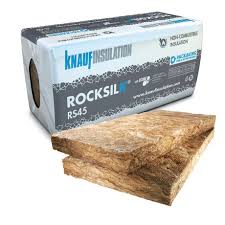
To implement effective budget soundproofing, it is necessary to understand the three fundamental mechanisms of noise control: mass, absorption, and decoupling. Mass refers to the weight and density of a material; heavier materials are harder to move, and therefore, they are better at blocking sound waves. Absorption involves the use of porous materials that trap sound energy and convert it into a tiny amount of heat, reducing the amount of sound that bounces off surfaces. Decoupling, or resilient isolation, involves creating a physical break between structural elements to stop vibrations from travelling directly through the building's frame.
In many UK apartments, the primary acoustic weakness is found in the floor-to-ceiling assembly. Timber joist floors, common in period conversions, are particularly susceptible to both airborne and impact noise because they lack the inherent mass of concrete and often contain large, hollow cavities that act as resonance chambers. Even in modern concrete structures, impact noise can travel through the slab and down into the walls, a phenomenon known as flanking transmission. This occurs when sound energy bypasses the primary soundproofing barrier by travelling along indirect paths, such as the inner leaf of a cavity wall or common service pipes.
Addressing these issues on a budget requires a focus on high-impact, low-cost interventions that target the most common paths of noise leakage. The following top ten solutions are selected based on their efficacy, affordability, and suitability for the UK residential market.
1. High-Performance Acoustic Sealants and Caulking
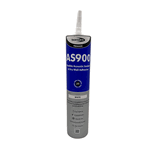
The most frequent oversight in soundproofing is the failure to address small gaps and cracks. Sound functions similarly to air or water; if there is a hole, the energy will pass through it. Acoustic sealant is a specialised, non-setting compound designed to maintain an airtight seal in joints that may experience movement. Unlike standard decorators' caulk or silicone, acoustic sealant remains permanently flexible and does not crack as the building settles or as temperatures fluctuate.
Acoustic sealants are particularly effective at the perimeters of rooms, specifically the gap between the skirting board and the floor, and the junction between the wall and the ceiling. In many UK flats, original floorboards may have gaps that allow sound to leak from the room below. Applying sealant to these joints is a critical first step in any acoustic project.
Application Area |
Purpose |
Material Requirement |
| Skirting Board Junctions | Blocks airborne sound from floor voids | Flexible Acoustic Sealant |
| Electrical Socket Perimeters | Seals gaps in drywall/plasterboard | Acoustic Sealant |
| Window and Door Frames | Prevents external noise ingress | Specialist Caulk |
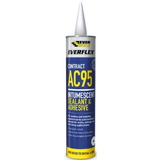
| Pipe Penetrations | Stops sound from travelling along plumbing | Intumescent Acoustic Sealant |
The installation process is straightforward for a DIY enthusiast. The surfaces must be cleaned of dust and debris before a bead of sealant is applied using a standard caulking gun. For larger gaps, a backing rod may be inserted first to provide support for the sealant. This simple intervention can improve the overall airborne sound performance of a wall by several decibels by ensuring the partition is truly airtight.
2. Perimeter Sealing and Specialist Door Draught Excluders
The internal and external doors of an apartment are often the weakest acoustic link. Most modern internal doors are hollow-core, meaning they consist of two thin veneers over a honeycomb cardboard centre. These doors provide almost no resistance to sound. While replacing the door with a solid-core version is a significant upgrade, it may not be within every resident's budget. A more affordable solution involves the use of high-quality perimeter seals and draught excluders.
Noise leaks around the edges of a door through the "air gap." By installing a compression seal around the frame, the gap is closed when the door is shut. Brands such as Stormguard offer silent acoustic door seals that can be easily cut to size and adhered to the frame. These seals are designed to compress slightly, creating an airtight barrier.
A significant amount of noise also enters through the gap at the bottom of the door. An automatic door bottom or a heavy-duty brush seal can mitigate this. For a more budget-friendly approach, a weighted fabric draught excluder (or "door snake") can be used, although its effectiveness is limited to when it is manually placed against the door. Sealing a door effectively can reduce the sound of corridor noise or communal area reverberation, which is a common complaint in blocks of flats.
3. Strategic Furniture Placement and Structural Mass
One of the most effective non-structural ways to improve soundproofing is through the strategic use of heavy furniture. This method relies on the principle of adding mass to a separating wall to make it harder for sound waves to penetrate. Large, heavy items such as built-in wardrobes, solid wood sideboards, and expansive bookcases act as secondary barriers against airborne noise.
A bookcase filled with books is particularly effective because it combines mass with diffusion. The varying depths and heights of the books help to scatter sound waves, preventing them from reflecting back into the room as a coherent echo. Placing a floor-to-ceiling bookcase against a shared party wall can provide a noticeable reduction in the sound of a neighbour's television or conversation.
When positioning furniture, it is also beneficial to create distance between the noise source and the listener. Moving a bed away from a shared wall and placing it against an internal wall can reduce the sound pressure level experienced by the resident. In a studio apartment, using wardrobes as room dividers can create a quiet zone for sleeping while simultaneously adding mass to the living space.
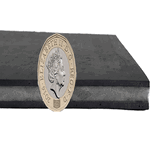
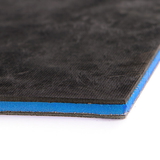
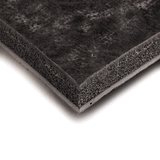
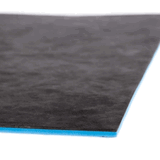
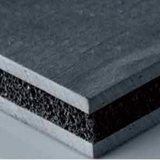
Buy Soundproofing Insulations Now
4. Dense Soft Furnishings and Acoustic Curtains
Internal reverberation—the persistence of sound in a room after the source has stopped—can make a quiet noise seem much louder. This is common in UK apartments with high ceilings and hard flooring surfaces like laminate or tile. Soft furnishings provide absorption, which "soaks up" the sound energy and reduces the echo.
Acoustic curtains are a specialised budget solution for windows and doors. These are not standard curtains; they are manufactured from multiple layers of heavy, dense fabrics such as velvet, wool, or industrial-grade blackout linings. The effectiveness of a curtain is largely dependent on its weight and "fullness." For the best results, curtains should be at least double the width of the window to allow for deep folds, which trap sound waves.
Rugs and carpets also play a vital role. While they do not block sound from travelling through a floor, they absorb the energy of footsteps at the point of contact, reducing the impact noise heard in the flat below. In kitchens and bathrooms, where hard surfaces are necessary, adding smaller mats can help to dampen the "clatter" of daily activity.
5. Secondary Glazing and Window Inserts 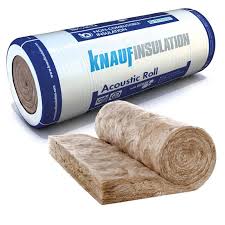
Windows are a primary entry point for external noise, such as traffic, sirens, and pedestrian chatter. In many conservation areas or listed buildings in the UK, residents are not permitted to replace original single-glazed windows with modern double-glazing. Secondary glazing is a budget-friendly and non-invasive alternative that involves adding a second pane of glass or acrylic inside the existing window frame.
The effectiveness of secondary glazing comes from the air gap created between the two panes. A gap of at least 100mm is recommended for significant noise reduction. This gap acts as an insulator, making it much more difficult for sound energy to pass through. DIY secondary glazing kits, which use magnetic strips to hold a clear acrylic sheet in place, are an affordable way to achieve this.
For those on a very tight budget, window film can be applied to the glass. While window film does not provide the same level of reduction as a second pane, it helps to dampen the vibration of the glass itself, which can slightly reduce high-frequency noise. Ensuring that the original window frame is well-sealed with acoustic sealant before installing secondary glazing will maximise the performance of the system.
6. Mass-Loaded Vinyl (MLV) for Partition Reinforcement
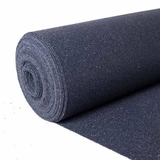
Mass-Loaded Vinyl is a high-density, flexible material that is often used in the UK soundproofing industry to add mass to surfaces without taking up excessive space. It is typically only a few millimetres thick but has a very high weight-to-area ratio. Because it is "limp," it does not have a natural resonant frequency, making it an excellent barrier for blocking airborne sound across a wide range of frequencies.
In an apartment setting, MLV can be used to reinforce thin internal walls or to line the back of cupboards and wardrobes. It is also used to wrap noisy soil pipes or waste pipes in kitchen and bathroom voids. Sound travelling through these pipes can be a source of annoyance in multi-storey buildings.
| Material Property | Specification | Benefit |
| Density | 5kg/m2 or 10kg/m2 | High mass blocks airborne noise |
| Flexibility | Limp-mass | Reduces resonance and vibration |
| Thickness | 2mm to 5mm | Saves space in small UK flats |
| Application | Walls, floors, pipes | Versatile noise barrier |
Installation involves cutting the vinyl to size and attaching it to the surface using a heavy-duty adhesive or mechanical fixings. For maximum effectiveness, the joints between the vinyl sheets should be overlapped and sealed with tape to ensure there are no gaps for sound to leak through.
7. Acoustic Underlays: Rubber, Felt, and Cork![]()
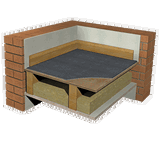
The reduction of impact noise is a key requirement of Approved Document E, especially for floors between flats. For residents with hard flooring, the use of an acoustic underlay is essential. These materials provide a resilient layer that decouples the floor finish from the structural subfloor, preventing vibrations from being transmitted.
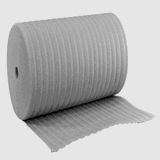
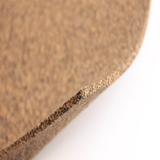
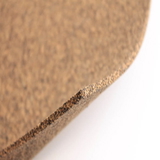
Recycled rubber underlay is a popular choice in the UK due to its durability and high resistance to impact. It is particularly effective under engineered wood or laminate floors. Acoustic felt underlay is often preferred for vinyl flooring, as it provides a stable base while offering excellent absorption properties. Cork is another budget-friendly, natural alternative that provides good impact reduction, though it may be less durable in high-traffic areas.
When installing underlay, it is vital to ensure that the material covers 100% of the floor area. Any gaps will create an "acoustic bridge," allowing sound to bypass the insulation. Additionally, the underlay should be turned up at the edges (flanked) or used in conjunction with a perimeter strip to ensure the floor finish does not touch the walls.
8. Acoustic Putty Pads for Electrical Sockets
Electrical sockets and light switches are often overlooked as potential noise paths. In a standard UK partition wall, the holes cut for socket boxes significantly reduce the acoustic integrity of the plasterboard. In many cases, sockets in adjoining rooms are placed back-to-back, creating a direct "hole" through the wall.
Acoustic putty pads are an inexpensive and highly effective solution. These are intumescent, mouldable liners that fit inside the socket box. They are designed to maintain both the fire rating and the sound insulation of the wall. The putty is non-setting and can be easily shaped around the cables.
Installation requires the removal of the socket faceplate (with the electricity turned off). The pad is then inserted and moulded to cover the back and sides of the box completely. This simple step can prevent sound from "leaking" through the walls, ensuring that the airborne sound insulation of the partition remains as high as possible.
9. Anti-Vibration Mats for Domestic Appliances 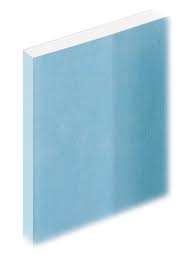
Mechanical noise from appliances like washing machines and dryers is a frequent source of structure-borne vibration in UK apartments. This is especially problematic on timber floors, which can amplify the vibration through the joists. Anti-vibration mats are made from high-density rubber or foam and are designed to isolate the machine from the floor.
A standard 10mm or 20mm rubber mat placed under a washing machine can significantly reduce the "thumping" sound of the spin cycle heard in the room below. For heavier machines, a thin wooden board should be placed on top of the mat to distribute the weight evenly, preventing the machine's feet from sinking into the rubber and rendering it ineffective.
Managing the appliance itself is also important. Ensuring that the machine is perfectly level and that any transit bolts have been removed will reduce the initial vibration. These mats are a very low-cost intervention that can prevent noise disputes with neighbours and protect the building's structure from excessive vibration.
10. DIY Acoustic Panels and Modular Wall Systems
For those dealing with excessive echo or noise originating within their own apartment, acoustic panels offer a stylish and functional solution. While professional panels can be expensive, they can be created at home using budget-friendly materials. A simple wooden frame can be filled with acoustic mineral wool—such as Rockwool RW3—and covered with an aesthetically pleasing, breathable fabric.
Acoustic mineral wool is much denser than standard fiberglass loft insulation and is specifically designed for sound absorption. It can be used in wall cavities, ceiling voids, or as standalone panels. These panels help to control the reverberation within a room, making it feel quieter and more private.
Modular systems, such as acoustic slat wall panels, have become a popular design trend in the UK. These consist of wooden slats mounted on a thick felt backing. They are easy to install by a competent DIYer and provide a combination of absorption and diffusion that improves the overall acoustic comfort of a living space.
Installation Pitfalls: Flanking Transmission and Acoustic Bridging
The success of any soundproofing project is dependent on the quality of the installation. Two of the most common reasons for failure are flanking transmission and acoustic bridging. Flanking transmission, as previously mentioned, occurs when sound energy travels around a barrier. In a typical UK flat, common flanking paths include the wall cavities, the floor joists, and even the timber plates that sit at the top and bottom of a stud wall.
Acoustic bridging occurs when a rigid connection is made between two isolated elements. For example, if a floating floor is installed with an acoustic underlay, but the flooring is then screwed through the underlay and into the subfloor, the screw acts as a bridge. The vibration travels directly through the screw, bypassing the underlay entirely. Similarly, if a floating floor touches the skirting board or the wall, a bridge is created.
To avoid these issues, it is essential to use resilient materials at every junction. Flexible acoustic sealant should be used to fill any perimeter gaps, and mechanical fixings should be avoided or used with specialist isolating washers where possible. Understanding these concepts is vital for ensuring that budget materials perform to their maximum potential.
Economic Considerations and Material Procurement in the UK
When budgeting for a soundproofing project in the UK, it is important to consider both the cost of materials and the potential long-term value added to the property. While some interventions, like door seals and putty pads, cost only a few pounds, they provide immediate and noticeable relief. Larger projects, such as floor underlays or secondary glazing, require a more significant investment but can improve the habitability and marketability of an apartment.
| Solution |
|
Installation Time | |
| Acoustic Sealant (per tube) | £5 - £15 | 1 hour | |
| Door Seal Kits | £10 - £40 | 1 - 2 hours | |
| Mass-Loaded Vinyl (per roll) | £60 - £120 | 1 day | |
| Acoustic Putty Pads (per pair) | £5 - £10 | 30 mins | |
| Anti-Vibration Mats | £15 - £30 | 30 mins | |
| Secondary Glazing (per window) | £40 - £150 | 2 - 4 hours | |
| Acoustic Underlay (per m2) | £5 - £20 | 1 day | |
| DIY Acoustic Panels (each) | £20 - £50 | 2 - 3 hours |
Procuring materials from specialist UK suppliers is often more cost-effective than buying from general DIY retailers, as they offer professional-grade products designed specifically for acoustic use. Brands such as The Soundproofing Store, SoundStop, and JCW Acoustic Supplies are well-regarded in the British market and provide detailed technical data for their products.
Conclusion: Achieving Acoustic Comfort in Urban Britain
Improving the soundproofing of a UK apartment is a multi-faceted challenge that requires an understanding of both the building's construction and the physical properties of sound. While structural changes provide the highest level of performance, they are often impractical for many residents. The top ten budget solutions identified in this guide offer a practical and affordable path to a quieter home.
By focusing on the principles of mass, absorption, and decoupling, and by meticulously addressing the most common paths of noise leakage, residents can significantly reduce both airborne and impact noise. Whether it is through the application of acoustic sealant, the strategic placement of a bookcase, or the installation of secondary glazing, these interventions help to meet the spirit of Approved Document E, creating a healthier and more private living environment.
Ultimately, effective soundproofing is about more than just blocking noise; it is about reclaiming the home as a sanctuary. In the dense urban landscapes of London, Manchester, Birmingham, and other UK cities, these budget-friendly strategies empower residents to take control of their acoustic environment and improve their overall well-being.
UK Legal Disclaimer
The information contained in this guide is provided for general informational purposes only and does not constitute professional advice. All building work in the UK must comply with the Building Regulations 2010 and any subsequent amendments. It is strongly recommended that all advice and material specifications be thoroughly checked by a qualified acoustic consultant, building control officer, or structural engineer before commencing any work. This content should not be used to specify materials for construction or renovation projects. The author and publisher assume no responsibility for any errors or omissions, or for any loss or damage resulting from the use of the information provided. Always ensure that fire safety regulations are maintained when installing soundproofing materials, particularly around electrical components and in shared dwellings.

Samuel Hitch
Managing Director
Buy Insulation Online.
Leave A Reply
Your feedback is greatly appreciated, please comment on our content below. Your email address will not be published. Required fields are marked *