
- Blogs
- A Comprehensive Guide to the Benefits of Actis Hybris Insulation in the UK Construction Industry
A Comprehensive Guide to the Benefits of Actis Hybris Insulation in the UK Construction Industry
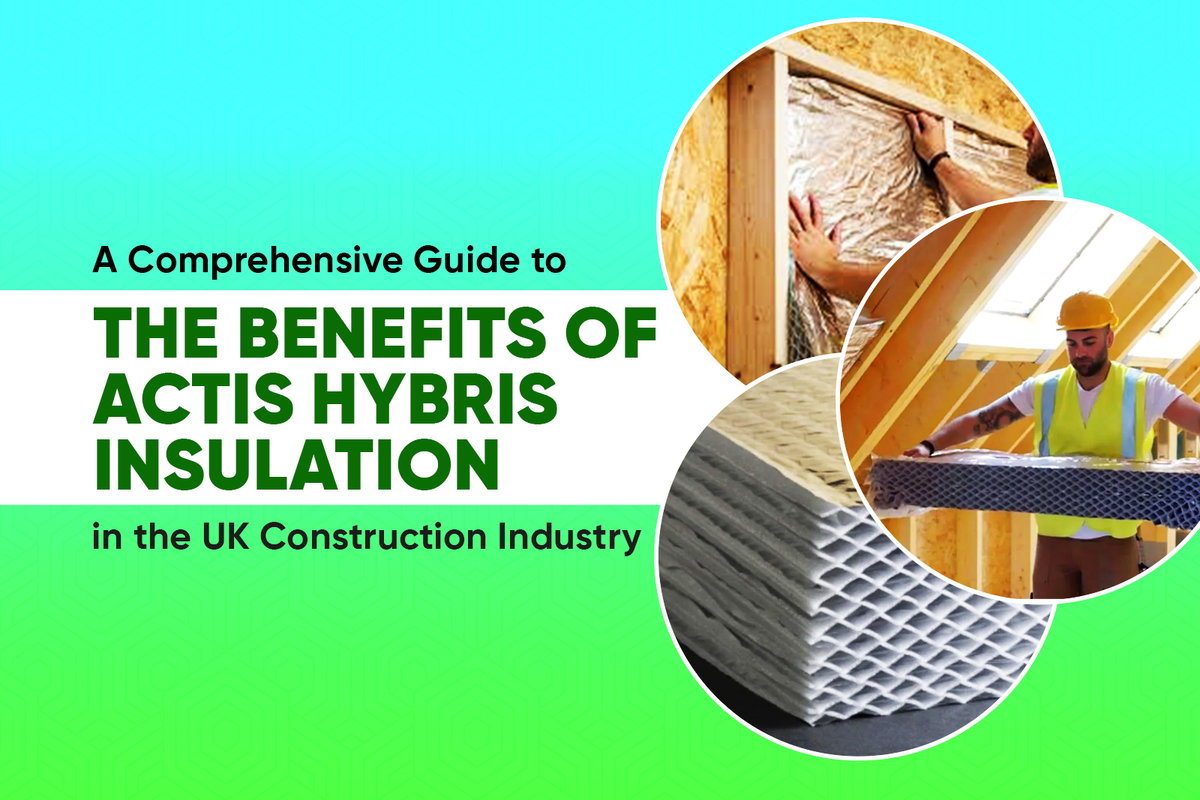

TLDR: Actis Hybris is a revolutionary reflective insulation panel engineered for the UK construction market, featuring a unique honeycomb structure that provides high thermal, acoustic, and airtight performance. Its lightweight, fibre-free design simplifies installation between rafters, studs, and joists while achieving a thermal conductivity of 0.033 W/mK. Certified by the BBA and LABC, it helps UK buildings meet Part L requirements and improve Energy Performance Certificate ratings. As a sustainable solution with Cradle to Cradle Bronze certification, it reduces site waste, avoids thermal bridging, and ensures long-term building durability without slumping or degrading over time.
The Evolution of Building Insulation within the United Kingdom
The landscape of the United Kingdom construction sector has undergone a profound transformation over the last decade. As national targets for net-zero carbon emissions by 2050 become integrated into local planning policies and building regulations, the selection of building materials has moved beyond simple cost considerations. The focus is now on the longevity, performance, and environmental footprint of the building envelope. Within this context, traditional insulation materials such as mineral wool and rigid polyisocyanurate foam boards are being evaluated against newer, more versatile technologies. One such technology that has gained significant traction across the British Isles is Actis Hybris, a reflective honeycomb insulation that addresses the unique challenges of the UK climate and housing stock.
Historically, the UK has relied on mass-insulation techniques that work by trapping air within fibres or closed-cell foams. While effective, these materials often present challenges during the installation phase, such as the generation of irritating dust, the requirement for bulky storage, and the risk of slumping within wall cavities. Actis Hybris represents a departure from these traditional methods by utilising the principles of thermal reflection and air entrapment within a structured geometric lattice. This approach is particularly relevant for the UK, where many residential projects involve retrofitting older, space-constrained properties or constructing new timber-frame homes that require high thermal efficiency within slim wall profiles.
The regulatory environment in the UK, particularly the recent updates to Approved Document L, has placed a greater emphasis on the continuity of insulation and the reduction of air leakage. Modern buildings are no longer assessed solely on the theoretical performance of individual materials but on the real-world efficiency of the entire system. Actis Hybris is designed to meet these requirements by providing an integrated solution that combines insulation, vapour control, and airtightness. This multi-functional capability simplifies the construction process and reduces the potential for errors that lead to thermal bridging and heat loss.
The Science and Architecture of the Honeycomb Structure
At the heart of Actis Hybris is a sophisticated engineering design that distinguishes it from any other insulation product available in the UK. The material consists of a series of shaped polyethylene foams bonded to aluminium-coated polyethylene foils. These layers are arranged to form a threedimensional honeycomb matrix. This geometry is not merely for structural integrity; it is a precisely calculated thermal barrier designed to combat the three primary forms of heat transfer: conduction, convection, and radiation.
Managing Conduction and Convection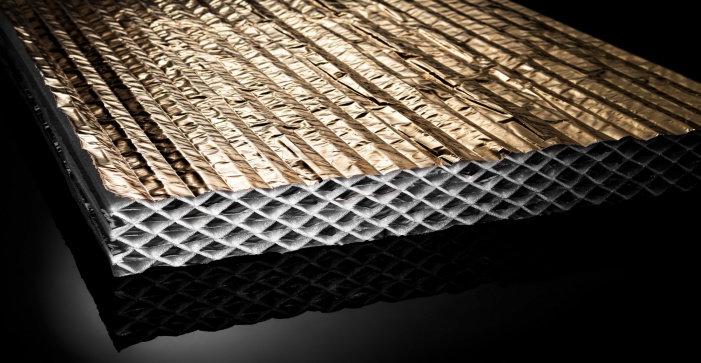
Conduction is the transfer of heat through solid materials. Because Actis Hybris is composed largely of air trapped within thin polyethylene walls, the path for conductive heat transfer is extremely limited. Polyethylene itself has a low thermal conductivity, and the thinness of the internal cell walls ensures that very little energy can move through the solid parts of the panel.
Convection involves the movement of air or liquid. In many traditional insulation types, air can move through the material, carrying heat with it—a process known as thermal bypass. The honeycomb structure of Hybris creates thousands of independent, closed cells. These cells trap air and prevent it from circulating. By immobilising the air, the material creates a highly effective thermal buffer. Because the cells are small and sealed, the temperature gradient across the panel does not result in the kind of internal air movement that compromises the performance of more porous materials.
The Role of Thermal Radiation and Emissivity
Radiation is perhaps the most significant mode of heat transfer addressed by this technology. All surfaces emit and absorb radiant heat in the form of infrared energy. The aluminium-coated layers within the Hybris panels are designed with low emissivity. Emissivity is a measure of a material's ability to radiate energy; a low-emissivity surface reflects a high percentage of radiant heat rather than absorbing it.
The internal cavities within the honeycomb lattice are lined with these reflective foils. This creates a series of radiant barriers that reflect heat back across each individual cell. On the exterior of the panel, the foils serve a dual purpose. During the winter, they reflect internal heat back into the living space. During the summer, they reflect external solar radiation away from the building, preventing the overheating that is becoming a common issue in modern, highly insulated UK homes. This dual-action performance ensures that the building remains comfortable throughout the unpredictable British seasons.
Detailed Technical Specifications and Physical Properties
For professionals specifying materials for UK construction projects, understanding the exact physical characteristics of a product is essential for ensuring structural compatibility and meeting thermal targets. Actis Hybris is manufactured to high standards, with specifications that allow for precise calculations in building models and SAP assessments.
Dimensions and Manufacturing Tolerances
The panels are sized to align with standard UK construction modules, particularly for timber frame and rafter spacing. The standard panel size is 1200 mm in length and 1145 mm in width. This width is specifically chosen to facilitate friction-fitting between studs or rafters that are typically spaced at 400 mm or 600 mm centres.
| Specification Item | Declared Value |
| Panel Length | 1200 mm |
| Panel Width | 1145 mm |
| Thickness Range | 50 mm to 205 mm |
| Density | 9.5 kg per cubic metre |
| Thermal Conductivity (λD) | 0.033 W/mK |
| Internal Face Emissivity | 0.05 |
| External Face Emissivity | 0.10 |
| Watertightness | Class W1 |
| Water Vapour Resistance | 450 MNs/g |
| Fire Reaction | Class F |
The lightweight nature of the material is particularly beneficial for site logistics. At a density of only 9.5 kg per cubic metre, a large volume of insulation can be handled by a single person without the risk of strain or the need for heavy lifting equipment. This is a significant advantage over high-density mineral wool or heavy rigid boards.
Thermal Resistance and Air Gap Performance
The performance of Actis Hybris is often calculated based on its core resistance plus the additional resistance provided by adjacent air gaps. In the UK, it is common practice to install insulation with a service void or a small unventilated air gap between the insulation and the internal finish. The low-emissivity surfaces of Hybris are designed to maximise the thermal benefit of these air gaps.
The following table details the core thermal resistance of the material at various thicknesses. For the purpose of technical accuracy, it is important to observe the specific resistance values as they scale with the thickness of the panel.
| Thickness (mm) | Core Thermal Resistance (m2K/W) |
| 50 | 1.50 |
| 75 | 2.25 |
| 90 | 2.70 |
| 105 | 3.15 |
| 125 | 3.75 |
| 140 | 4.20 |
| 155 | 4.65 |
| 170 | 5.15 |
| 185 | 5.60 |
| 205 | 6.20 |
When these panels are installed with unventilated air gaps on both sides, the total thermal resistance of the assembly can increase by a significant margin. For example, a 105 mm panel can achieve a total resistance of over 4.00 m2K/W when combined with two 20 mm air gaps. This allows builders to achieve the low U-values required by modern standards without resorting to excessively thick wall or roof profiles.
Acoustic Performance and Internal Comfort Levels
While thermal efficiency is often the primary driver for insulation selection, acoustic comfort is a secondary benefit that has a major impact on the quality of life for building occupants. The United Kingdom's dense housing developments and the increase in multi-dwelling units mean that sound insulation is a critical component of building design.
The cellular structure of Actis Hybris functions as an array of sound traps. As sound waves enter the honeycomb lattice, they are reflected and absorbed by the various layers of foam and foil. This reduces the transmission of both airborne noise, such as speech and music, and impact noise. The airtight nature of the panels further contributes to sound reduction by eliminating the gaps through which noise can travel.
In specific laboratory tests, a masonry wall constructed with 125 mm of Hybris insulation achieved a weighted sound reduction index of 67 dB. This level of performance is well within the requirements for separating walls and provides a serene internal environment, even in bustling urban areas. For homeowners, this means a reduction in noise from neighbours, traffic, and weather events like heavy rain on a pitched roof.
Furthermore, the materials used in Hybris are selected for their neutrality. The product is rated A+ for internal air quality, meaning it does not emit volatile organic compounds or other harmful gases into the home. For residents with respiratory issues or allergies, the absence of irritating fibres is a significant advantage over traditional glass or stone wool products, which can release particulates during the lifespan of the building if the airtightness layer is compromised.
Buy Actis Hybris Insulation
Building Element Applications: Roofs, Walls, and Floors
The versatility of Actis Hybris allows it to be used across the entire building envelope. Its flexible but semi-rigid nature makes it adaptable to the various structural forms found in UK architecture, from traditional masonry to modern timber frames.
Pitched Roof Applications
In the UK, pitched roofs are often the most difficult areas to insulate effectively, especially in retrofit or loft conversion projects. The irregular spacing of older rafters and the need to maintain a ventilation path can make the installation of rigid boards difficult and wasteful.
Actis Hybris excels in this environment. The panels can be easily cut to size and friction-fitted between rafters. Because the material is flexible, it can compensate for slight variations in rafter width, ensuring a snug fit that eliminates the gaps responsible for heat loss. It can be used in "warm roof" configurations, where it is placed above or between rafters, or "cold roof" setups at the ceiling level.
In many high-performance roof designs, Hybris is used between the rafters, while a secondary layer of reflective vapour control material is fixed across the underside of the rafters. This creates a continuous thermal blanket that virtually eliminates the thermal bridging caused by the timber rafters themselves.
Timber Frame and Masonry Walls
Timber frame construction is an increasingly popular choice in the UK due to its speed and sustainability. Hybris is ideally suited for this method, as it can be fitted into the stud voids on the factory floor or on the building site. The friction-fit properties mean that no additional mechanical fixings are required to hold the insulation in place during the construction phase, which speeds up the build process.
For masonry walls, Hybris can be used in a "room-in-roof" style or as internal wall insulation. When applied internally, the slim profile of the material is a major benefit, as it minimises the loss of valuable floor space. The integrated vapour control layer in the copper-coloured film is essential in these applications, as it prevents moisture from the internal air from reaching the cold masonry surface and causing damp or mould.
Ground and Suspended Floors 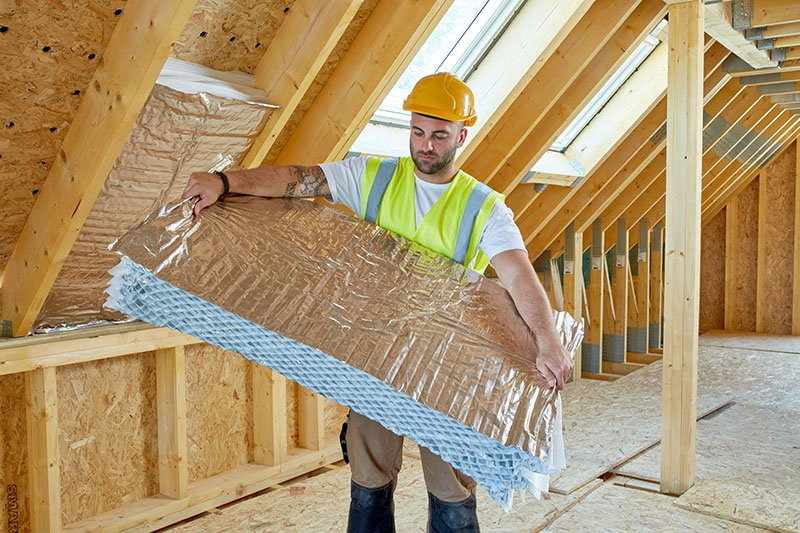
Heat loss through floors is a significant factor in older UK homes with suspended timber joists. Hybris can be installed between joists to provide a robust thermal barrier. Its moisture-resistant properties are particularly useful in crawl spaces, where humidity levels can be high. Unlike some mineral wool products that can absorb moisture and lose their insulating properties, the polyethylene components of Hybris remain unaffected by damp conditions, maintaining their performance for the life of the building.
Comprehensive Installation Guide for Professionals
Achieving the declared performance of any insulation material requires a high standard of installation. The following guide outlines the best practices for handling and fitting Actis Hybris on a UK building site.
Site Preparation and Tool Requirements
One of the practical benefits of working with this material is the cleanliness of the process. Installers do not need to wear bulky protective clothing, and the absence of dust means that the work area remains clean. The essential tools for installation include:
-
A sharp insulation saw or a standard fine-toothed handsaw.
-
A tape measure and a marker for layout.
-
A heavy-duty staple gun with galvanised staples of at least 20 mm in length.
-
Actis Multidhesif tape for all joints and perimeter sealing.
The Cutting and Fitting Process
Accurate measurement is the first step toward a high-quality installation. The gap between the structural timbers should be measured at several points. The Hybris panel should then be cut approximately 5 mm to 10 mm wider than the widest point of the gap.
When cutting the material, it is often most efficient to keep the panels in their original packaging. The entire pack can be cut through with a saw, which ensures that all panels in the bale are identical in width. Once cut, the panels are removed from the packaging and expanded to their full length.
The panel is then pushed into the void between the timbers. It should be positioned to create the necessary air gaps as specified in the building design. For instance, if the rafters are 150 mm deep and 105 mm Hybris is being used, the panel can be centralised to leave a small air gap on either side, or pushed to one side to create a larger single gap.
Securing and Sealing the Envelope
Once the panel is friction-fitted, the copper-coloured film, which serves as the vapour control layer, must be stapled to the face of the timber. Staples should be placed every 50 mm along the edges to ensure a secure and permanent fixing.
The most critical phase of the installation is the sealing of joints. Every joint between panels, and any area where the insulation meets a structural member like a wall plate or a ridge beam, must be sealed with the specialised adhesive tape. This creates a continuous airtight barrier. Air leakage can account for a significant percentage of heat loss in UK homes; by ensuring that the Hybris installation is perfectly sealed, the builder can significantly improve the building's overall energy performance.
When passing services like electrical cables or plumbing pipes through the insulation, a small cross-cut should be made in the foil. After the service is in place, the area around the penetration must be taped to restore the airtight integrity of the panel.
The Hybrid System: Integration and Synergy
While Actis Hybris is a powerful standalone insulator, it is part of a broader family of products known as the Actis Hybrid range. These products are designed to work together to create a high-performance building envelope that exceeds the requirements of current UK building regulations.
Complementary Membranes
The range includes Boost'R Hybrid and HControl Hybrid. These are thin, reflective membranes that add further thermal resistance and provide specialised moisture management functions.
-
Boost'R Hybrid: This is an insulating breather membrane designed for the cold side of the structure. It protects the building from wind-driven rain and snow while allowing internal moisture to escape. It features a reflective surface that boosts the overall thermal performance of the wall or roof.
-
HControl Hybrid: This is a reflective vapour control layer that is used on the warm side of the insulation. It is exceptionally airtight and provides an additional layer of thermal resistance.
When Hybris is combined with these membranes, the result is a slim, lightweight, and highly efficient system. This approach is often the only way to achieve the very low U-values required for "passive" standard buildings or high-efficiency retrofits without significantly increasing the thickness of the building's walls or roof.
Logistics and Packaging Efficiency
The efficiency of the Actis system extends to its logistics. Because the materials are lightweight and can be compressed for transport, the number of deliveries required for a large project is greatly reduced. For a typical UK housing development, this means fewer lorries on site, reduced carbon emissions from transport, and less space required for on-site storage.
| Thickness (mm) | Packs per Pallet | Coverage per Pack (m2) |
| 50 | 32 | 5.49 |
| 105 | 17 | 5.49 |
| 125 | 25 | 2.74 |
| 155 | 23 | 2.74 |
| 185 | 18 | 2.74 |
This table shows the high volume of material that can be stored on a single pallet, providing a clear logistical advantage for builders working on sites with limited access or storage capacity.
Regulatory Compliance, Certification, and Standards
For any building material used in the United Kingdom, compliance with national standards and building regulations is mandatory. Actis Hybris has been subjected to extensive testing by independent accredited bodies to ensure it meets the highest levels of safety and performance.
BBA Agrément Certificate 24/7263
The British Board of Agrément (BBA) is the UK's leading body for the assessment of construction products. Hybris holds BBA Certificate 24/7263, which covers its use in timber frame walls, masonry walls, and pitched roofs. The certificate confirms that the product is fit for its intended use and provides detailed information on its thermal performance, fire safety, and durability. This certification is a vital document for building control officers, architects, and warranty providers like the NHBC, as it offers independent proof that the material complies with UK building regulations.
LABC and LABSS Registered Details
The product is also recognised under the Local Authority Building Control (LABC) and LABSS (for Scotland) Registered Details schemes. These schemes are designed to streamline the building control process by providing a pre-approved set of technical data that local authorities across the country can accept. When a builder uses a product with LABC Registered Details, they can be confident that the building control process will be more efficient, as the technical merit of the product has already been verified at a national level.
Fire Safety and European Standards
In terms of fire safety, Actis Hybris is classified as Euroclass F. While this indicates it is a combustible material, it is designed to be installed behind a fire-resistant barrier such as fire-rated plasterboard. This is a common requirement for many modern insulation materials used in domestic construction. The product must always be installed in accordance with the guidance provided in the BBA certificate and the manufacturer's instructions, ensuring that it is properly protected from potential ignition sources like chimneys or heat-emitting light fixtures.
Impact on Energy Performance Certificates and SAP Ratings
The United Kingdom's strategy for improving the energy efficiency of the housing stock relies heavily on the Energy Performance Certificate (EPC) system. For landlords and homeowners, achieving a high EPC rating is no longer optional; it is a requirement for renting out properties and a significant factor in property valuation.
Understanding SAP and RdSAP
The Standard Assessment Procedure (SAP) is the government-approved methodology for calculating the energy performance of a dwelling. For existing homes, a simplified version known as RdSAP is used. These assessments consider every aspect of the building fabric, including the U-values of the walls, roof, and floor, as well as the efficiency of the heating system and the airtightness of the structure.
Installing Actis Hybris can have a transformative effect on a building's SAP score. Because it addresses both thermal resistance and airtightness, it provides a double benefit in the calculation. By reducing the heat lost through the fabric and preventing the cold air draughts that SAP identifies as a major source of energy waste, the product helps move buildings into higher EPC bands.
Meeting the EPC C Requirement
The UK government has set a target for all residential rental properties to reach a minimum EPC rating of C by 2035. Many older properties currently sit in bands D, E, or F. Moving a property from an E to a C requires a substantial improvement in the thermal efficiency of the envelope.
Actis Hybris is a particularly effective tool for this upgrade. In retrofit scenarios, where adding thick layers of traditional insulation to the inside of walls would make rooms too small, the slim profile of Hybris allows for significant thermal improvements with minimal impact on living space. This makes it a preferred choice for social housing providers and private landlords who need to meet these energy targets while maintaining the functionality of their properties.
Sustainability and the Circular Economy: Cradle to Cradle 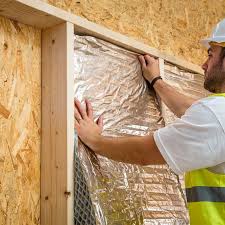
The environmental impact of building materials is a subject of growing concern for everyone involved in the UK construction industry. From the carbon emitted during manufacture to the ease of recycling at the end of a building's life, every stage of a product's lifecycle is now under review.
Cradle to Cradle Bronze Certification
Actis Hybris is the only reflective insulation product in Europe to have achieved Cradle to Cradle Bronze certification. This is a rigorous global standard that assesses products for their positive impact on people and the planet. To achieve this certification, the material was evaluated across five key categories:
-
Material Health: Ensuring the components are safe for humans and the environment.
-
Product Circularity: Designing the product so that its components can be recycled or reused.
-
Clean Air and Climate Protection: Reducing the carbon footprint of manufacturing.
-
Water and Soil Stewardship: Protecting the environment from pollution during production.
-
Social Fairness: Ensuring ethical treatment of workers throughout the supply chain.
Recyclability and Waste Management
The product is 100% recyclable. This is a crucial feature for the UK construction industry, which is striving to reduce the amount of waste sent to landfill. On a typical building site, off-cuts of Hybris can be collected and sent for recycling, contributing to a circular economy. Furthermore, because the material does not degrade or slump, its performance remains constant over the life of the building, which avoids the need for replacement and the environmental cost of manufacturing new insulation.
The lightweight nature of the material also contributes to its sustainability. By requiring fewer deliveries and using less fuel for transport, the logistical efficiency of Hybris reduces the carbon emissions associated with the construction process. For projects aiming for BREEAM or other sustainability certifications, these factors are highly valuable.
Economic and Commercial Viability for the UK Market
Choosing the right insulation is not just a technical decision; it is a commercial one. For professional builders and developers, the total cost of a project is the most important metric. This includes the purchase price of the materials, the cost of labour for installation, and the cost of managing waste.
Labour Savings and Site Efficiency
In the UK, labour is one of the largest costs in any construction project. Materials that are slow or difficult to install can quickly erode a project's profitability. Actis Hybris provides a clear economic benefit by significantly reducing the time required for installation. The friction-fit panels are much faster to install than rigid boards, which often require complex cutting and foaming to achieve an airtight seal.
The cleanliness of the product also means that no specialized cleanup is required after the insulation phase. There are no fibres to vacuum up and no irritating dust to manage. This allows follow-on trades, such as electricians and plasterers, to start their work sooner, keeping the project on schedule.
Space Optimization and Property Value
In high-value areas like London and the South East, every square metre of floor space has a high financial value. By allowing for thinner walls while still meeting building regulations, Actis Hybris can increase the internal floor area of a development. For a large apartment building or a terrace of new homes, this extra space can translate into thousands of pounds of additional value for the developer.
Furthermore, the long-term durability of the product means that the building remains energy efficient for decades. This protects the value of the property and reduces the risk of future maintenance costs, providing peace of mind for both developers and homeowners.
Summary of Benefits for the UK Reader
To conclude this guide, it is helpful to summarise the primary advantages that Actis Hybris offers to the UK construction industry and the broader public.
The product represents a significant technological leap over traditional materials. Its unique honeycomb structure provides a robust thermal barrier that is effective in both winter and summer. Its acoustic properties ensure a quiet and comfortable internal environment, while its airtightness and vapour control capabilities help buildings meet the most demanding energy efficiency standards.
For the installer, the material is a dream to work with. It is light, clean, and easy to cut. The friction-fit design eliminates the need for complex fixings and reduces the risk of thermal bridging. For the architect and specifier, the BBA and LABC certifications provide the assurance that the product is fully compliant with UK building regulations and is backed by a reputable manufacturer.
From an environmental perspective, the Cradle to Cradle certification and 100% recyclability make it a responsible choice for the future. By helping properties achieve higher EPC ratings, it plays a vital role in the national effort to reduce carbon emissions and combat climate change.
Whether you are a professional builder looking to improve site efficiency, an architect designing a high-performance home, or a homeowner seeking to lower your energy bills and improve your comfort, Actis Hybris offers a comprehensive and proven solution that is perfectly suited to the needs of the United Kingdom.
UK Legal Disclaimer: The information provided in this article is for general guidance and informational purposes only. It does not constitute professional construction, architectural, or legal advice. Every building project is unique and subject to specific local conditions, structural requirements, and varying interpretations of building regulations. All technical specifications, installation details, and material selections must be independently verified and specified by a qualified professional, such as a chartered architect, building surveyor, or structural engineer, prior to any work commencing. This content should not be used as a specification document or as a definitive guide to regulatory compliance. No liability is accepted by the author or publisher for any loss, damage, or injury arising from the reliance on the information contained herein. Always consult the latest manufacturer data sheets and BBA certificates for up-to-date technical information. All building work must be inspected and approved by an authorised building control body to ensure it meets the legal requirements of the Building Regulations in your specific jurisdiction.

Samuel Hitch
Managing Director
Buy Insulation Online.
Leave A Reply
Your feedback is greatly appreciated, please comment on our content below. Your email address will not be published. Required fields are marked *