




- Blogs
- Best Pipe Insulation in the UK: How to Choose the Right Lagging for Every Pipe
Best Pipe Insulation in the UK: How to Choose the Right Lagging for Every Pipe
Why Pipe Insulation Matters In UK Homes
Using the best pipe insulation to prevent freezing is one of the simplest ways to protect your home. Good lagging is your first line of defence against burst pipes, wasted energy and damp patches around your plumbing.
When water in a pipe freezes, it expands by roughly 9%. That extra volume puts huge pressure on copper or plastic pipes, especially at elbows and joints. The result is often a split pipe, a soaked ceiling and a nasty repair bill. In the UK it's common for a single frost damaged pipe to cost £150–£600 to put right, and the water damage can easily run into the thousands once you add in flooring, plaster and electrics.
Pipe insulation slows down the rate at which pipes lose heat to cold air. By slowing heat transfer, it delays water from freezing in winter and helps keep cold water runs below temperatures where bacteria thrive. Ignoring exposed pipework risks costly repairs, structural damp and avoidable energy waste across the whole building.
Beyond emergency frost protection, insulation is also a cornerstone of modern home energy efficiency. A typical uninsulated 22 mm central heating flow pipe can lose around 30 watts of heat per metre, while the same pipe wrapped in 19 mm foam lagging might lose nearer 8 watts per metre. On current UK energy prices, that rough difference can work out at about £12 per year saved for every metre of insulated pipework in the right conditions, meaning simple lagging jobs often pay for themselves within a year or two.
Fig. 1 — Heat loss comparison: uninsulated vs insulated 22mm copper pipe
Insulation also helps with cold pipes. When humid indoor air touches a cold, uninsulated pipe, the pipe surface can drop below the local dew point and "sweat". Over time, that dripping water can stain plasterboard, rot timber and encourage mould growth. Lagging keeps the pipe surface warmer, so moisture is less likely to condense, and it helps stop cold water runs warming up above 20 °C where bacteria like Legionella are happiest.
Types Of Pipe Insulation And Where They Are Best
Choosing the best pipe insulation is mainly about matching the material to the job: what temperature the pipe runs at, how damp the area is, and whether the pipe is indoors or outside.
The main types used in modern domestic and commercial installations are:
|
Material type |
Approx. thermal conductivity (at 0 °C) |
Typical temperature range |
Best for |
|
Polyethylene foam |
~0.034 W/mK |
–45 °C to +105 °C |
Indoor hot and cold pipes in reasonably dry areas |
|
Elastomeric nitrile rubber |
~0.033–0.035 W/mK |
–50 °C to +110 °C |
Chilled water, condensate, high humidity basements |
|
High temperature EPDM rubber |
≤0.044 W/mK |
–50 °C to +150 °C |
Solar and high temperature external runs |
|
Phenolic foam |
~0.025 W/mK |
Up to ~+120 °C |
High performance, space constrained runs |
|
Stone wool / mineral fibre |
Varies with density |
0 °C to +250 °C |
Very hot pipes, plant rooms, fire rated zones |
Fig. 2 — Thermal conductivity (λ) of common UK pipe insulation materials (lower = better)
Low density PE foam offers very competitive thermal performance around 0.034 W/mK at 0 °C, which makes it excellent for typical indoor heating and hot water pipes. In high humidity or chilled water applications, though, you need materials with high watervapour resistance (like elastomeric rubber or correctly detailed phenolic). If insulation absorbs moisture, its conductivity shoots up, the insulation value collapses and corrosion can set in.
Fire performance is another key factor. Products are tested to Euroclass standards from A1 (non combustible, typical of stone wool) down to F for highly combustible materials. In commercial buildings, escape corridors or multi occupancy plant rooms, specifiers usually choose non combustible mineral wool wraps or Class 0 / Euroclass B elastomeric products to limit fire spread and toxic smoke.
|
DIY note: All rigid lagging (phenolic and mineral wool sections) is noticeably harder to install neatly than flexible foam or rubber. Getting clean mitres, supporting the sections and taping joints properly takes practice. If you're not used to working with rigid pipe sections, it's worth getting a heating engineer or lagging firm to install those for you. |
PE Foam Pipe Insulation - Best For Indoor Hot And Cold Pipes
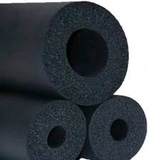
Polyethylene foam insulation is the everyday workhorse for domestic central heating pipework and internal cold water networks in heated spaces. It is:
- Economical and lightweight
- Fibre free and easy to cut
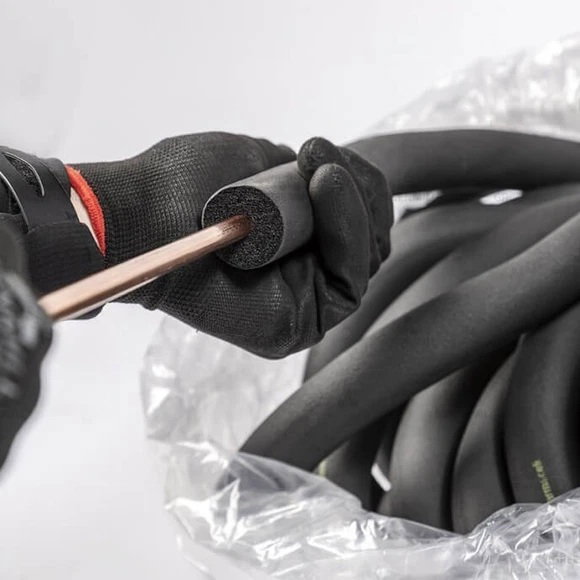
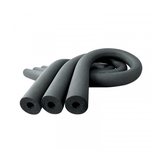
- Designed as flexible extruded tubes that clip over pipes
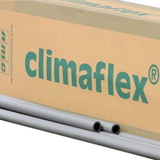
Well known UK brands (for example Climaflex type products) use durable polyethylene with zero ozone depletion potential and very low thermal conductivity. Standard 9 mm or 13 mm wall thickness works very well for most residential energy saving jobs and is commonly used in lofts, airing cupboards and under floors.
The closed cell structure gives a high water vapour resistance factor, helping the insulation stay dry when humidity in cupboards and floor voids fluctuates. The foam also adds a little acoustic damping, reducing water flow noise transmitted through joists and studwork.
However, standard PE foam lagging is intended for indoor or ducted use. Prolonged exposure to sunlight and driving rain breaks the material down, making it brittle and crumbly. For that reason, it shouldn't be used bare on outside pipes. If you do use it outdoors, it needs to sit inside a proper weatherproof cladding system.
Nitrile Rubber Lagging – Best For Condensation And Chilled Lines
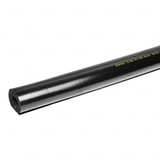
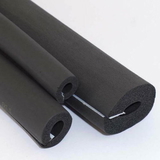
Flexible closed cell elastomeric nitrile rubber is the industry standard for chilled lines, air conditioning pipework and high humidity areas. Its dense, non porous composition builds the vapour barrier into the insulation itself, so moist air can't reach the cold pipe surface and cause sweating or corrosion under insulation.
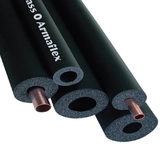
Top tier brands (such as Armaflex or Rubaflex) manufacture dust free tubes that bend easily around tight corners and complex runs. Because every cell in the rubber acts as its own vapour barrier, you don't need a separate foil jacket to keep humidity out.
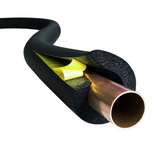
Many premium nitrile products include antimicrobial protection in the foam. This helps discourage mould and bacterial growth on the surface in dark, damp service areas and supports hygiene on cold water lines. Self seal versions with integral adhesive strips allow installers to close seams quickly without messy contact adhesives.
Use nitrile rubber for:
- Chilled water and AC pipework
- Cold mains in basements and plant rooms
- External or semi external condensate runs (usually with a weatherproof outer skin)
Phenolic Pipe Insulation – Slim, High Performance Option
Phenolic foam pipe insulation is more common in commercial settings but increasingly appears in higher performance homes. Its big selling point is very low thermal conductivity (often around 0.025 W/mK), meaning you can achieve the same insulation performance as thicker foam with significantly thinner sections.
That makes phenolic ideal when: 
- You have very limited space behind boxing or in service risers
- You need to hit BS 5422 energy targets but can't accommodate thick lagging
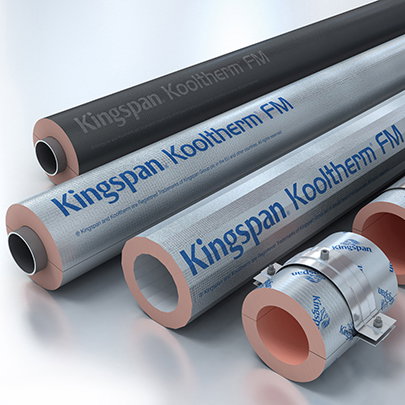
- You want a rigid, foil faced surface for taping joints and forming a vapour barrier
Because phenolic comes as rigid, preformed sections, it's much less forgiving than standard foam to cut and fit. You'll need accurate mitre cuts, proper pipe supports and careful taping to avoid gaps and cold bridges. For most homeowners, it's more realistic to have a plumber or lagging contractor install phenolic rather than tackling it as a first time DIY job.
For very hot pipes or where non combustibility is essential, mineralwool pipe sections are still the default, but phenolic fills a useful "high performance yet slimline" niche in the domestic market.
High Temperature Pipe Insulation – For Boiler Flow And Solar
Where pipe temperatures regularly exceed 90–110 °C—think boiler primary flow, biomass circuits or solar thermal loops—standard PE foam is not suitable. It can soften, shrink and pull away from the pipe at higher temperatures.
Here you're typically looking at:
- High temperature EPDM rubber (products like Armaflex HT), which keeps its shape and flexibility up to around 150 °C while still insulating well.
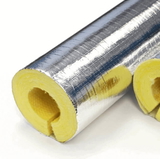
- Pre formed mineralwool (stone wool) sections, often with foil facings, which are non combustible and cope well with very hot surfaces.
These are commonly used in boiler rooms, plant rooms and on exposed high temperature external runs. As with phenolic, they're rigid and more technical to install neatly, so most homeowners will be better off bringing in a professional for high temperature work.
Best Pipe Insulation To Prevent Freezing (And Where Trace Heating Fits In)
Preventing freezing in unheated voids (lofts, garages, crawl spaces) means choosing both the right material and the right thickness. BS 5422 and related UK guidance set out recommended insulation wall thicknesses for different pipe sizes to achieve around a 12 hour freeze delay under design conditions.
There's a simple "paradox" behind those tables:
- Bigger pipes have more surface area and lose more heat overall, so they need insulation to reduce energy loss.
- Smaller pipes hold far less water per metre, so they cool and freeze much faster—meaning they can actually need thicker insulation to meet freeze delay targets.
In theory you might see specs calling for 19–25 mm insulation on common sizes like 15, 22 and 28 mm copper in cold lofts. In practice, most older houses don't have that sort of clearance around existing pipes.
Fig. 3 — Minimum insulation wall thickness by pipe OD under UK regulations
* Based on reference insulant λ ≤ 0.040 W/mK (closed-cell PE foam). Higher-performance materials may comply at reduced thickness — refer to BS 5422:2023.
So what if you physically can't get 25–32 mm of lagging round a pipe?
- If you can only fit 9–13 mm, it's still worth doing – it slows heat loss and gives some protection.
- On very exposed or critical runs (condensate pipes, outside mains, loft lines that can't easily be drained) it's wise to pair thinner lagging with trace heating.
- A trace heating cable runs along the pipe and switches on when the temperature drops towards freezing. Without insulation it can draw 15–40 W per metre. Wrap the cable and pipe in closed cell insulation and the heat is trapped, so the cable cycles on less often and uses much less energy overall.
Best Outdoor Pipe Insulation And Lagging For Outside Pipes
External pipework is at the highest risk of freezing. Standard 9 or 13 mm indoor foam sleeves are not enough for fully exposed runs in a UK winter.
A robust outdoor setup usually includes:
- Closed cell insulation (often nitrile rubber, phenolic or EPDM)
- As thick as space allows—often 25–32 mm wall thickness or more on very exposed runs
- A continuous weatherproof jacket (PVC, PIB or aluminium) with all seams taped and sealed so wind and rain can't get in
If water penetrates the insulation, it replaces the trapped air pockets and dramatically increases thermal conductivity. So keeping the insulation dry and airtight is just as important as choosing the right product.
Critical weak points include:
- The short exposed elbow where a pipe exits the wall to a garden tap
- The "riser" where mains pipes come up into meter boxes
- Any brackets or supports that puncture the insulation layer
On older properties with tight clearances outside, this again is where trace heating plus whatever insulation will fit is often the safest compromise.
Best Lagging For Condensate Pipes
Condensing boilers discharge slightly acidic condensate in small batches. Long, thin, uninsulated external pipes are notorious for freezing solid and locking boilers out during cold snaps.
To reduce the risk:
- Increase the condensate pipe to 32 mm plastic waste before it goes outside where possible.
- Keep external runs short, with a continuous fall so water can't sit in dips.
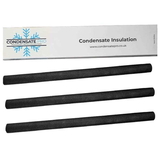
- Wrap the outside pipe in PVC coated nitrile rubber lagging or similar, at least 19 mm thick, with all joints sealed.
- Consider adding trace heating to long or very exposed runs, especially if space limits the insulation thickness.
Where you can't connect to a drain and use a soakaway instead, follow boiler manufacturer guidance (typically a small pit with a plastic liner and limestone chippings) so the condensate can drain and be neutralised without damaging foundations.
How to size and fit pipe insulation correctly
For homeowners, the key points are:
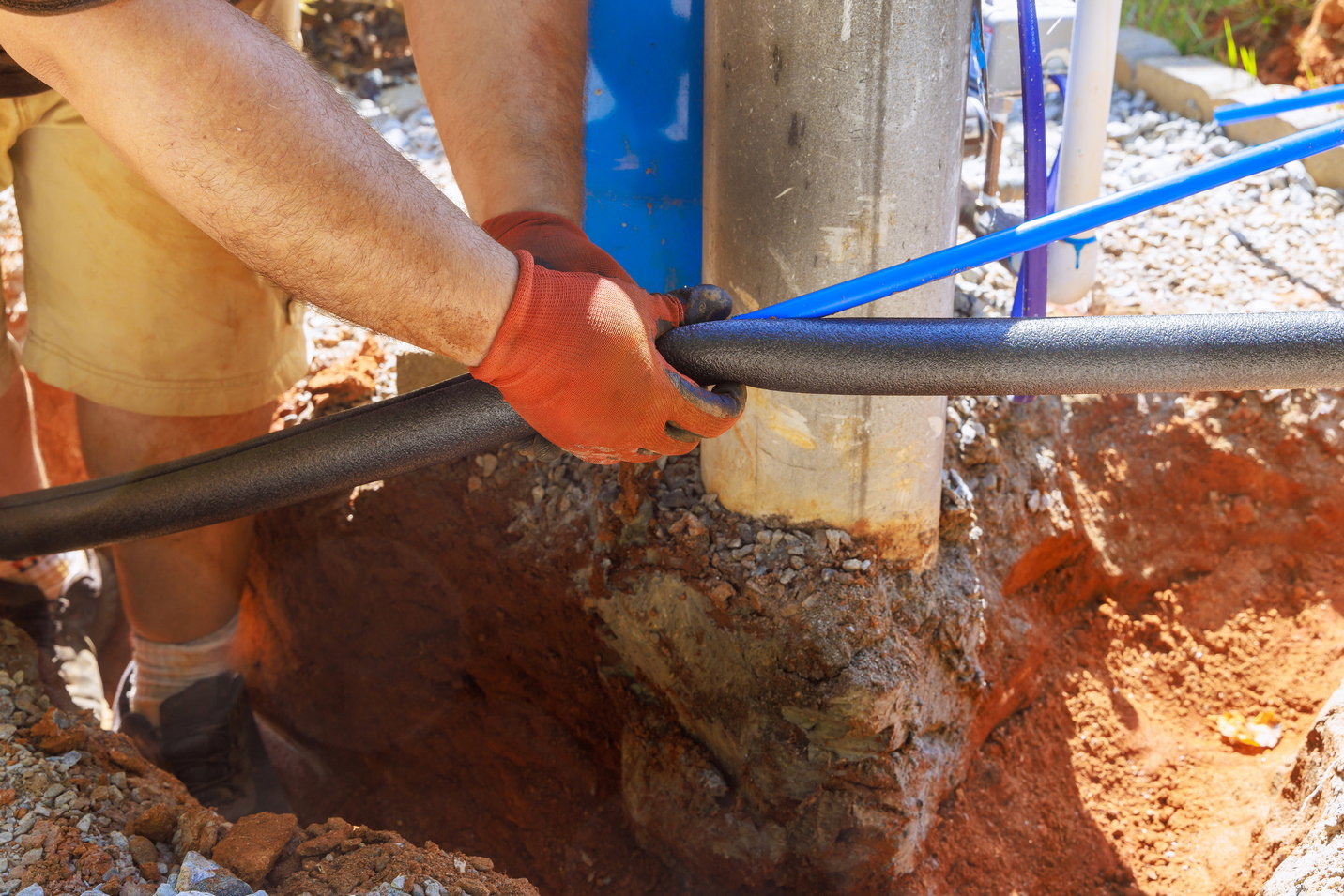
- Measure the pipe's outside diameter, not the nominal pipe size. "15 mm" and "22 mm" refer to internal bore; the outside is larger. Use callipers, a tape or the adjustable spanner trick: clamp the spanner on the pipe, remove it and measure the jaw gap.
- Match the insulation bore to that outside diameter for a snug fit – not so loose it rattles, not so tight you can't close the slit.
- Choose a realistic thickness for the space you've got, using manufacturer or BS 5422 guidance as a benchmark, and add trace heating on very exposed runs if you can't reach ideal thicknesses.
- Cut cleanly and seal every joint. Use a sharp knife or insulation saw, cut neat mitres around corners, and tape or self seal all longitudinal slits and butt joints so there are no gaps. Even a 5 mm gap can act as a cold bridge.
- For complex runs, rigid phenolic or mineral wool sections, high temperature pipes or long external lines, getting a heating engineer or specialist lagging firm in for a day is often cheaper than fixing the consequences of a badly insulated pipe later.
Samuel Hitch
Managing Director
Buy Insulation Online.
Leave A Reply
Your feedback is greatly appreciated, please comment on our content below. Your email address will not be published. Required fields are marked *

