
- Blogs
- A Comprehensive Guide to Sheep Wool Insulation for UK Housing: Thermal Performance, Moisture Management, and Structural Longevity
A Comprehensive Guide to Sheep Wool Insulation for UK Housing: Thermal Performance, Moisture Management, and Structural Longevity


TLDR
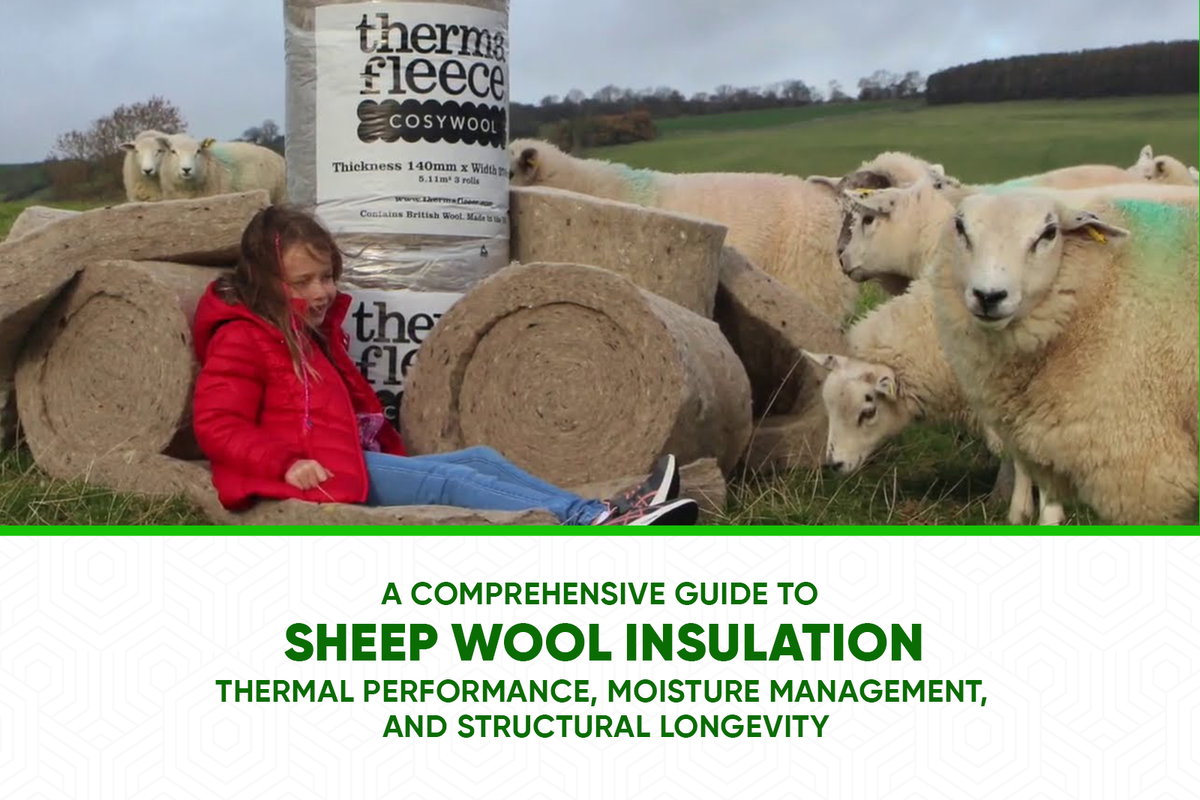
Sheep wool insulation is a superior natural solution for the British housing stock, offering a unique combination of thermal performance and moisture regulation. With thermal conductivity values between 0.033 and 0.040 W/mK, it matches or exceeds many mineral-based products. Its standout feature is its hygroscopic nature, allowing it to absorb up to 33 per cent of its weight in moisture without losing insulating power, which protects timber structures from rot. Additionally, wool purifies indoor air by neutralising harmful chemicals like formaldehyde and provides natural fire resistance. While the upfront cost is higher than synthetic alternatives, its 60-year lifespan and health benefits make it a sustainable and cost-effective long-term investment for UK homeowners.
The Context of the British Housing Stock and the Need for Natural Insulation
The United Kingdom possesses some of the oldest and most varied housing stock in Europe. From Victorian stone cottages and Edwardian terraces to inter-war cavity-wall semis and modern timber-frame developments, the architectural heritage of the country presents a significant challenge for energy efficiency. Traditional buildings were designed to breathe, allowing moisture to move freely through porous materials like lime mortar and timber. When modern, non-breathable insulation materials are introduced into these environments, they often trap moisture, leading to damp, mould, and structural degradation.
Sheep wool insulation has emerged as a professional-grade solution that respects the physical requirements of both heritage and modern buildings. Unlike petrochemical-based foams or mineral wools, sheep wool is a biological fibre that has evolved over millennia to manage extreme weather conditions. In the UK, where humidity levels are consistently high and temperatures fluctuate significantly between seasons, the ability of an insulation material to manage water vapour is as important as its ability to trap heat.
The shift towards natural fibre insulation is driven by a growing awareness of the "performance gap"—the difference between the theoretical energy savings of a building and its actual performance. Sheep wool addresses this gap by maintaining its efficiency even when conditions are less than ideal. This report examines the technical specifications, biological mechanisms, and practical applications of sheep wool insulation within the specific context of the UK building sector.
Biological Foundations and the Evolution of the Fibre
The effectiveness of sheep wool as a building material is a direct result of the evolution of the sheep. These animals have developed a fleece that provides a stable microclimate against their skin, regardless of whether they are exposed to the freezing winds of the Scottish Highlands or the damp heat of a coastal summer. The fibre itself is a sophisticated piece of biological engineering.
At the microscopic level, sheep wool fibres possess a natural crimp. This waviness ensures that when the fibres are processed into insulation batts or rolls, they do not lay flat against one another. Instead, they create millions of tiny air pockets. Because air is a poor conductor of heat, these pockets form a resilient thermal barrier. This structure is fundamentally different from the straight, glass-like fibres of mineral wool, which can settle and compress over time, reducing their effectiveness.
The chemical composition of wool is primarily keratin, the same protein found in human hair and fingernails. Keratin is naturally resilient and possesses several properties that are highly beneficial in a construction context. It is naturally flame retardant and has a high specific heat capacity. This means that wool does not just block heat; it absorbs it, helping to regulate the temperature of the building through thermal mass effects.
The Physics of Heat: Thermal Conductivity and Thermal Inertia
In the technical assessment of insulation, thermal conductivity, expressed as a lambda value, is the primary metric of performance. Sheep wool products available in the UK typically achieve lambda values ranging from 0.033 to 0.040 W/mK. For comparison, standard glass mineral wool often sits around 0.044 W/mK. This means that sheep wool can achieve the same level of heat retention with a slightly lower thickness, or superior retention at an equivalent thickness.
| Material Type | Thermal Conductivity (W/mK) | Specific Heat Capacity (J/kgK) | Density (kg/m3) |
| High-Density Sheep Wool | 0.035 | 1800 | 20 - 32 |
| Standard Sheep Wool | 0.038 | 1800 | 14 - 18 |
| Glass Mineral Wool | 0.044 | 1030 | 10 - 12 |
| Wood Fibre Board | 0.040 | 2100 | 40 - 160 |
| Expanded Polystyrene | 0.038 | 1300 | 15 - 30 |
The specific heat capacity of wool is particularly relevant to the UK climate. At 1800 J/kgK, it is significantly higher than that of mineral wool. This property allows the insulation to act as a buffer against external temperature changes. During a hot summer day, the wool absorbs the heat before it reaches the interior of the home, releasing it slowly during the cooler night. This thermal inertia keeps the house cool in summer and warm in winter, reducing the reliance on active heating and cooling systems.
The Science of Breathability: Hygroscopic Mechanisms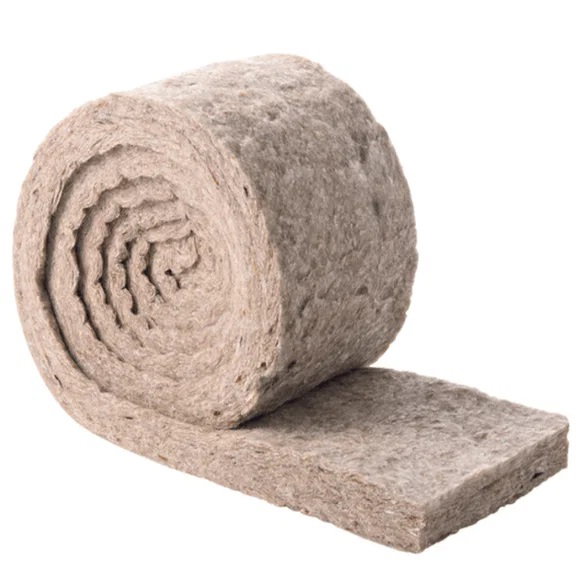
The term "breathability" in building science refers to vapour permeability—the ability of a material to allow water vapour to pass through its structure. Sheep wool is one of the few insulation materials that is truly hygroscopic. This means it can actively absorb and release moisture from the surrounding air to maintain equilibrium with the environment.
The structure of a wool fibre consists of a water-repellent (hydrophobic) outer layer and a water-attracting (hydrophilic) inner core. This allows the material to draw moisture vapour into its core without the surface ever feeling damp to the touch. In a typical British loft or wall cavity, where humidity often exceeds 70 per cent, sheep wool can absorb up to a third of its own weight in water vapour.
This moisture management is vital for the protection of timber rafters and joists. By absorbing excess moisture, the wool prevents liquid water from condensing on the surface of the wood, which would otherwise encourage the growth of dry rot or wet rot. When the internal humidity of the building drops, the wool naturally releases the stored vapour back into the atmosphere. This cycle helps to maintain a stable relative humidity within the home, typically between 45 and 65 per cent, which is the optimal range for human health and the preservation of the building fabric.
Another fascinating aspect of this process is the "latent heat of sorption." When wool fibres absorb water vapour, a chemical reaction occurs that releases a small amount of heat energy. In winter, as the humidity in a loft rises, the insulation actually generates its own warmth, helping to keep the temperature of the structure above the dew point and further reducing the risk of condensation.
Health and Indoor Air Quality: The Chemical Buffering of Keratin
The health of building occupants is increasingly linked to the quality of indoor air. Modern homes are often filled with Volatile Organic Compounds (VOCs) emitted by furniture, carpets, paints, and cleaning products. One of the most common and hazardous VOCs is formaldehyde, which can cause respiratory issues and other long-term health problems.
Sheep wool acts as a natural air purifier. The keratin molecules in the wool contain amino acid side chains that are capable of chemically bonding with formaldehyde and other harmful gases. This is not a temporary physical trapping of the molecules; it is a permanent chemical reaction. The pollutants are absorbed into the core of the fibre and neutralised, effectively removing them from the indoor environment.
Independent testing has confirmed that sheep wool can reduce formaldehyde concentrations in a room within a very short period. This makes it an ideal choice for nurseries, bedrooms, and homes where residents suffer from asthma or allergies. Furthermore, sheep wool is entirely non-toxic and does not release any harmful fibres or dust during or after installation. Unlike mineral wool, which requires the use of gloves, masks, and goggles to prevent skin and lung irritation, sheep wool is safe to handle with bare hands.
| Pollutant Type | Interaction with Sheep Wool | Resulting Benefit |
| Formaldehyde | Chemical bonding with amino acids | Permanent neutralisation |
| Nitrogen Dioxide | Absorption and neutralisation | Improved respiratory health |
| Sulphur Dioxide | Neutralisation via keratin | Reduced atmospheric acidity |
| Excess Humidity | Hygroscopic absorption | Prevention of mould spores |
BUY SHEEPWOOL INSULATION
Safety Profiles: Natural Fire Resistance and Combustion Science
Safety is a primary concern for any homeowner when selecting insulation. There is a common misconception that because wool is a natural hair, it must be highly flammable. On the contrary, sheep wool is naturally fire-resistant and one of the safest materials to have within the structure of a building.
The fire resistance of wool is due to its high nitrogen and moisture content. These factors mean that wool has a very high ignition temperature, typically between 560 and 600 degrees Celsius. In the presence of a flame, wool does not melt or drip like synthetic foam or plastic-based insulations. Instead, it chars and smoulders. Because it requires more oxygen to burn than is present in the natural atmosphere, it is self-extinguishing. Once the external flame source is removed, the wool will stop burning.
In the UK, sheep wool insulation is tested against rigorous fire safety standards, achieving Euroclass ratings such as E, C, or even B1 depending on the density and specific product treatment. It complies with British Standard BS 5803-4 for flammability and resistance to smouldering. In the unfortunate event of a fire, wool does not emit the highly toxic hydrogen cyanide or carbon monoxide gases associated with burning polyurethane foams, providing extra time for occupants to escape safely.
Acoustic Engineering: Sound Dampening in Modern and Heritage Contexts
Noise pollution is a significant factor in the quality of life, particularly in urban areas of the UK. Whether it is the sound of traffic from outside or the transmission of voices between rooms in a shared house, effective acoustic insulation is essential. Sheep wool is an exceptional acoustic absorber due to the complexity and density of its fibrous structure.
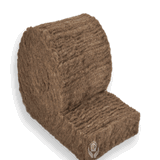
Sound waves are essentially vibrations in the air. When these waves hit the irregular, multi-layered surfaces of sheep wool fibres, their energy is dissipated as heat. Wool is particularly effective at dampening airborne sound and reducing impact noise between floors. High-density wool products, such as Thermafleece UltraWool, are often used in partition walls and floor joists to meet or exceed the requirements of Approved Document E of the Building Regulations.
Acoustic performance is measured in terms of sound absorption coefficients and decibel reduction. Sheep wool typically achieves a Noise Reduction Coefficient (NRC) of 1.05 at a 100mm thickness, which is considered an excellent rating. In a standard partition wall, sheep wool can reduce sound transmission by 45 to 50 decibels, creating a much quieter and more private living environment.
Buy Sheep Wool Insulation
The Environmental Equation: Carbon Sequestration and Life Cycle
Sheep wool insulation is a powerful tool in the transition to a low-carbon economy. The environmental impact of a building material is measured not just by its energy savings during use, but by its "embodied carbon"— the energy used to produce, transport, and dispose of it.
Wool is a renewable resource that is grown naturally by sheep every year. The carbon in wool is sequestered from the atmosphere. Sheep eat grass, which absorbs carbon dioxide through photosynthesis. That carbon is then converted into the protein that forms the wool. Each kilogram of wool sequestered approximately 2 kilograms of carbon dioxide. In an average UK home, the insulation in the loft can lock away several tonnes of carbon for decades.
The manufacturing process for sheep wool insulation is incredibly low-energy. It involves washing the wool to remove lanolin and dirt, followed by a mechanical carding process to align the fibres and form batts. This uses less than 15 per cent of the energy required to produce an equivalent amount of glass fibre insulation.
At the end of its life, sheep wool remains a valuable resource. It can be recycled into new insulation or, because it is entirely biodegradable, it can be composted. It will break down in the soil within a few months, releasing nitrogen and other nutrients back into the earth. This circular lifecycle stands in stark contrast to synthetic materials that will remain in landfills for centuries.
| Sustainability Metric | Sheep Wool | Glass Fibre | Polyurethane Foam |
| Renewable | Yes (Annual) | No | No |
| Biodegradable | Yes | No | No |
| Embodied Energy (MJ/kg) | 7 | 26 | 101 |
| Carbon Sequestration | Positive | None | Negative |
| End of Life | Compostable | Landfill | Landfill |
Brand and Material Analysis: Leading Solutions for UK Retrofit
Several specialist manufacturers provide sheep wool insulation tailored to the UK market. Understanding the differences between these products is essential for choosing the right material for a specific application.
Thermafleece
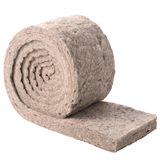
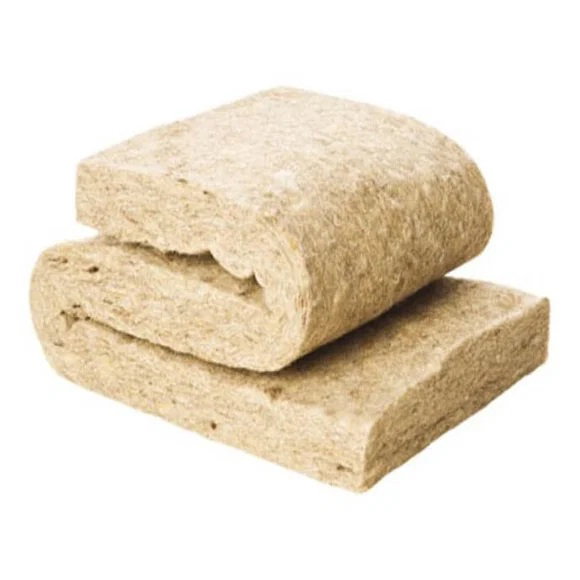
Based in the Lake District, Thermafleece is the largest UK manufacturer of natural fibre insulation. Their products are designed specifically for the British climate and often feature a blend of wool and recycled polyester (derived from plastic bottles).
-
CosyWool: This is their most popular product, designed for lofts and internal partitions. It is flexible, easy to install, and provides a balanced performance between thermal and acoustic insulation.
-
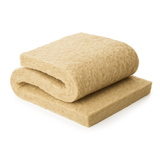
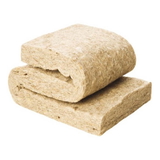
UltraWool: A high-density slab that is ideal for applications where space is limited or where maximum acoustic dampening is required. It is often used in floors and high-performance walls.
Isolena
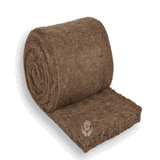
Isolena is a premium European brand that specialises in 100 per cent pure sheep wool insulation. They are well-known for their "Ionic Protect" technology. This is a biocide-free plasma treatment that permanently protects the wool from moths and beetles without using harmful chemicals like borax.
-
Premium Rolls: These are high-density rolls designed for walls and sloping rafters. They hold their shape exceptionally well and do not sag over time.
-
Optimal Rolls: A medium-density product suited for lofts and timber frame constructions.
TRUEWOOL (Wool Insulation Wales)
Focusing on locally sourced Welsh wool, TRUEWOOL provides a 100 per cent wool solution with no synthetic binders. This product is highly sought after for heritage restoration projects and eco-builds where the use of local, plastic-free materials is a priority.
Practical Installation: A Specialist Guide for the DIY and Professional
One of the most appealing aspects of sheep wool insulation is the ease and safety of installation. Because the fibres do not cause irritation, it is a favourite for DIY loft upgrades. However, achieving the best performance requires attention to detail and an understanding of building physics.
Loft Insulation
The loft is the most effective place to start any insulation project, as heat rises and as much as a quarter of a home's heat is lost through the roof.
-
Preparation: Ensure the loft is clear and that any existing electrical cables are identified. It is important not to cover high-draw cables (like those for showers or cookers) as they may overheat.
-
Layering: The first layer of wool should be laid between the joists. The second layer should be laid at right angles across the joists. This "cross-layering" covers the wooden joists and prevents thermal bridging.
-
Eaves Ventilation: A critical step is to maintain a 50mm ventilation gap at the eaves. This ensures that fresh air can circulate in the roof space, preventing the buildup of stagnant, moist air.
Floor Insulation
Insulating under a suspended timber floor can eliminate draughts and make a significant difference to the comfort of a ground-floor room.
-
Fitting: Wool batts are cut slightly wider than the joist spacing so they fit snugly.
-
Support: The insulation is supported from below using a breathable plastic netting stapled to the joists.
-
Membranes: In some cases, a breathable membrane is used to prevent wind-wash from reducing the effectiveness of the insulation.
Wall Insulation
In the UK, wool is used both in timber-frame new builds and for internal wall insulation in solid-wall properties.
-
Solid Wall Retrofit: A timber stud frame is built against the internal masonry wall. Sheep wool is then fitted into the frame before being covered with a vapour-permeable plasterboard or lime plaster. This allows the masonry wall to remain breathable, which is essential for preventing damp in older buildings.
-
Acoustic Partitions: Wool is fitted into internal stud walls to reduce noise transfer between bedrooms or bathrooms.
Tools and Methods
While no specialist safety gear is needed, a few simple tools make the job easier. A sharp, scalloped-edged insulation knife or a dedicated insulation saw is the best tool for cutting the wool. For a clean cut, the material can be clamped between two boards and sliced along the edge. Most sheep wool is delivered in compressed rolls. It is important to unpack the material and allow it to "loft" or regain its full thickness before it is permanently covered.
Economics: Life Cycle Costing and Performance Gaps
The primary barrier to the widespread adoption of sheep wool has traditionally been its upfront cost. It is undeniably more expensive than glass fibre or mineral wool. However, a professional economic analysis looks beyond the initial purchase price to the life cycle cost of the material.
The long-term durability of wool is a major factor. While some synthetic materials can settle, compress, or lose their effectiveness when exposed to moisture, sheep wool remains stable for the life of the building. Most manufacturers specify a design life of at least 60 years. When the cost is spread over this duration, the price difference becomes negligible.
Furthermore, the "real-world" performance of wool often exceeds its lab-tested thermal conductivity. Because wool manages moisture and generates its own heat through sorption, it often keeps a building warmer in winter than a non-hygroscopic material with an identical lambda value. This translates into greater energy bill savings over time.
For eco-conscious homeowners, the environmental and health benefits also represent a form of value. The reduction in indoor pollutants and the peace of mind provided by a non-toxic home are difficult to quantify in pounds and pence but are nonetheless significant factors in the decision-making process.
Policy and Future Outlook: Grants and the 2026 Landscape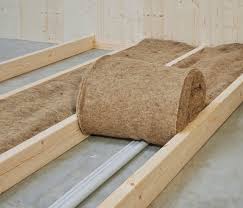
The UK government has established several schemes to encourage the uptake of home insulation as part of its net-zero strategy. While these schemes often prioritise the lowest-cost materials, natural fibres are becoming more integrated into the funding landscape.
ECO4 and GBIS
The Energy Company Obligation (ECO4) and the Great British Insulation Scheme (GBIS) are the two primary funding routes.
-
ECO4: This scheme is scheduled to run until December 2026. It focuses on a "whole-house" approach for low-income and vulnerable households.
-
GBIS: This scheme, ending in March 2026, offers single insulation measures to a wider group of households, including those in Council Tax bands A to D.
The Warm Homes Plan
Looking ahead, the government has announced the £15 billion Warm Homes Plan, expected to launch in April 2026. This plan is anticipated to offer more flexible support, including zero-interest loans and larger grants for high-performance insulation. This transition reflects a shift in policy towards high-quality, long-lasting retrofits rather than quick, cheap fixes.
The Future of Rigid Panels
While wool has traditionally been used in rolls and batts, innovative research is currently underway in the UK to develop rigid insulation panels made from compressed sheep wool. These panels, such as those being developed by Wull Technologies, aim to provide a sustainable alternative to external wall insulation boards made from polystyrene or mineral wool. This could revolutionise the retrofit of solid-wall properties across the country.
Comparative Analysis: Natural vs. Synthetic and Mineral
When choosing insulation, it is helpful to compare sheep wool directly against its competitors across several categories.
Thermal Resistance: Sheep wool is comparable to the best mineral wools and superior to standard glass fibre. While PIR foam boards have a lower thermal conductivity (meaning they can be thinner), they are entirely non-breathable and have a massive carbon footprint.
Moisture Handling: Sheep wool is the clear winner. Mineral wool and glass fibre can become waterlogged and lose their insulating properties entirely if a leak occurs or if condensation builds up. Wool continues to insulate even when damp.
Installation: Sheep wool is the most user-friendly. It does not produce the "itch" associated with mineral wool and does not release the chemical odours often associated with spray foam or rigid boards.
Fire Safety: While mineral wool has a higher melting point, sheep wool is the safest natural fibre. It is significantly safer than polyurethane foam, which is highly flammable and produces toxic smoke.
Environmental Impact: Sheep wool is the most sustainable. It is the only material that is truly renewable, carbon-positive, and fully biodegradable.
Summary of Technical Performance
To conclude the technical analysis, the following table summarises the key performance metrics for sheep wool insulation as used in a typical UK domestic setting.
| Metric | Typical Value | Performance Context |
| Thermal Conductivity ($\lambda$) | 0.035 - 0.040 W/mK | Competitive with high-spec mineral wool |
| Vapour Diffusion ($\mu$) | 1 - 2 | Highly breathable / vapour open |
| Moisture Absorption | Up to 33% by weight | Superior moisture regulation |
| Specific Heat Capacity | 1800 J/kgK | High thermal inertia / buffering |
| Fire Rating (Euroclass) | E, C, or B1 | Naturally flame retardant |
| Sound Reduction ($R_w$) | 40 dB at 75mm | Excellent acoustic dampening |
| Lifespan | 60+ Years | Durable and settlement resistant |
The integration of sheep wool insulation into a UK home is more than an energy-saving measure; it is a commitment to the health of the building and its occupants. By mimicking the biological systems that protect sheep in the wild, this material provides a sophisticated, breathable, and warm envelope that is perfectly suited to the unique demands of the British climate. As the construction industry moves towards a more sustainable and health-conscious future, sheep wool is set to play a central role in the greening of the UK's housing stock.
The durability of the material ensures that once installed, it requires no maintenance and will continue to perform for the lifetime of the structure. For the homeowner, this means lower energy bills, a quieter home, and the knowledge that their insulation is contributing to a healthier indoor and outdoor environment. Whether used in a sensitive heritage restoration or a cutting-edge modern eco-home, sheep wool represents the pinnacle of natural building science.
The Role of Sheep Wool in the Circular Economy
The British wool industry has faced significant challenges in recent years, with the price of raw wool often falling below the cost of shearing. By developing a high-demand, high-value market for this wool in the insulation sector, we are supporting a vital part of the UK's agricultural heritage. This not only keeps carbon locked in the building fabric but also ensures that the upland landscapes of Britain, which are shaped by sheep grazing, are preserved.
The carbon sequestration potential of wool is an often-underestimated factor in the fight against climate change. In a world where we are desperately searching for ways to remove CO2 from the atmosphere, the answer may be as simple as looking to the fields. Every kilogram of wool produced is a kilogram of carbon captured. When that wool is then placed in the walls of a house, that carbon is prevented from returning to the atmosphere for sixty to one hundred years. This makes sheep wool insulation not just "carbon neutral," but "carbon positive."
As we look towards the 2030s and 2040s, the focus on sustainable building materials will only intensify. The anticipated changes in building regulations and the introduction of stricter EPC requirements will push more homeowners towards high-performance solutions. Sheep wool is uniquely positioned to meet these challenges, offering a proven, safe, and effective way to warm our homes while allowing them to breathe.
Final Considerations for Homeowners
For those considering an upgrade to sheep wool insulation, the following checklist ensures a successful project:
-
Assess the Space: Determine the required thickness to reach modern standards (typically 270mm to 300mm for lofts).
-
Check the Brand: Look for reputable UK or European brands that offer biocide-free moth protection.
-
Plan the Ventilation: Ensure that your loft or wall design remains vapour-open to take full advantage of the wool's breathability.
-
Professional vs DIY: While lofts are an easy DIY job, wall and floor insulation may require a professional to ensure that the building's airtightness and vapour control layers are correctly managed.
The transition to a warmer, more breathable home starts with the choice of materials. By choosing sheep wool, you are opting for a material that has been refined by nature over millions of years, providing a level of comfort and protection that synthetic materials simply cannot match. It is a long-term investment in the fabric of your home and the health of your family.
UK Legal Disclaimer
The information contained in this report is provided for general guidance and informational purposes only. While every effort has been made to ensure the accuracy of the technical data, the suitability of sheep wool insulation for any specific property depends on a wide range of factors including building age, construction type, and existing damp issues. This content should not be used as a definitive specification for building materials or as a substitute for professional advice from a qualified architect, building surveyor, or structural engineer. All building work in the UK must comply with the relevant Building Regulations and planning permissions. The author and publisher accept no responsibility for any loss, damage, or structural issues resulting from the implementation of advice in this report. Always consult with a certified professional before commencing any home improvement or insulation project.

Samuel Hitch
Managing Director
Buy Insulation Online.
Leave A Reply
Your feedback is greatly appreciated, please comment on our content below. Your email address will not be published. Required fields are marked *