
- Blogs
- A Comprehensive Guide to Vacuum Insulation Panels (VIPs) in the UK
A Comprehensive Guide to Vacuum Insulation Panels (VIPs) in the UK

TLDR
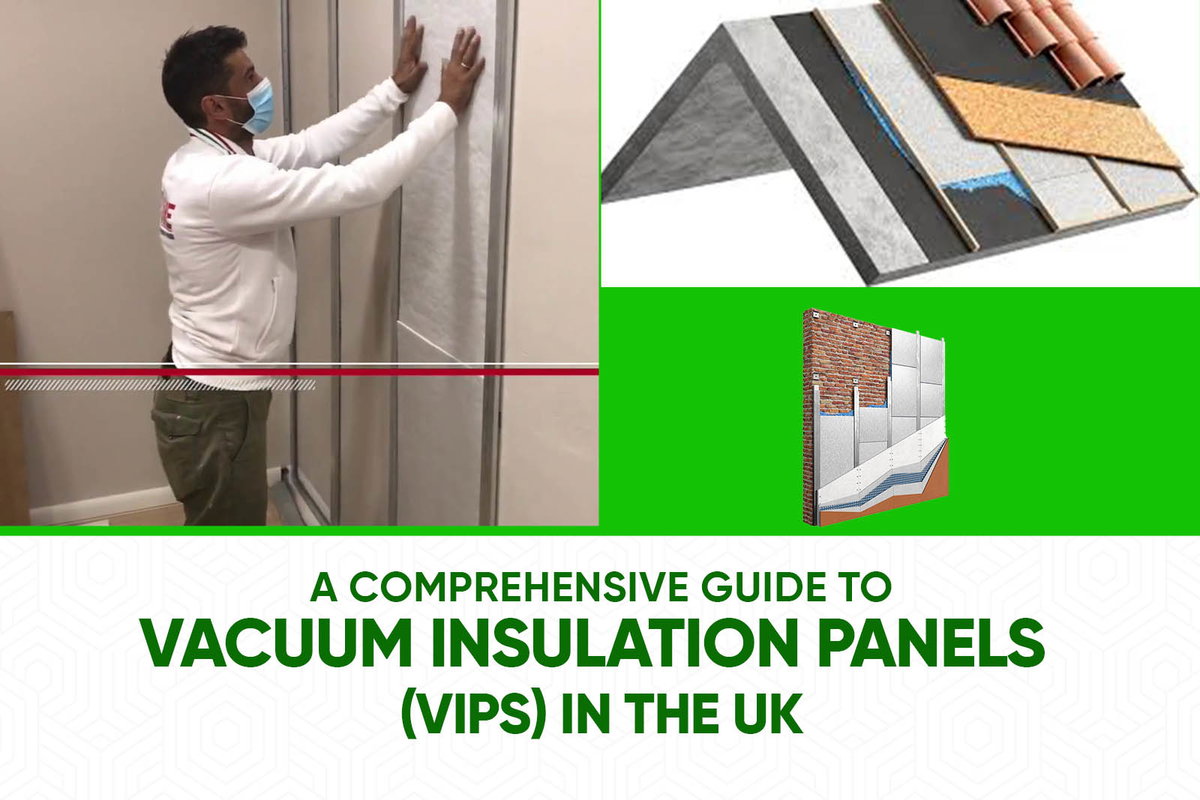
Vacuum Insulation Panels (VIPs) are ultra-thin, high-performance insulation boards. They consist of a rigid, porous core (typically fumed silica) sealed within a gas-impermeable, multi-layer foil envelope from which the air has been evacuated. Their exceptional thermal performance—five to ten times better than traditional materials—comes from the vacuum, which virtually eliminates heat transfer by convection. This allows designers to meet stringent UK energy efficiency targets with a fraction of the thickness required by conventional insulation, making VIPs ideal for space-critical applications like retrofitting solid walls or maximising floor area in new builds. However, they are a premium product and require careful handling as they cannot be cut, drilled, or punctured on-site without destroying their vacuum and, consequently, their performance. Specification requires precise planning and adherence to system-based installation methods.
Introduction to Vacuum Insulation Panels (VIPs)
What is a Vacuum Insulation Panel?
A Vacuum Insulation Panel, or VIP, is an advanced form of thermal insulation that provides a high level of performance within a very thin profile. It consists of a rigid, porous core material that is enclosed and sealed within a gas-tight, multi-layered envelope. The air inside the envelope is then evacuated to create a vacuum. This construction principle allows VIPs to achieve a thermal performance significantly greater than conventional insulation materials of a comparable thickness.
Their unique properties make them suitable for a wide range of applications where both high thermal resistance and space-saving are critical. These include demanding sectors such as temperature-controlled packaging for medical supplies, high-efficiency refrigeration appliances, and, increasingly, the building industry for both new-build and refurbishment projects.
The Science Behind VIPs: How They Achieve Superior Performance
The exceptional insulating capability of a VIP stems from its ability to disrupt the three modes of heat transfer: conduction, convection, and radiation. The fundamental principle is the creation of a vacuum within the panel's core.
Heat transfer by convection relies on the bulk movement of gas molecules to carry thermal energy from a warmer area to a cooler one. By evacuating almost all the air from inside the panel's envelope, the number of gas molecules is drastically reduced, which practically eliminates convection as a heat transfer mechanism.
The core material plays a crucial and sophisticated dual role. Firstly, it provides the necessary structural support to the outer envelope, preventing it from collapsing under atmospheric pressure once the vacuum is created. Without this internal skeleton, the panel would be crushed flat. Secondly, its highly porous microstructure is critical to suppressing the remaining modes of heat transfer. Even in a high vacuum, some gas molecules remain. The core is engineered with extremely small pores, often on a microscopic or nanoscopic scale. When the pressure is low enough, the average distance a gas molecule can travel before colliding with another (its mean free path) becomes greater than the size of the pores themselves. This effectively traps the few remaining molecules, severely hindering their ability to conduct heat across the panel.
The core material itself still allows for some solid-state conduction, and the envelope can contribute to radiative heat transfer. However, by tackling convection and gas conduction so effectively, the overall thermal conductivity of a VIP is reduced to a level that is far below that of traditional insulation materials.
Core Components of a Vacuum Insulated Panel
A functional Vacuum Insulation Panel is an assembly of three essential components working in concert:
The Core: A rigid, open-pored material that provides structural strength and the microporous environment needed to suppress heat transfer.
The Envelope: A multi-layered, high-barrier film that is heat-sealed around the core to form a gas-tight enclosure, maintaining the internal vacuum.
Getters and Desiccants: Specialised chemicals placed inside the panel to absorb any residual gases or moisture that may permeate the envelope over the panel's service life, thereby protecting the integrity of the vacuum.
Materials and Construction of VIP Insulation
The performance and longevity of a VIP are determined by the careful selection and combination of its constituent materials. Each component is engineered to fulfil a specific function within the composite panel.
The Core Material: The Structural and Insulating Heart
The core must possess a unique combination of properties: it needs to be strong enough to withstand atmospheric pressure, yet porous enough to allow air to be evacuated efficiently. A range of materials, including powders, fibres, and foams, have been developed for this purpose.
Fumed Silica (Pyrogenic Silica): This is the most prevalent core material used for VIPs in the building sector. Fumed silica is a powder composed of particles with extremely small, nano-sized pores. This nano-pore structure is its key advantage; it is so fine that it continues to suppress gas conduction effectively even if the internal pressure rises slightly over many years. This inherent robustness makes fumed silica-based panels particularly well-suited to the long service life demanded of building materials. Furthermore, fumed silica is non-toxic, has good fire resistance, and its high specific surface area allows it to adsorb a certain amount of moisture, acting as a built-in desiccant.
Glass Fibre: Mats or boards of glass fibre are another common core material, frequently used in applications such as high-performance refrigerators and cold-chain shipping boxes. The pores within a glass fibre core are larger than those in fumed silica. Consequently, glass fibre cores are more sensitive to any degradation of the vacuum. To achieve and maintain high performance, they typically require a deeper initial vacuum and the inclusion of dedicated getter and desiccant materials to manage any gas or water vapour ingress over time.
Other Materials: Other materials such as aerogels, expanded perlite, and rigid foams like polyurethane (PUR) and expanded polystyrene (EPS) have also been explored and used as VIP cores. Aerogels, in particular, are noted for their exceptionally small pore diameters and low density.
The choice of core material represents a critical engineering decision, balancing initial cost, manufacturing complexity, and long-term performance stability. For building applications where a service life of several decades is expected, the forgiving nature and durability of fumed silica cores make them the preferred option.
The Envelope: The Critical Barrier Film
The envelope, or barrier film, is arguably the most critical component for ensuring the long-term performance of a VIP. It is a sophisticated, multi-layered composite film designed to be impermeable to air and water vapour. Its quality directly dictates the service life of the panel.
Composition: These high-barrier films are not simple plastic sheets. They are advanced laminates constructed from several different polymer layers, each chosen for a specific function. Barrier layers, which provide the resistance to gas permeation, are often made from materials like Ethylene Vinyl Alcohol (EVOH), Polyvinyl Alcohol (PVA), or Polyamide (PA). These are combined with heat-sealable layers, such as Linear Low-Density Polyethylene (LLDPE) or Cast Polypropylene (CPP), which allow the envelope to be securely sealed around the core. The primary barrier function is frequently achieved by depositing one or more ultra-thin layers of metal onto a polymer substrate like Polyethylene Terephthalate (PET). This process, known as metallisation, creates a highly effective barrier.
Aluminium Foil vs. Metallised Films: There are two main approaches to creating the metallic barrier layer, each with distinct advantages and disadvantages.
Solid Aluminium Foil: A thin sheet of solid aluminium foil offers the most effective barrier against both gas and water vapour transmission.
Metallised Films: These consist of one or more extremely thin layers of aluminium vapour deposited onto a polymer film. Panels with these films are often described as having a double or triple metallisation.
The selection between these two options involves a crucial performance trade-off. While solid aluminium foil provides a superior gas barrier, the foil itself is highly conductive. This creates a significant thermal bridge along the sealed edges of the panel, where the front and back faces of the foil meet. In an installation with many small panels, the cumulative heat loss through these edges can noticeably reduce the overall thermal performance of the system.
Metallised films, on the other hand, have a much lower thermal bridging effect at the edges because the metallic layers are microscopically thin. However, they are inherently more permeable to gas and water vapour than a solid foil. For a specifier, this presents a nuanced choice: for large, unbroken areas where edge effects are minimal, the superior barrier of aluminium foil might be advantageous. For complex layouts with a high ratio of edge length to surface area, the reduced thermal bridging of multi-layer metallised films could provide a better effective insulation performance for the construction as a whole.
Getters and Desiccants: Ensuring Longevity
To ensure the vacuum remains effective for decades, VIPs often incorporate active materials to manage any gases that find their way inside.
Getters: These are reactive chemical compounds that are placed inside the panel during manufacturing. Their purpose is to trap and bind with any gas molecules that might slowly permeate the envelope or be released from the core material itself over time (a process known as offgassing).
Desiccants: These are materials designed specifically to adsorb water vapour. The presence of water vapour inside a VIP is particularly detrimental, as it can significantly increase the panel's thermal conductivity.
The inclusion of these materials is especially important for VIPs with larger-pored cores, such as glass fibre or foams, which are more sensitive to small increases in internal pressure. As mentioned, the microporous structure of fumed silica gives it a very high internal surface area, allowing it to act as its own desiccant by adsorbing a considerable amount of water vapour.
Performance and Applications
The primary reason for specifying Vacuum Insulation Panels is their outstanding thermal performance, which opens up new possibilities in both new construction and the refurbishment of existing buildings.
Thermal Performance: A Comparison with Traditional Insulation
Vacuum Insulation Panels provide a level of thermal performance that is typically five to ten times better than that of conventional insulation materials like mineral wool or rigid foam boards. Commercially available VIPs for building applications can achieve a centre-of-panel thermal conductivity (lambda value, or λ) of approximately 0.004m⋅KW?. When accounting for the effects of thermal bridging at the panel edges and the gradual ageing over its service life, the effective conductivity for a whole panel is typically in the range of 0.006 to 0.008m⋅KW?.
This extremely low thermal conductivity means that a much thinner layer of insulation is required to meet a specific thermal target, commonly measured by its U-value. For example, a building element that would require 300 mm of traditional insulation to meet a certain U-value might achieve the same performance with just 72 mm of VIPs. This space-saving capability is the technology's most compelling advantage in the construction industry.
The ability to achieve very low U-values within a slim construction profile is not merely an efficiency gain; it has direct spatial and economic consequences. In high-value urban areas, reducing the thickness of external walls translates directly into more lettable or saleable internal floor area. For the refurbishment of the UK's older housing stock, particularly properties with solid walls, VIPs allow for significant thermal upgrades without an unacceptable loss of room space, a common barrier to retrofitting with conventional materials.
Table 1: Illustrative Thickness Comparison to Achieve Building Regulations U-values
Insulation Material |
Typical Thermal Conductivity (m⋅KW) |
Approx. Thickness for Wall U-value of 0.18m2KW |
Approx. Thickness for Roof U-value of 0.11m2KW |
| Vacuum Insulation Panel (VIP) | 0.006 - 0.008 (effective) | 35 - 45 mm | 55 - 70 mm |
| PIR/PUR Foam Board | 0.022 | ~120 mm | ~190 mm |
| Expanded Polystyrene (EPS) | 0.032 | ~160 mm | ~250 mm |
| Mineral Wool | 0.035 | ~170 mm | ~260 mm |
Table Note: Thicknesses for conventional materials are indicative and based on published data. VIP thickness is an estimation based on its superior performance. Actual required thickness will depend on the specific product and overall construction build-up.
Key Applications in UK Construction
The unique characteristics of VIPs make them a valuable problem-solver in a variety of building applications.
Floors, Walls, and Roofs: VIPs can be integrated into all elements of the building envelope. They are particularly useful in warm flat roofs and terraces, where the overall height of the construction is often tightly restricted to meet planning requirements or to align with existing features.
Retrofit and Refurbishment: VIPs are a key technology for the thermal upgrade of the UK's existing building stock. For solid-walled properties, which are notoriously difficult to insulate internally without significant loss of space, VIPs offer a way to achieve modern thermal standards with a minimal footprint. This can make the difference between a viable and an unviable refurbishment project.
Terraces and Balconies: Creating a level threshold between a building's interior and an external terrace or balcony is a common design challenge. The slim profile of VIPs allows for effective insulation of the external space without creating a large, inconvenient, and potentially hazardous step up or down from the internal floor level.
Buy Vacuum Insulation Panel now
Beyond Buildings: Cold Chain and Specialised Uses
The high performance of VIPs has led to their widespread adoption in fields beyond construction. They are integral to the cold chain logistics industry, used in insulated shipping containers for the long-distance transport of temperature-sensitive goods like fresh food and pharmaceuticals, including vaccines that require stable, low temperatures. They are also used to maximise the internal volume of high-efficiency appliances like freezers, refrigerators, and hot water storage tanks by reducing the thickness of the required insulation.
Best Practices for Handling and Installing VIP Panels
The high performance of VIPs is entirely dependent on the integrity of their vacuum. This makes correct planning, handling, and installation absolutely critical to their success. A damaged panel is no longer a high-performance panel.
Pre-Installation: Planning and Design
The "No-Cut" Rule: The most important principle when working with VIPs is that they cannot be cut, sawn, drilled, screwed into, or otherwise punctured on-site. Any action that breaches the gas-tight envelope will destroy the vacuum, causing the panel's thermal performance to degrade dramatically. Its insulating value will revert to that of its core material, which, while still providing some insulation, is a fraction of the panel's designed performance.
Early Design Freeze: Because panels cannot be modified, they must be ordered from the manufacturer to the precise dimensions required for the project. This necessitates a rigorous and accurate on-site survey and a subsequent "design freeze" early in the project programme. Once the panels are ordered and manufactured, any changes to the building's layout—such as moving a window, door, or service penetration—can render the bespoke panels useless, leading to costly delays and waste.
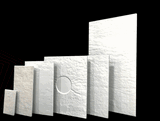
Layout Schemes: For complex areas such as a flat roof with multiple outlets and upstands, manufacturers can supply optimised layout schemes. These drawings act as a guide for the installer, showing the precise placement of various standard-sized panels and identifying the areas that will need to be filled with conventional insulation.
On-Site Handling and Storage
VIPs must be treated with care throughout the delivery, storage, and installation process. The envelope is the panel's most vulnerable component and must be protected from punctures, tears, and excessive abrasion.
A simple visual inspection can often identify a compromised panel. A healthy VIP with its vacuum intact will have a slightly wrinkled or dimpled surface, as atmospheric pressure pushes the envelope tightly against the core. If a panel's surface appears smooth and flat, it is a sign that air has leaked in, the vacuum has been lost, and the panel should not be installed.
Installation Guidelines 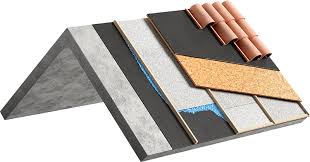
The inherent fragility of VIPs has led manufacturers to develop comprehensive installation systems, rather than simply supplying panels as a standalone product. This system-based approach is designed to protect the VIP and ensure its performance is realised.
System-Based Approach: A typical VIP system involves sandwiching the panels between protective layers. These can include high-density polyisocyanurate (PIR) boards, magnesium oxide boards, or resilient rubber crumb mats. These layers serve to shield the VIP from damage during the construction process (e.g., from foot traffic or dropped tools on a roof) and throughout its service life.
Fixing and Adhering: VIPs are generally loose-laid with their edges lightly butted together. In some systems, they may be bonded in place using a compatible adhesive specified by the manufacturer. It is critical that mechanical fixings like screws or nails are never driven through the VIP itself. Any fixings must pass through the surrounding protective layers or designated infill zones only.
Detailing and Infill: Any areas where a standard VIP cannot fit, such as around rooflights, pipe penetrations, or at the junction of complex shapes, must be filled. This is done by cutting pieces of a conventional rigid insulation board, such as PIR, to the same thickness as the VIP system. This ensures a continuous thermal layer across the entire area.
Vapour Control: As with any robust insulation strategy, a continuous vapour control layer (VCL) must be installed on the warm side of the insulation. This prevents warm, moist air from inside the building from reaching colder surfaces within the construction, where it could condense and cause damp problems. The VCL should be installed with all joints lapped and sealed with a suitable tape to ensure its integrity.
This evolution towards selling complete, integrated systems is a direct response to the on-site risks associated with VIPs. By providing the panels bundled with specified protective boards, adhesives, and detailed installation methodologies, manufacturers help to de-risk the process for contractors and ensure the final construction performs as designed.
The Downsides of Vacuum Insulation Panels
While offering exceptional thermal performance for their thickness, vacuum insulation panels (VIPs) are not without their challenges. It is important to consider these potential drawbacks before specifying them for a project.
High Initial Cost
Perhaps the most significant barrier to the widespread adoption of VIPs is their high initial cost. Compared to traditional insulation materials like mineral wool or rigid foam boards, VIPs are considerably more expensive on a like-for-like thickness basis. This higher upfront investment can be a deterrent for many projects, especially those with tight budgets. While the space-saving benefits can sometimes offset this cost, particularly in high-value property areas, the initial financial outlay remains a primary consideration.
Fragility and Risk of Damage
The core principle of a VIP is the vacuum sealed within its envelope. If this envelope is punctured, the vacuum is lost, and the panel's thermal performance dramatically decreases. Although the core material will still offer some insulation, it will be significantly less effective. The panels are most vulnerable during transportation and installation, where accidental damage from tools, fixings, or rough handling can compromise their integrity. This fragility necessitates careful planning and handling protocols on-site.
Complex Installation Requirements
Unlike traditional insulation materials that can be easily cut to size on-site, vacuum insulation panels cannot be modified in any way. Any attempt to cut, drill, or pierce a panel will destroy the vacuum. This means that every panel must be custom-made to precise dimensions for the specific project. This requires a high degree of accuracy in the design and surveying stage, leading to longer lead times for manufacturing and delivery. The installation process itself must be meticulous, with operatives trained in the specific handling requirements of VIPs to avoid damage.
Long-Term Performance and Ageing
Over time, the performance of a vacuum insulation panel can degrade. This is due to the slow permeation of air and water vapour through the envelope, which gradually increases the internal pressure and, therefore, the thermal conductivity. While manufacturers are developing increasingly robust and long-lasting envelopes, this ageing process is an inherent characteristic of the technology. The expected lifespan of the vacuum is a critical factor, and while it is generally designed to last for many years, there is still some uncertainty within the construction industry about their performance over the entire life of a building, which could be 50 years or more.
Thermal Bridging
The edges of vacuum insulation panels, where the envelope is sealed, have a higher thermal conductivity than the centre of the panel. This can create a thermal bridge, a path of less resistance for heat to travel through. While the effect of this is generally small for individual panels, in a large installation with many joints, the cumulative impact of thermal bridging can reduce the overall thermal performance of the system. Careful design and detailing are required to minimise these effects, often involving the use of overlapping layers or specialised joint details.
UK Standards and Building Regulations
Specifying and installing any insulation material in the UK requires a thorough understanding of the relevant legal framework. For Vacuum Insulation Panels, this involves navigating requirements for thermal performance and fire safety as set out in the Building Regulations.
Navigating UK Building Regulations
In England, the design and construction of buildings are governed by the Building Regulations 2010. To help designers and builders comply with the technical requirements of these regulations, the government publishes a series of guidance documents known as "Approved Documents". For insulation, the two most important are:
Approved Document L: Conservation of fuel and power
Approved Document B: Fire safety
It is important to note that Wales has its own devolved building regulations and associated Approved Documents, which, while similar, may have different specific requirements. This guide focuses primarily on the regulations for England.
Conservation of Fuel and Power: Approved Document L
Approved Document L sets the minimum standards for the energy performance of new and existing buildings. A key performance metric within this document is the U-value, expressed in units of Watts per square metre Kelvin (W/m2K). The U-value measures the rate of heat transfer through a building element; a lower U-value signifies better insulation and less heat loss.
The 2021 edition of Approved Document L, which came into force in June 2022, introduced a significant uplift in thermal performance standards, driving the need for more effective insulation solutions. While compliance is ultimately judged on the overall energy performance of the entire building, the document sets out "limiting" U-values for individual fabric elements (walls, floors, roofs) which act as a minimum acceptable standard. To achieve overall compliance, the U-values of most elements in a project will need to be considerably better than these backstop values.
The increasingly stringent U-value targets in Approved Document L are a primary regulatory driver for the adoption of VIPs in the UK. While it is possible to meet these targets with very thick layers of traditional insulation, this can lead to challenges with wall thickness, loss of internal space, or complex detailing. VIPs provide a "problem-solver" solution, enabling architects and builders to achieve compliance in situations where space is at a premium or a thinner construction is a design priority.
Table 2: Summary of Key U-Value Targets in Approved Document L (England, 2021 Edition)
| Building Element | New Dwellings (Notional Dwelling Target) | Existing Dwellings (New/Replacement Elements) | Existing Dwellings (Renovated Elements - Improved Value) |
| Wall | 0.18m2KW? | 0.18m2KW? | 0.30m2KW? |
| Floor | 0.13m2KW? | 0.18m2KW? | 0.25m2KW? |
| Pitched Roof (Ceiling Level) | 0.11m2KW? | 0.15m2KW? | 0.16m2KW? |
| Flat Roof / Pitched Roof (Rafter Level) | 0.11m2KW? | 0.15m2KW? | 0.16m2KW? |
Table Note: Values are for dwellings in England. These are simplified targets; the full document contains further details and context. "Notional" values are part of a model recipe for compliance, not strict requirements for every element. Renovated wall value of 0.30 is for internal/external insulation; cavity fill is 0.55.
Fire Safety: Approved Document B
Approved Document B provides guidance on how to meet the fire safety requirements of the Building Regulations. It covers a wide range of topics, including means of escape, internal and external fire spread, and structural resistance to fire.
Reaction to Fire (Euroclasses): For materials, a key performance characteristic is their "Reaction to Fire." This assesses how a product itself will contribute to the development and spread of a fire. In the UK, this is classified using the harmonised European system (Euroclasses) detailed in the standard BS EN 13501-1.
The classification runs from A1 (non-combustible) to F (easily flammable). For combustible materials (classes B to E), the main classification is supplemented with additional ratings for smoke emission (s1, s2, or s3) and the production of flaming droplets or particles (d0, d1, or d2).
VIP Fire Performance: The fire performance of a Vacuum Insulation Panel is that of the complete, composite product. While the fumed silica core used in many VIPs is non-combustible (Euroclass A1), the overall classification of the panel depends on the entire assembly, including the polymer-based envelope, any adhesives used, and the protective facings. It is therefore essential for specifiers to obtain the certified Euroclass rating for the specific VIP system they intend to use directly from the manufacturer's Declaration of Performance.
Brands of VIP Panels Available in the UK
The UK market for Vacuum Insulation Panels, while specialised, features several key manufacturers and suppliers offering system-based solutions for construction. These brands often provide comprehensive packages that include the VIPs, protective layers, infill materials, and detailed technical support.
Kingspan 
Kingspan is a prominent name in the UK insulation market and offers the OPTIM-R range of vacuum insulation panels. The OPTIM-R system is presented as a solution for both new-build and retrofit projects, particularly where space is limited.
Products: The range includes the OPTIM-R Flooring System and the OPTIM-R Roofing System. These systems combine the core vacuum insulation panels with phenolic or PIR (polyisocyanurate) infill boards, which can be cut to size to fit around details and penetrations. An inverted roofing system, OPTIM-R E, is also available, which features panels encapsulated in a protective coating for enhanced durability on-site.
Performance: Kingspan OPTIM-R panels have a declared thermal conductivity of 0.007 W/mK, offering an insulation performance up to five times better than many conventional materials.
Support: The company provides a bespoke design service to ensure the system is tailored to specific project requirements, helping to minimise on-site waste.
Recticel Insulation
Recticel offers the Deck-VQ® system, which is designed for ultra-high performance insulation in flat roofs and terraces.
Products: Deck-VQ® consists of a vacuum insulation panel with a fumed silica core, which is encapsulated within a protective high-density PIR board on all sides. This system is designed to be robust and easy to install.
Performance: The core of the VIP has a lambda value of 0.006 W/mK. The overall effective lambda value for the composite Deck-VQ® panel is between 0.008 W/mK and 0.009 W/mK, depending on thickness.
Installation: The system is available in modular sizes and is compatible with adhered single-ply membranes and bituminous waterproofing systems. Recticel provides tailor-made design schemes to guide installation. Gradient, a UK-based tapered roofing specialist, also supplies the Deck-VQ® system.
Panasonic
Panasonic's U-Vacua™ range of VIPs are available in the UK and are used in a variety of applications, from high-efficiency appliances to building construction.
Products: U-Vacua™ panels feature a glass fibre core. They are available to purchase in the UK through electronic component distributors such as DigiKey.
Performance: The panels offer a very low thermal conductivity, stated as low as 0.0018 W/mK or 0.002 W/mK in different product literature. They are rated Class A for fire and smoke.
System Integration: Panasonic VIPs are also integrated into systems offered by other companies. For example, the Holcim Elevate VIP system for commercial roofing uses Panasonic Advanc-R® Vacuum Insulated Panels as its core insulation component.
Other Notable Brands
Several other specialised manufacturers offer VIP products to the UK market.
SOPREMA: Offers the SOPRA VIP range, which consists of a micro-porous silica core. These panels are available in a variety of standard sizes with a declared thermal conductivity of 0.007 W/m.K.
Bauder: Provides the BauderVIP INV system, specifically designed for inverted roof applications such as terraces and balconies. The panels have a microporous core and are encapsulated in a protective polyurea coating for durability.
va-Q-tec: A German company with a UK facility in Rochester, va-Q-tec is a pioneer in VIP and Phase Change Material (PCM) technology. While a large part of their business is in high-performance thermal packaging for logistics, their products are also used in building applications.
Morgan Thermal Ceramics: This company offers the Vacupor® range of VIPs. These panels are suitable for applications with a temperature range between -50°C and 120°C and can be supplied in various shapes and sizes.
Summary and Concluding Points
Vacuum Insulation Panels represent a significant advancement in thermal insulation technology, offering a level of performance that far exceeds conventional materials within an exceptionally thin profile.
Their principal advantage in the UK construction market is their ability to help designers and builders meet the increasingly demanding thermal targets of the Building Regulations (Approved Document L) without the significant spatial penalty associated with using very thick layers of traditional insulation. This makes them a particularly valuable solution for the refurbishment of older buildings and for maximising usable floor space in new-build projects.
The specification and use of VIPs, however, demand a disciplined approach to design and construction. The fact that panels cannot be cut or modified on-site requires meticulous upfront planning, accurate measurement, and an early commitment to the building's final layout.
During installation, the panels must be handled with great care to avoid damaging the vital gas-tight envelope. To address this vulnerability, leading manufacturers now supply VIPs as part of a complete, integrated system, which includes dedicated protective layers and detailed installation protocols to mitigate the risk of on-site failure.
While the initial material cost of VIPs is higher than that of traditional insulation, a holistic view of a project may reveal wider economic benefits. These can include the value of increased net internal area in commercial or residential developments, or the ability to solve complex refurbishment challenges that would otherwise be technically or financially unfeasible.
Legal Disclaimer
The information contained in this article is for general information purposes only. The information is provided with the understanding that the authors and publishers are not herein engaged in rendering legal, architectural, engineering, or other professional advice and services. As such, it should not be used as a substitute for consultation with professional advisers. While we endeavour to keep the information up to date and correct, we make no representations or warranties of any kind, express or implied, about the completeness, accuracy, reliability, suitability, or availability with respect to the article or the information, products, or services contained herein for any purpose. Any reliance you place on such information is therefore strictly at your own risk. In no event will we be liable for any loss or damage including without limitation, indirect or consequential loss or damage, or any loss or damage whatsoever arising from actions taken or not taken as a result of using this content. This content should not be used to specify materials for any construction project. All specifications should be based on manufacturer's data and in consultation with qualified professionals.

Samuel Hitch
Managing Director
Buy Insulation Online.
Leave A Reply
Your feedback is greatly appreciated, please comment on our content below. Your email address will not be published. Required fields are marked *