
- Blogs
- Kingspan Insulation Boards: A Comprehensive Guide for the UK Built Environment
Kingspan Insulation Boards: A Comprehensive Guide for the UK Built Environment
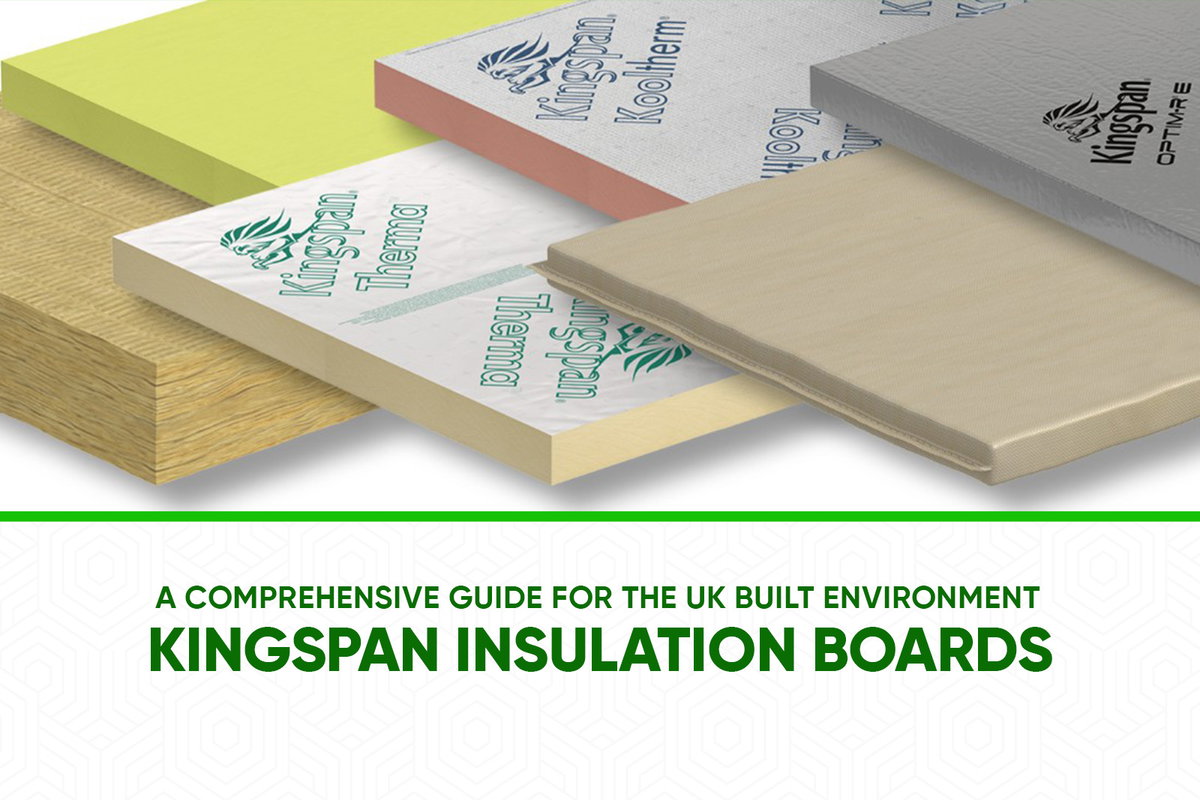

TLDR: Kingspan insulation relies on high-performance materials, primarily rigid thermoset phenolic (Kooltherm) and polyisocyanurate (PIR, Therma), designed to achieve extremely low thermal conductivity values. Specification in the UK is governed by Approved Document L (Conservation of Fuel and Power), which dictates stringent U-value targets (e.g., 0.11 W/m²K for new dwelling roofs) in preparation for the Future Homes Standard 2025. Fire safety compliance (Approved Document B) is crucial, requiring rigorous Euroclass testing and demanding careful attention to system performance, particularly in external walls above 11 metres. Correct installation mandates precision cutting, close-butting joints, and meticulous application of sealants to ensure air tightness and mitigate thermal bridging.
Kingspan Insulation in the UK Built Environment: Core Offerings and System Performance
Kingspan is a major manufacturer providing a full range of insulation solutions tailored for diverse applications across the UK construction sector, encompassing residential, commercial, new build, and retrofit projects. The choice of insulation family is generally dictated by the required thermal performance and the physical limitations of the building structure regarding installation space.
Defining the Product Families for UK Specification
The company groups its products into several distinct families, each addressing specific performance needs: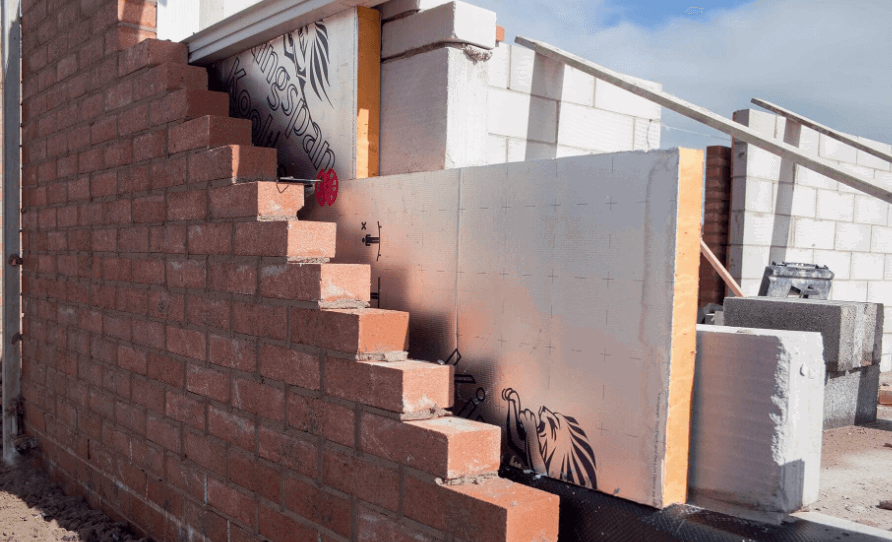
-
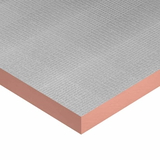
Kooltherm: This is designated as the premium performance range, characterised by its extremely low thermal conductivity. Kooltherm features a fibre-free rigid thermoset phenolic insulant core. This material enables Kingspan to offer the thinnest commonly used insulation products, which is a significant advantage in urban environments or retrofit projects where maximising internal floor area and preserving existing features are primary concerns. Examples include Kooltherm K3 Floorboard, K7 Pitched Roof Board, and K8 Cavity Board.
-
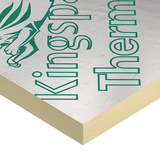
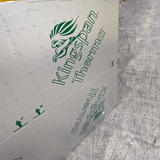
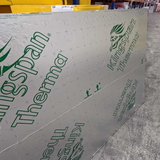
Therma: This range provides high performance using a fibre-free rigid thermoset Polyisocyanurate (PIR) core. Therma products are thermally efficient, suitable for a broad spectrum of UK applications, including roofs, walls, and floors.
-
OPTIM-R: These vacuum insulation panels (VIPs) represent the highest possible thermal performance available. They are used specifically in applications where conventional insulation boards, even the premium phenolic type, are too thick to meet the requisite performance standards, often in highly restricted spaces.
-
Aerobord/GreenGuard: This range includes rigid expanded polystyrene (EPS) products, such as Aerofloor, which is often specified in floor applications where stability, rigidity, and load-bearing characteristics are critical requirements.
This tiered offering—from standard EPS to high-performance PIR, and then to the ultra-thin phenolic and VIP solutions—is strategically aligned to address the twin pressures in UK construction: the stringent regulatory demand for low U-values set by Part L, and the need to conserve space in high-density or high-value urban developments. The additional performance achieved by the phenolic range, for instance, justifies its specification when structural constraints limit the achievable insulation thickness.
The Significance of Technical Assurance and Certification
Technical assurance is a requirement for insulation products in the UK. BBA (British Board of Agrément) certification provides critical third-party verification that a specific system, such as the Kooltherm K118 Insulated Dry Lining System, will satisfy or contribute to satisfying the relevant requirements of the Building Regulations and NHBC Standards, provided it is installed, used, and maintained correctly. This certification is relied upon by specifiers and Building Control bodies across Great Britain.
Furthermore, products such as Kooltherm K108 are produced under comprehensive management systems certified to international quality standards, including ISO 9001 (Quality management) and ISO 14001 (Environmental management). This confirms a traceable, high-quality manufacturing process. The manufacturer also provides extensive technical support, including Continued Professional Development (CPD) courses and project-specific U-value calculations, to assist construction professionals in correctly detailing complex building assemblies.
Material Science and Thermal Performance: Phenolic versus PIR Insulation Cores
The thermal efficacy of Kingspan’s board products is rooted in the chemical structure of their core materials, primarily phenolic and PIR foams.
Phenolic Insulation: The Kooltherm Standard
The core of the Kooltherm range is a premium performance, fibre-free rigid thermoset phenolic insulant. Phenolic foam is renowned for its low thermal conductivity, enabling it to achieve superior thermal resistance with minimal material thickness.
λ value is the reason Kooltherm is specified for applications where space is extremely limited but high energy efficiency is required.
Polyisocyanurate (PIR) Insulation: The Therma Standard
PIR insulation, forming the core of the Therma range, is based on a fibre-free rigid thermoset polyisocyanurate. While PIR and polyurethane (PUR) share a common heritage, PIR is chemically engineered for improved performance. PUR foams are created by reacting polyol and iso components to form urethane linkages. PIR, conversely, is manufactured by inducing trimerization reactions at a higher temperature, causing iso components to react with each other to form highly stable isocyanurates, with excess iso reacting to form urethanes. This specific chemical structure provides PIR with enhanced thermal stability and flame resistance compared to traditional PUR foams. The Therma range typically exhibits a core thermal conductivity between 0.022 and 0.027 W/mK.
The Crucial Metric of Thermal Conductivity (λ value)
Thermal performance is measured intrinsically by thermal conductivity (λ value), expressed in W/mK. A lower λ value signifies that the material is a better insulator, allowing a thinner board to achieve the same level of thermal resistance.
It is important to distinguish the λ value from the U-value. The U-value (measured in W/m²K) is the calculated heat loss through a complete element (roof, wall, or floor) and represents the total system performance, taking into account all components, air gaps, and fixings. The insulation board’s λ value is merely one component of this overall U-value calculation.
| Material Type | Kingspan Product Family | Core Chemical Descriptor | Typical Core λ Value | Primary Feature |
| Phenolic | Kooltherm | Rigid Thermoset Phenolic | As low as 0.021 W/mK | Thinnest solution for premium performance |
| Polyisocyanurate (PIR) | Therma | Rigid Thermoset Polyisocyanurate | 0.022 – 0.027 W/mK | High performance and versatility |
| Expanded Polystyrene (EPS) | Aerobord | Rigid Expanded Polystyrene | Varies | Load-bearing capacity for floor types |
Compliance with UK Building Regulations: Conservation of Fuel and Power (Part L)
Approved Document L (Conservation of Fuel and Power) is the bedrock of energy efficiency standards for buildings in England, applying to both new and existing properties. These regulations are divided into Volume 1 for Dwellings and Volume 2 for Buildings other than Dwellings.
The Path to the Future Homes Standard
The UK government views recent changes to Part L as a significant intermediate measure towards achieving the Future Homes Standard (FHS), anticipated in 2025. These regulatory updates, which became effective in June 2022, established higher performance targets, including a targeted 31 per cent reduction in carbon emissions for new dwellings. The FHS is set to accelerate this process, requiring new homes to be 'net zero ready' through stringent measures focused on high energy efficiency and the mandatory adoption of low-carbon heating systems. Specifying insulation that meets or surpasses the 2022 Part L requirements is essential for ensuring buildings are resilient to the forthcoming 2025 standards.
Buy Kingspan Insulation Boards now
Meeting Stringent Notional U-Value Targets
The 2022 amendments set demanding performance metrics for the building fabric. Achieving these requires insulation products with inherently low thermal conductivity, such as those within the Kingspan Kooltherm and Therma ranges.
Table of Key Notional U-Value Targets for New UK Dwellings (Part L Volume 1, 2022/2023)
| Building Element | Reference Target (New Dwellings) | Limiting Value (New Elements in Existing Dwellings) |
| Roofs | 0.11 W/m²K | 0.15 W/m²K |
| External Walls | 0.18 W/m²K | 0.18 W/m²K |
| Floors | 0.13 W/m²K | 0.18 W/m²K |
These low targets confirm the 'fabric first' focus of UK policy. For projects to meet, for example, the 0.11 W/m²K roof standard, the overall construction assembly must be thermally optimised, typically requiring premium rigid foam insulation. This regulatory pressure directly validates the use of specialised, high-performance materials in standard construction to minimise the required thickness of the insulation layer.
Air Tightness and Thermal Bridge Mitigation
Compliance with Part L is not limited to U-values; it also includes stricter requirements for air tightness, reducing heat loss caused by convection.
Installation best practice demands meticulous attention to these junctions. Modelling technical details, such as the interface around windows, shows that effective performance relies on specific overlaps (for instance, a 30 mm overlap in K108 models) and comprehensive sealing. Flexible sealant must be applied to all interfaces between the internal air barrier and structural elements like window and door frames. Furthermore, every penetration through the air barrier must be sealed to ensure the final building passes required air tightness tests.
Compliance with UK Building Regulations: Fire Safety (Part B) 
Approved Document B (Fire Safety) sets out the requirements for fire performance in England. Specifiers must navigate two key aspects: the reaction to fire of the material itself and the fire resistance of the entire constructed element.
The Primacy of Euroclass Classification
Reaction to fire performance for construction products in the UK is primarily classified under the European standard, BS EN 13501-1 (Euroclass). Following recent amendments, the outdated national classes (BS 476 tests) have been withdrawn, mandating the use of the more robust Euroclass standards.
The Euroclass system provides a classification from A1 (highest performance, non-combustible) down to F (lowest performance).
Fire resistance, conversely, measures the capability of an assembly (such as a wall or floor) to maintain its function during a fire, specifically assessing resistance to collapse (R), fire penetration (E, integrity), and the transfer of excessive heat (I, insulation), measured in minutes.
External Wall Fire Safety Provisions
The Building (Amendment) (England) Regulations 2022 introduced updated fire safety provisions for residential buildings with a storey 11 metres or more in height. These regulations impose a ban on combustible materials in and on the external walls of these buildings, generally necessitating the use of materials achieving a Euroclass A2-s1, d0 or A1 classification.
Using PIR and Phenolic within Masonry Cavity Walls
While polymer insulants like PIR and Phenolic foams typically fall outside the A1/A2 non-combustible classification, they remain acceptable for use in specific assemblies that offer inherent protection. Kingspan’s phenolic and PIR cavity boards may be used in the cavity walls of relevant buildings (residential buildings above 11 m or non-residential buildings above 18 m) under strict conditions.
This usage is permitted when the insulation is contained within a masonry cavity wall consisting of two leaves of masonry, each at least 75 mm thick. The cavity must also be closed around all openings and at the top, unless the cavity is fully filled with insulation. The regulatory acceptance of these materials in high-rise applications hinges on the protection offered by the surrounding non-combustible masonry structure. This system-based approach to fire safety is critical for specifiers to acknowledge, as the same board may be suitable for a protected masonry cavity but unsuitable for an external cladding application on a high-rise building.
Site Work and Installation Best Practices for Continuity and Air Tightness
The design performance specified under Approved Document L can only be realised if the insulation is installed correctly, with continuity and air tightness prioritised throughout the construction process.
Handling, Storage, and Protecting Material Integrity
The thermal integrity of the boards must be protected before and during installation. The polyethylene packaging used for shipment is not sufficient for long-term outdoor storage. Ideally, boards should be stored inside. If outside storage is unavoidable, they must be stacked clear of the ground and protected by an opaque, weatherproof tarpaulin to prevent contact with moisture. Boards that have become wet or have been exposed to harsh acids or solvents must not be used, as this can compromise performance.
Precision Cutting and Joint Management
Accurate trimming is fundamental to successful installation. Cutting should be performed using a fine-toothed saw or by scoring the board deeply with a sharp knife, snapping it over a straight edge, and cutting the facing on the reverse side. The goal of this precision is to achieve close-butting joints throughout the installation, ensuring complete continuity of the insulation layer. Any gaps will introduce heat loss paths, severely degrading the achieved U-value of the system and potentially leading to thermal bridging issues.
Fixing Methods and Board Retention
Installation methods vary by application, but the principle of securing the board tightly and ensuring thermal continuity remains constant.
-
Cavity Walls: For partial-fill applications, the insulation boards (e.g., Kooltherm K108) must be installed between rows of wall ties, ensuring the board is retained tight against the inner leaf. Each board must be secured at a minimum of three points using BBA/NSAI-approved wall ties and retaining clips. Additional ties may be required beyond the minimum to satisfy structural standards or ensure the retention of cut pieces.
-
Dry Lining: Insulated plasterboard systems require specific fixing schedules. For instance, boards should be fixed to framing members using drywall screws at designated centres (e.g., 300 mm centres), with screws placed no closer than 10 mm from the bound edges.
-
Insulated Panels: For larger installations involving insulated panels, the application of sealants (such as non-setting butyl sealant or PVC foam tape) to Class A requirements is specified at junctions like the ridge, verge, and eaves. Panel joints must be pulled tight to eliminate gaps during installation. Fasteners must comply with project specifications, and wind load calculations should always be performed to determine if additional fasteners are required beyond the minimum fixing pattern.
The meticulous implementation of these site practices—particularly the elimination of gaps and sealing of interfaces—is a non-negotiable step to achieve the high air tightness rates required for compliance with Part L. Failure to seal thoroughly or ensure close-butting joints can result in uncontrolled air leakage, leading to failed air tightness tests and jeopardising the building's overall regulatory compliance.
Technical Due Diligence and Specification Responsibility 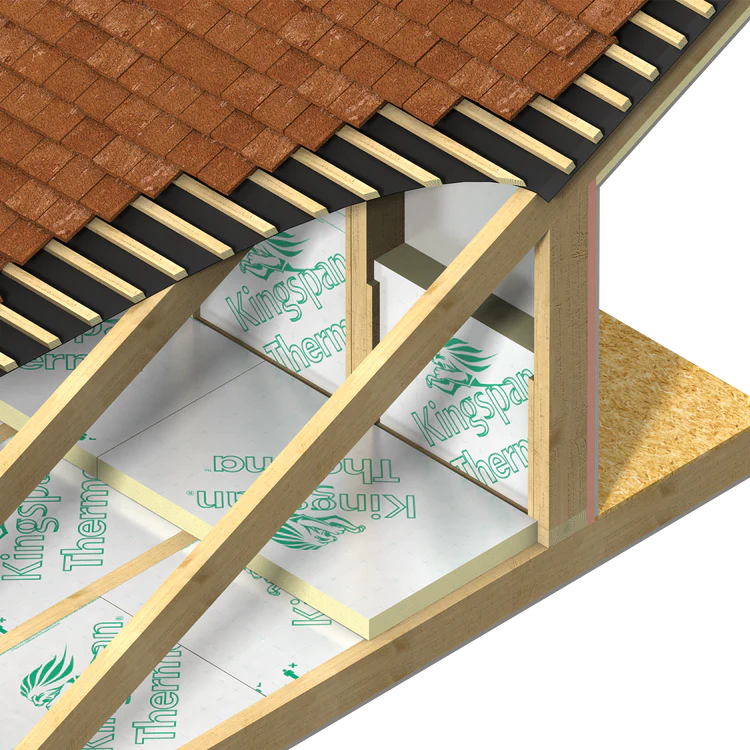
When specifying high-performance insulation boards, construction professionals must recognise the boundary between the manufacturer’s product data and the final compliance of the finished structure.
The Requirement for System U-Value Calculations
The thermal performance of the finished building element is dictated by its U-value, not solely by the insulation board’s thermal conductivity (λ value). The U-value calculation must account for every component in the assembly, including the conductivity of internal blockwork, mortar joints, fixings, and air gaps. This is why the manufacturer's technical teams offer services to compute a precise U-value for specific project details.
A single insulation board does not have a U-value on its own; that value belongs to the system as a whole. Professionals must verify that the calculated system performance meets the relevant Part L limiting targets (e.g., 0.18 W/m²K for new walls).
The Role of Professional Verification
Manufacturer literature and technical guides provide essential information regarding fixing instructions and material characteristics. However, this information is provided in good faith and applies to the uses described within the document. The manufacturer explicitly states that they do not accept responsibility for issues arising from using products in applications different from those described or for failure to correctly follow the provided instructions.
This confirms that the ultimate professional and legal responsibility for verifying the suitability of the insulation product, ensuring its correct application, and confirming compliance with all applicable UK laws and regulations rests with the qualified professional—the architect, engineer, or installer. Rigorous verification must be undertaken to ensure that the chosen system will meet the performance expectations set by the UK Building Regulations.
UK Legal Disclaimer
The information provided in this guide is intended solely for general informational and educational purposes. This content is not exhaustive and is not a substitute for professional technical advice or mandatory legal compliance procedures.
Accordingly, before taking any actions based upon this content, it is crucial that construction professionals consult with the appropriate qualified experts—such as structural engineers, certified architects, and local Building Control bodies—to confirm the suitability of any materials or systems for a specific project. This content must not be used to specify materials or determine regulatory compliance without formal, project-specific verification and U-value calculations performed by a competent person. The use or reliance upon any information contained in this guide is solely at the professional’s own risk.

Samuel Hitch
Managing Director
Buy Insulation Online.
Leave A Reply
Your feedback is greatly appreciated, please comment on our content below. Your email address will not be published. Required fields are marked *