
- Blogs
- Rockwool Insulation in the UK: The Complete Guide
Rockwool Insulation in the UK: The Complete Guide


TLDR: Rockwool Insulation at a Glance
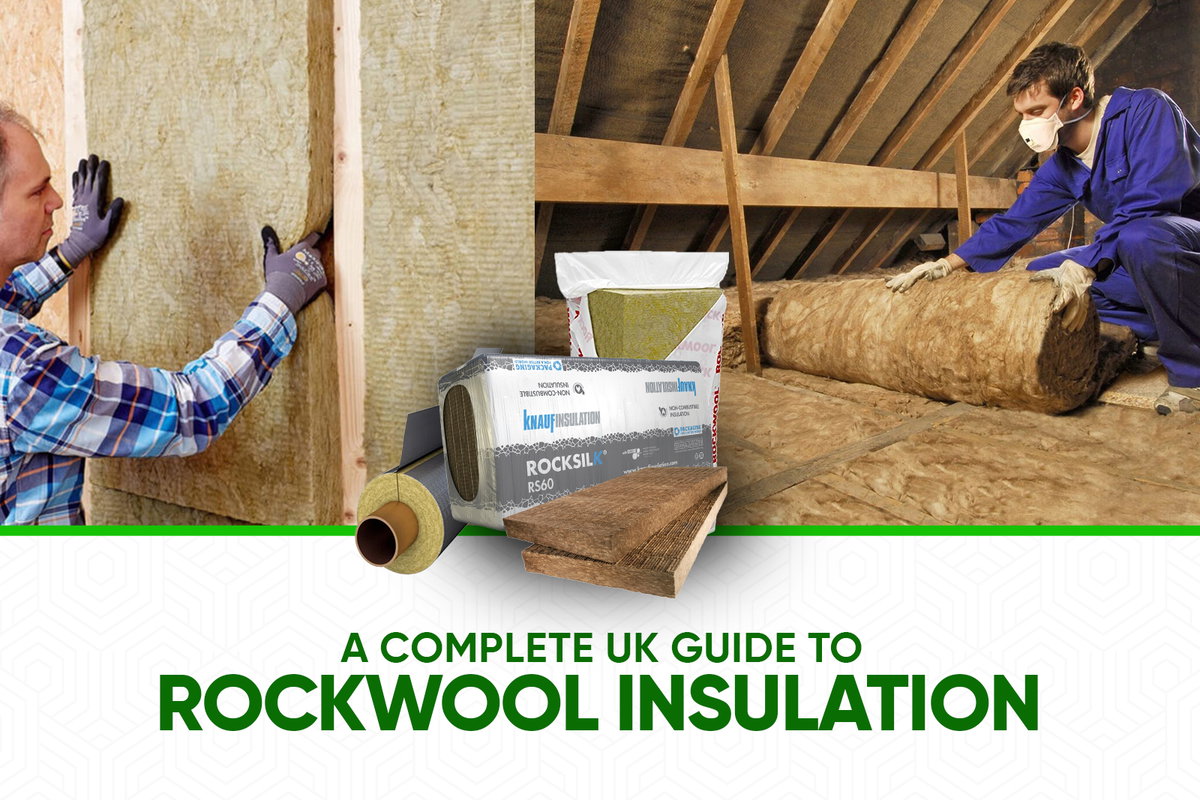
Rockwool insulation, also known as stone wool, is a high-performance insulation material manufactured from natural volcanic rock, primarily basalt, and recycled industrial by-products like slag. The raw materials are melted at extreme temperatures and spun into a dense, fibrous, wool-like material.
Its key advantages include exceptional fire resilience, as it is non-combustible with a Euroclass A1 fire rating, superior acoustic performance for soundproofing, and excellent durability, with a lifespan of over 50 years. It is also resistant to moisture, mould, and pests.
The main disadvantages are the need for Personal Protective Equipment (PPE) during installation, as the fibres can cause temporary skin and respiratory irritation, and a manufacturing process that is energy-intensive. It is generally denser and can be more expensive than some alternatives like standard fibreglass.
Rockwool is particularly well-suited for projects where fire safety and acoustic performance are critical priorities. This includes applications in separating walls and floors in flats and terraced houses, home offices, extensions, and buildings subject to stringent fire regulations, such as high-rise constructions.
From Volcano to Fleece: What is Rockwool Insulation and How is it Made?
Rockwool insulation is a type of mineral wool made from natural rock. Its unique properties are a direct result of its raw materials and the manufacturing process that mimics the natural formation of volcanic rock fibres.
Raw Materials: The Core Ingredients
The primary component of Rockwool insulation is basalt, an igneous volcanic rock that is naturally abundant across the globe. This is often supplemented with other natural rocks such as diabase, anorthosite, and dolomite.
A significant secondary ingredient is slag, a recycled by-product from the steel and copper industries. Incorporating this waste material introduces an element of the circular economy directly into the production process. To further reduce waste, recycled stone wool off-cuts from construction sites and production are also collected and added back into the furnace, creating a closed-loop system.
The Manufacturing Process: A Controlled Volcano
The production of Rockwool insulation is a high-temperature process that transforms solid rock into a flexible, fibrous fleece.
-
Melting: The carefully selected blend of rock and recycled materials is crushed and fed into a furnace. Here, it is heated to temperatures exceeding 1500°C, melting it into a substance that resembles molten lava. This initial stage is what gives the final product its inherent resistance to fire; by starting with non-combustible rock and subjecting it to extreme heat, the resulting material has a fundamentally high melting point.
-
Spinning (Fiberising): The molten liquid is then poured onto high-speed spinning machines. Centrifugal force pushes the material through thousands of tiny holes, drawing it out into fine fibres. This process is often compared to the method of making candy floss.
-
Binding: As the newly formed fibres are collected on a conveyor belt, a small amount of a thermosetting resin binder is sprayed onto them. This binder holds the fibres together and gives the final product its structure and stability. A mineral oil is also added to reduce dust and provide water-repellent properties. Standard products often use a phenol formaldehyde binder, which is fully cured in a high-temperature oven, leaving only trace amounts in the finished insulation.
-
Curing and Forming: The fibrous mat then passes through a large curing oven. Hot air is blown through the material, which hardens the binder and sets the wool into its final form. The material is compressed to achieve the required density before being cut into specific products, such as rolls for lofts, semi-rigid batts for walls, or high-density slabs for floors.
The sustainability of this process presents a complex picture. While the use of natural, abundant rock and recycled industrial waste is a positive attribute, the energy required to melt rock is considerable. This creates a balance between a high upfront environmental cost in manufacturing and the significant long-term environmental benefit the product delivers by reducing a building's heating and cooling energy consumption over its long lifespan.
The Comprehensive Benefits of Rockwool Insulation (The Pros)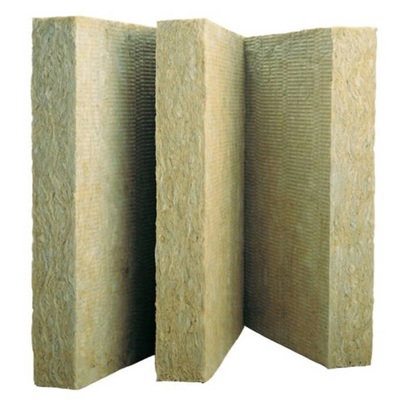
Rockwool insulation's popularity in UK construction stems from its ability to provide a multi-faceted solution, addressing thermal, fire, and acoustic performance requirements with a single material.
Unmatched Fire Resilience
The standout characteristic of Rockwool insulation is its performance in a fire. Because it is made from stone, it is non-combustible and achieves the highest possible Euroclass A1 reaction to fire classification. This means it does not contribute to the development or spread of a fire and will not produce significant quantities of toxic smoke. It can withstand temperatures in excess of 1000°C without melting, acting as a fire barrier that helps to protect a building's structural integrity and provides valuable time for occupants to escape in an emergency.
Consistent Thermal Performance
The dense, non-directional fibre structure of Rockwool traps millions of tiny pockets of air. This trapped air is what gives the material its insulating properties, preventing heat transfer and helping to maintain a stable and comfortable indoor temperature. It keeps buildings warmer in the winter and cooler in the summer, which can lead to a significant reduction in energy bills and a lower carbon footprint for the property over its lifetime.
Superior Acoustic Insulation
The same high-density and open-porous structure that provides thermal insulation also makes Rockwool an exceptionally effective material for soundproofing. It works by absorbing sound waves and dampening vibrations, reducing both airborne noise (like traffic, televisions, and conversations) and impact noise (like footsteps or moving furniture from a floor above). This makes it an ideal choice for internal partition walls between bedrooms and home offices, as well as for separating floors and walls in flats and terraced houses. A standard 75mm metal stud wall containing a 30mm Rockwool slab can achieve a weighted sound reduction (Rw?) of 41 decibels (dB), exceeding the minimum requirements of UK Building Regulations for internal walls.
Durability and Longevity
Rockwool is a dimensionally stable material. It does not shrink, sag, or settle over time, unlike some other forms of insulation. This means it maintains a tight fit within wall studs or floor joists, preventing gaps from forming and ensuring that its thermal and acoustic performance does not degrade. Studies have shown that the material retains its properties for more than 65 years, lasting for the entire lifespan of the building without needing maintenance or replacement.
Moisture, Mould, and Pest Resistance
A key performance benefit for the long-term health of a building is Rockwool's relationship with moisture. The material is engineered to be water-repellent, meaning it resists liquid water. At the same time, it is vapour permeable, allowing water vapour (moisture in the air) to pass through it freely. This "breathability" prevents moisture from becoming trapped within the building's structure, which could otherwise lead to problems with damp, condensation, and rot.
Being an inorganic material derived from rock, Rockwool provides no nutritional value for pests such as rodents or insects. It also does not support the growth of mould, fungi, or bacteria, contributing to a healthier indoor environment.
Sustainability and Recycling
Rockwool is manufactured from natural, abundant volcanic rock and includes a significant proportion of recycled material from other industries. The company also operates a dedicated recycling programme in the UK, with a facility at its plant in Bridgend, South Wales. This allows contractors to return uncontaminated off-cuts and used insulation from renovation or demolition projects. This material is then re-melted and used to produce new insulation, creating a closed-loop system that reduces the amount of waste sent to landfill.
Important Considerations and Drawbacks (The Cons)
While Rockwool offers a range of high-performance benefits, there are several important considerations and potential drawbacks to be aware of before specifying or installing the material.
| Pros | Cons |
| Superior Fire Resilience (Euroclass A1 Non-combustible) | Requires PPE for Installation (Fibres cause skin/respiratory irritation) |
| Excellent Acoustic Performance (High density absorbs sound effectively) | Energy-Intensive Manufacturing (High embodied energy) |
| High Durability (Does not sag or shrink, lasts 50+ years) | Higher Cost (Can be more expensive than standard fibreglass) |
| Moisture and Mould Resistant (Water-repellent yet vapour permeable) | Heavier and Denser (Can be more cumbersome to handle) |
| Sustainable Materials (Made from natural rock and recycled content) | Non-Biodegradable (Raises waste management considerations) |
Handling and Installation Safety
The fine fibres that make up Rockwool insulation are classified as a mechanical irritant. Direct contact with the material during handling and installation can cause temporary itching of the skin, eyes, and respiratory system. It is essential to wear the correct Personal Protective Equipment (PPE) to minimise this irritation. This includes gloves, long-sleeved clothing, eye protection (especially when working overhead), and a dust mask or respirator when working in enclosed or poorly ventilated spaces.
While this irritation is a key consideration during installation, it is important to distinguish it from long-term health risks. Major health organisations do not classify the type of mineral wool fibres used in insulation as carcinogenic to humans. The fibres are bio-soluble, meaning that if they are inhaled, they are safely dissolved and cleared by the body's natural defence mechanisms. Once installed and enclosed behind plasterboard or other finishes, the insulation is stable and does not release fibres into the air.
Environmental Impact of Production
The manufacturing process, which involves melting rock at over 1500°C, is very energy-intensive. The embodied energy—the total energy consumed to produce the material—is higher than that of natural insulation products like sheep's wool. For context, producing 1 kg of sheep's wool requires around 6 megajoules (MJ) of energy, whereas figures for mineral wool are higher, and polyurethane foam insulation can require over 90 MJ/kg. This places Rockwool in a middle ground; it has a higher environmental cost than natural fibres but a significantly lower one than petrochemical-based rigid foams.
Cost, Density and Weight
Rockwool is generally denser and heavier than its main competitor, fibreglass insulation. This density is a key reason for its strong acoustic performance but can make handling large, thick slabs more difficult for a single person. In terms of price, it is typically more expensive than standard fibreglass rolls but often more cost-effective than high-performance rigid foam insulation boards.
A Practical Guide to Installing Rockwool Insulation 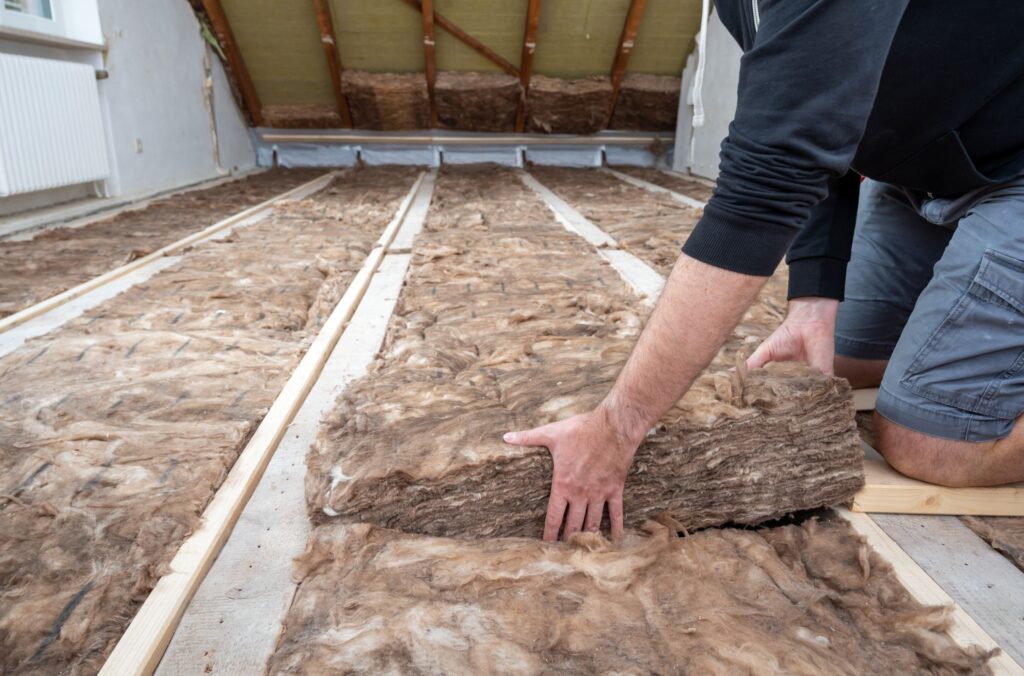
The final performance of Rockwool insulation is highly dependent on the quality of its installation. A tight, gap-free fit is essential to achieve the specified thermal and acoustic benefits. While some applications like cavity wall insulation require professional installers, fitting Rockwool slabs and rolls in lofts and stud walls is a common task for competent DIYers.
Essential Tools and General Best Practices
-
Tools: The basic toolkit includes a tape measure, a long-bladed serrated knife or a specialised insulation saw for clean cuts, and full PPE.
-
Measuring & Cutting: For a tight friction fit, measure the internal gap between the timbers (joists or studs) and cut the insulation slab or roll approximately 10mm wider than this measurement.
-
Fitting: The semi-rigid nature of Rockwool slabs allows for easy friction fitting. Push one edge of the slab into the frame and then compress the other edge slightly to fit it in. The material will then expand to hold itself securely in place without the need for additional fixings. It is critical to ensure there are no gaps between the insulation and the timber frame, or between adjacent pieces of insulation, as these will compromise performance.
-
Layering: When installing more than one layer of insulation, for example in a loft, the joints between the pieces in each layer should be staggered to avoid creating a direct path for heat to escape (a thermal bridge).
Application Focus: Insulating a UK Loft
Insulating a loft is one of the most effective ways to improve a home's energy efficiency. The physical form of loft rolls is specifically engineered for this task, being flexible enough to be laid easily between and over joists.
-
Preparation: Before starting, clear the loft of any stored items. Check for any signs of damp or leaks in the roof and ensure these are repaired first. Inspect the condition of any existing insulation; if it is compressed, damp, or disturbed, it should be removed.
-
First Layer: The first layer of insulation, typically 100mm thick to match the height of standard ceiling joists, is unrolled and laid snugly between the joists.
-
Second Layer: To meet the UK's recommended total insulation depth of 270mm and to cover the joists themselves (which would otherwise act as a thermal bridge), a second, thicker layer of insulation (e.g., 170mm or 200mm) is laid at a right angle, running across the top of the joists.
-
Special Considerations: Do not place insulation directly underneath a cold water tank, as this can increase the risk of it freezing. Electrical cables should be gently lifted and laid over the top of the final insulation layer to prevent them from overheating. Finally, an insulated and draught-proofed loft hatch is essential to complete the thermal barrier.
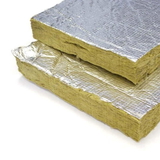
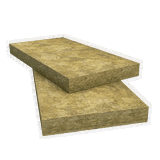
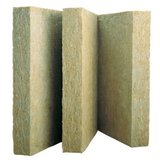
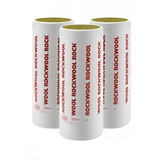
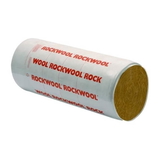
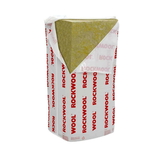
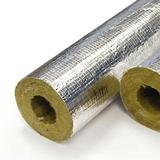
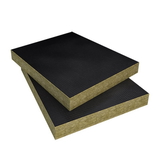
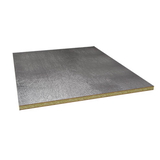
Buy Rock wool Insulation now
Application Focus: Insulating a Masonry Cavity Wall
Insulating a cavity wall is not a DIY job and must be carried out by professional, registered installers. The method depends on whether it is a new building under construction or an existing property.
-
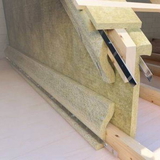
New Build (Insulation Slabs): In a new construction, rigid Rockwool Cavity Batts are built into the wall as it is constructed. Typically, the outer leaf of brickwork is built up first. The installer then cleans any excess mortar from the cavity face before fitting the insulation slabs tightly against the inner leaf, where they are held in place by wall ties. It is vital that the slabs are butted tightly together to form a continuous layer of insulation. A cavity board is often used to protect the top edge of the insulation from mortar droppings as the next course of masonry is laid.
-
Existing Homes (Blown Fibre): For existing properties with an unfilled cavity, the process involves blowing granulated mineral wool into the void. The installer drills a precise pattern of small holes into the mortar joints of the external wall. Using specialised equipment, loose-fill, water-repellent mineral wool is then blown under pressure into the cavity until it is completely filled. Afterwards, the holes are carefully filled with mortar that is colour-matched to the existing wall.
Meeting UK Building Regulations with Rockwool Insulation
In the UK, the specification of building materials is heavily governed by the Building Regulations, which set minimum standards for performance. The increasing stringency of these regulations, particularly concerning energy efficiency, fire safety, and acoustics, has made material selection a critical part of the design and construction process.
| Building Regulation | Key Requirement | How Rockwool Complies |
| Approved Document L (Thermal) | Achieve specific U-values for walls, floors, and roofs (e.g., 0.18 W/m²K for new walls). | Provides effective thermal insulation. Required U-values can be met by selecting the appropriate product thickness (e.g., approx. 150-170mm for new walls). |
| Approved Document B (Fire) | Limit fire spread. External walls on high-rise buildings (>11m/18m) must use non-combustible (A1 or A2) materials. | Achieves Euroclass A1 non-combustible rating. Withstands >1000°C. Compliant for use in high-rise external walls where combustibles are banned. |
| Approved Document E (Acoustic) | Meet minimum sound insulation levels for separating walls and floors (e.g., Airborne ≥45 dB, Impact ≤62 dB). | High-density, porous structure provides excellent sound absorption and transmission loss. Specific systems are tested to meet and exceed Part E requirements. |
Thermal Performance and Approved Document L (Conservation of Fuel and Power)
Approved Document L sets the standards for the energy efficiency of buildings. It does this by specifying maximum U-values, which measure the rate of heat loss through a building element like a wall, roof, or floor. A lower U-value indicates better insulation.
For new-build homes, the requirements are very strict, with walls needing to achieve a U-value of 0.18 W/m²K and roofs 0.11 W/m²K. For existing homes undergoing major renovation, the targets are typically 0.30 W/m²K for walls and 0.16 W/m²K for roofs. Achieving these U-values requires a sufficient thickness of insulation. For example, meeting the 0.16 W/m²K target in a loft typically requires 270mm of mineral wool insulation. To meet the demands for ever-lower U-values without requiring excessively thick walls, manufacturers have developed products with improved thermal conductivity, such as Rockwool's NyRock technology, which allows the required performance to be achieved with a reduced thickness.
Fire Safety and Approved Document B (Fire Safety) 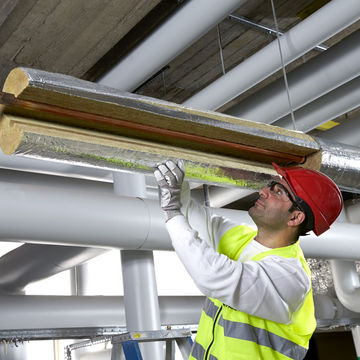
Approved Document B governs all aspects of fire safety in buildings. A critical aspect is the choice of materials and their reaction to fire, which is classified using the Euroclass system (BS EN 13501-1). Under this system, materials are rated from A1 (non-combustible) to F (easily flammable).
Rockwool insulation products achieve a Euroclass A1 rating, the highest possible classification. This is particularly important for compliance with regulations concerning high-rise and high-risk buildings. Following amendments to the Building Regulations, there is now a ban on the use of combustible materials in the external walls of "relevant buildings"—which includes residential buildings with a storey over 18 metres in height in England (and 11 metres in Scotland). For these buildings, any material that becomes part of the external wall must be of European Classification A2-s1, d0 or A1. Rockwool's A1 classification makes it a fully compliant insulation choice for these applications.
Acoustic Performance and Approved Document E (Resistance to the Passage of Sound)
Approved Document E sets out to protect residents from noise, whether from neighbouring properties or from other rooms within the same dwelling. It sets minimum performance standards for sound insulation that must be met.
For new-build homes, separating walls and floors must achieve an airborne sound insulation level of at least 45 dB (DnTw?+Ctr?). Separating floors must also limit impact sound transmission to a maximum of 62 dB (LnTw′?). The dense, fibrous nature of Rockwool makes it highly suitable for meeting these acoustic requirements. For example, a separating floor construction that includes 100mm of Rockwool Sound Slab between the joists, combined with other acoustic components, can be tested to meet both the airborne and impact sound requirements of Part E. This proven performance simplifies the design and specification process, reducing the risk of failing mandatory pre-completion sound tests.
Conclusion: A Balanced Verdict on Rockwool Insulation
Rockwool stone wool has established itself as a high-performance, multi-functional insulation material in the UK market. Its core strengths are derived directly from its raw material—volcanic rock—and the high-temperature manufacturing process it undergoes. This results in a product with exceptional fire resilience, robust acoustic dampening, and long-term durability.
Its primary advantage lies in its ability to simultaneously address the three key pillars of modern building performance regulations: thermal efficiency (Part L), fire safety (Part B), and acoustic control (Part E). For architects, specifiers, and builders navigating an increasingly complex and stringent regulatory landscape, this makes Rockwool a reliable and efficient choice that can help to de-risk projects and ensure compliance.
However, these benefits come with considerations. The need for correct PPE during installation due to fibre irritation is non-negotiable, and its manufacturing process carries a higher embodied energy cost than natural fibre alternatives. While it may be more expensive than basic fibreglass, its superior performance in fire and acoustics often justifies the investment, particularly in applications like party walls, home cinemas, and the external walls of high-rise buildings where safety and comfort are paramount.
Ultimately, Rockwool insulation is a premium product that offers a comprehensive solution. For projects where fire resilience and soundproofing are as important as thermal performance, it remains one of the most effective and trusted materials available.
Legal Disclaimer
The information provided in this article is for general informational purposes only. All information is provided in good faith; however, we make no representation or warranty of any kind, express or implied, regarding the accuracy, adequacy, validity, reliability, availability, or completeness of any information. This content should not be used as a substitute for consultation with professional builders, architects, structural engineers, or other qualified professionals. Building regulations are complex and subject to change; you should always consult the latest official government guidance and seek approval from your local building control authority before commencing any work. Reliance on any information provided in this article is solely at your own risk. We disclaim all liability in respect to actions taken or not taken based on any or all the contents of this site to the fullest extent permitted by law.

Samuel Hitch
Managing Director
Buy Insulation Online.
Leave A Reply
Your feedback is greatly appreciated, please comment on our content below. Your email address will not be published. Required fields are marked *